Why Is My Boiler Dripping Water? A Practical Troubleshooting Guide
Learn urgent, step-by-step troubleshooting for a dripping boiler, from safe checks to when to call a pro. Boiling down common causes and prevention tips.


A boiler dripping water is usually linked to condensate drainage, a faulty pressure relief valve, or a leaking pipe. Start by locating the drip source, verifying boiler pressure, and inspecting the condensate line and relief valve. If the drip persists after basic checks, shut off the boiler and call a licensed technician.
What makes a boiler drip water and why you should act fast
A boiler that drips water isn’t just a minor nuisance—it can signal a safety risk or an impending breakdown. Most dripping issues fall into a few common categories: condensate line or trap problems, a leaking expansion tank, and a faulty or overworked pressure relief valve. In many homes, a simple accumulation at the condensate drain is mistaken for a bigger fault, but persistent dripping or a sudden surge in water near the boiler is a warning flag. The phrase why is boiler dripping water becomes a crucial question in home maintenance, and answering it quickly protects your heating system and reduces the risk of damage to surrounding areas. This guide, informed by Boiler Hub Analysis, 2026, helps homeowners navigate the most likely causes and safe first steps.
Common causes of a dripping boiler
The most frequent culprits are the condensate drain line, a faulty pressure relief valve (PRV), an overfilled or malfunctioning expansion tank, and loose or corroded pipe connections. Condensate lines carry acidic wastewater away from the boiler; if the line is blocked, cracked, or frozen, water can back up and drip. A PRV leaks when system pressure is higher than the valve’s setting, or when the valve itself fails. An aging expansion tank can become waterlogged, causing constant small drips. Finally, tiny leaks at joints or valves are easy to miss but can produce noticeable drips over time. Each cause has a distinct path to repair, so identifying the exact source is essential for a lasting fix.
Immediate safety actions you should take
First, if you smell gas or hear hissing sounds, evacuate and call emergency services. For non-emergency leaks, turn off the boiler and shut off the water supply if accessible. Do not block or tamper with safety devices, and wear eye protection when inspecting. Keep a bucket under the drip to minimize water damage and document the source if it’s visible. If you’re unsure about the source or if water is actively spraying out, it’s safer to contact a professional rather than attempting a risky DIY repair.
How to identify the source of the drip (simple checks)
Start with visual inspection of common sources: the pressure relief valve on the boiler, the condensate drain line and its trap, and the joints where pipes connect to the boiler. Look for signs of rust, mineral buildup, or mineral staining around valves. Check the boiler pressure gauge; if the needle sits significantly above the typical operating range, the system may be overcharged, triggering the PRV. Discoloration and damp patches along copper or steel pipes can indicate a slow leak. Keep detailed notes of where water is emerging to guide a technician later.
Reading gauges and recognizing abnormal readings
Boiler pressure readings vary by model, but a sudden rise in pressure or a consistently high reading is a red flag. Normalize readings by allowing the boiler to cool before checking again, and compare to the manufacturer’s recommended range printed on the boiler or in the manual. Spikes can result from a faulty expansion tank or an blocked condensate line. If the pressure remains high after cooling, do not attempt to bleed the system yourself; contact a pro. Understanding these indicators helps you decide when a DIY check is feasible and when to escalate to professional service.
Step-by-step diagnostic mindset (non-technical) you can follow
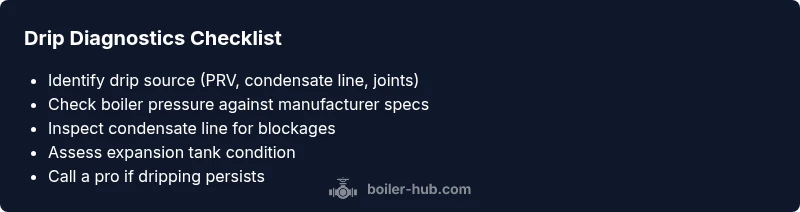
Approach the drip like a flow chart: locate the source, assess the path of leakage, and confirm whether the drip is continuous or intermittent. If the water originates from the condensate line, clearing a blockage often resolves the issue. If it’s from the PRV, the valve or the system pressure may need adjustment or replacement. Use the diagnostic flow below to decide the appropriate action and to prepare for a service call.
When to call a professional and what to expect
If you discover active spraying, a strong gas odor, or the drip continues after basic steps, contact a licensed boiler technician. Professionals will inspect the PRV, expansion tank, condensate line, and joints, perform a pressure test, and determine whether parts need replacement or adjustment. The pro will also check for carbon monoxide risks and ensure proper venting. Early professional input can prevent further damage and keep your heating system running safely.
Prevention and maintenance tips to reduce future drips
Schedule annual boiler maintenance, ensure the expansion tank is correctly charged, and inspect condensate lines for blockages. Regularly bleed air from radiators and check pipe insulation for wear. Address minor leaks promptly to prevent corrosion, and replace worn gaskets and seals before they fail. Maintaining clear condensate lines, proper venting, and accurate system pressure helps minimize future drips and extend boiler life.
Steps
Estimated time: 45-60 minutes
- 1
Power down and isolate the boiler
Turn off the boiler and switch off the power supply. If you can access the shutoff valve, close it to prevent more water from entering the system. Wait for the unit to cool before handling components to avoid scalds or burns.
Tip: Safety first: never work on a live boiler or gas line. - 2
Find the drip source
Trace where the water is coming from: PRV, condensate line, or a pipe joint. Note any corrosion, mineral buildup, or damp patches. A clear source helps you decide the next step or what to tell a technician.
Tip: Take photos from multiple angles for accurate diagnosis. - 3
Inspect condensate line and valve
Examine the condensate drain for cracks, kinks, or clogs. Clear any blockage and ensure the line slopes properly to drain. If the trap or valve looks damaged, plan for replacement with a professional.
Tip: Do not use makeshift plugs or tape as a permanent fix. - 4
Check the pressure relief valve and system pressure
Look at the PRV for signs of dripping around the valve seat. If the system pressure feels high, avoid attempting reductions beyond what the manual permits. Do not bypass the PRV; it’s a critical safety device.
Tip: Record the gauge reading when cold to compare with the graph in your manual. - 5
Test the expansion tank
Inspect the expansion tank for signs of leakage or waterlogged behavior. If you press the air valve and water escapes easily, the tank may be failing and require replacement.
Tip: A professional can confirm charge and perform a proper test. - 6
Decide on next steps
If the drip stops after checks, monitor for a few days and schedule maintenance. If it continues, contact a licensed heating professional for a full inspection and potential part replacement.
Tip: Keep a maintenance log and note any changes in water flow.
Diagnosis: Boiler is dripping water
Possible Causes
- highCondensate line/trap blockage or freezing
- highPressure relief valve leaking or overpressure
- mediumExpansion tank not charged or waterlogged
- lowLoose pipe connections or valve leaks
Fixes
- easyUnblock condensate line and trap; clear blockage and test flow
- mediumCheck boiler pressure; relieve pressure if high or replace faulty PRV
- mediumInspect expansion tank; recharge or replace if needed
- hardTighten connections or replace leaking valve
Questions & Answers
Why is water dripping from the boiler relief valve?
Dripping from the pressure relief valve typically indicates overpressure or a faulty valve. The system may be overcharged, or the PRV itself could be wearing out. Do not ignore continuous dripping; have a professional inspect and, if needed, replace the valve.
A drip from the relief valve usually means the boiler is under high pressure or the valve is failing; this should be checked by a pro if it keeps happening.
Is a dripping boiler dangerous?
Yes, persistent dripping can signal unsafe pressure or contamination risks. If you detect gas, overheating, or active spraying, evacuate and call emergency services. Otherwise, schedule professional evaluation promptly.
A dripping boiler can be dangerous if it involves gas or high pressure—treat as urgent and get a technician.
Can I fix a dripping boiler myself?
You can perform basic safety checks and simple line clears if you’re comfortable, but most internal components require a licensed technician. Do not attempt to repair or bypass safety devices.
While some small checks are okay, internal repairs should be done by a professional for safety.
What should I do about a frozen condensate line?
If you suspect a frozen condensate line, do not pour hot water on it. Instead, turn off the boiler and thaw the line gradually or contact a pro. Frozen lines often recur in cold weather.
Frozen condensate lines are common in cold weather; call a pro if you’re unsure how to thaw it safely.
When is expansion tank replacement needed?
If the expansion tank is waterlogged or cannot hold air pressure, it should be replaced. A technician can confirm by testing the tank’s air charge and water volume.
If the expansion tank is failing, a professional should replace it to restore proper system pressure.
Should I shut off the boiler if it’s dripping slowly?
If water is actively leaking and you cannot identify the source, power down the boiler and call a professional. Slow drips may still indicate a developing issue.
If a drip is ongoing, safety first—shut down and call a pro to prevent damage.
Watch Video
Key Points
- Identify the drip source before acting
- Shut off power and water if you suspect dangerous conditions
- Most drips are fixable with simple checks; persistent drips require a pro
- Regular boiler maintenance reduces future dripping