Water Dripping from Boiler Pipe: Quick Fixes and When to Call a Pro
Urgent, practical troubleshooting guide to diagnose and fix water dripping from a boiler pipe, with safe steps and when to call a pro.


Water dripping from a boiler pipe is most often condensate from the condensate drain or a releasing pressure-relief valve. A loose fitting or a blocked condensate line is a common culprit. As a quick first step, shut off the boiler to stop the flow, inspect visible joints, and clear blockages or snug any loose connections before proceeding with deeper checks.
Understanding the symptom: water dripping from boiler pipe\n\nIf you notice a drip or small stream from the boiler pipe, regard it as a safety and maintenance alert. In many homes the drip is condensate water formed as the boiler vents excess moisture, or it can be water from a valve releasing pressure. The important point is to identify whether the drip is a normal byproduct or a sign of a component failure. Quick, calm assessment helps prevent water damage and keeps your heating system reliable. In a boiler room this is common in shoulder seasons when the system cycles frequently, but any persistent drip warrants closer inspection. This guide from Boiler Hub outlines practical steps you can take today, plus clear signals that require a licensed professional. The goal is to stop the flow safely, protect you and your family, and keep your boiler operating efficiently.
Common causes you should check first\n\nBefore you panic, start with the easiest explanations. A loose drain or condensate line fitting is a frequent source of a dripping pipe. A blocked condensate trap or a partially blocked drain line can also cause water to back up and escape at joints. A relief valve that is failing or has become overworked will often discharge water to prevent overpressure, which can look like a leak. Corrosion or a loose connection in the piping near the boiler can also create small drips over time. Finally, a water supply line or valve that has shifted slightly due to vibration can leak at an elbow or union. In most homes, addressing these easy-to-check items resolves the issue without major repairs. If you identify a faulty pressure relief valve or significant corrosion, stop there and call a professional.
Safety first: what you should and shouldn't do\n\nSafety is non negotiable when dealing with boilers. If you notice strong hissing, a gas smell, or if the leak is accompanied by water pooling on electrical components, shut off the boiler and, if safe, the gas supply. Do not touch exposed electrical components or attempt to seal leaks with tape or sealant. Keep children and pets away from the area while you assess the situation. If you must work near the boiler, wear safety glasses and gloves, and turn off power at the inlet and the switch. After any immediate shutoff, ventilate the space and avoid using the boiler until a professional has inspected it.
Condensate drain and pressure relief valve: key culprits\n\nTwo components people commonly misinterpret are the condensate drain and the pressure relief valve. The condensate line carries acidic water away from the boiler; if the line is blocked or the trap is failing, water may drip from joints or the pipe. The pressure relief valve is designed to vent excess pressure; if it wears out or gets stuck, it can leak continuously. In either case, look for water staining around fittings, a damp condensate trap, or a valve handle that remains wet after the boiler cycles. These signs indicate where to focus your checks and what a technician will verify during a service call.
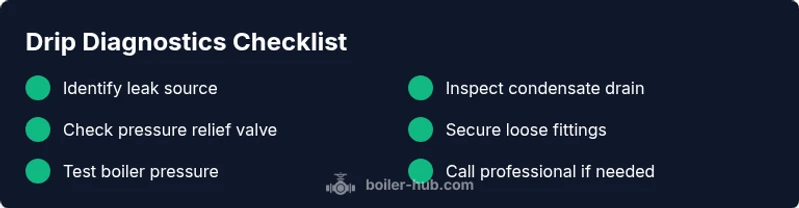
Quick diagnostic checklist you can perform\n\nUse this non-destructive checklist to narrow down the source. Inspect visible joints for looseness and ensure fittings are snug (do not overtighten). Check the condensate drain for blockages by flushing with water and inspecting the trap. Examine the pressure relief valve for signs of leakage around the seal and confirm the valve is not dislodged or corroded. If the drip persists after these checks, note the exact location and timing (when the drip occurs) to share with a professional. Remember, if you smell gas or suspect a dangerous condition, evacuate the area and call emergency services.
Step-by-step overview (non-technical)\n\nThese steps provide a safe, practical framework you can follow, but do not replace professional service.\n1. Power down the boiler and shut off the water supply if accessible.\n2. Visually trace the dripping path to identify whether the source is the condensate line, valve, or nearby piping.\n3. Clear any visible blockages in the condensate drain and reseat loose fittings.\n4. Inspect the pressure relief valve and its connections; replace or reseat if you can do so safely.\n5. Check boiler pressure and temperature readings; compare to the manufacturer guidance.\n6. Decide whether to call a licensed technician if the drip continues or you notice corrosion or gas concerns.\nTip: Do not attempt gas valve work unless you are a trained professional.
Prevention and maintenance to avoid future drips\n\nRegular maintenance reduces the chance of drips. Schedule annual boiler servicing to inspect the condensate line, relief valve, and piping for corrosion. Keep the area around the boiler clean and dry, and replace worn gaskets and seals as recommended by the manufacturer. Monitor vibration and securing wall brackets to minimize pipe movement. Consider installing a secondary containment tray if the boiler is in a high-traffic or wet area. By staying proactive, you’ll catch problems early and reduce the risk of leaks turning into costly damage.
When to call a professional and what to expect\n\nIf basic checks do not stop the drip, or you observe corrosion, rust, or gas odors, contact a licensed boiler technician promptly. A pro will perform pressure testing, inspect the relief valve, calibrate system pressure, and evaluate the condensate line for blockages or damage. They may replace gaskets, tighten or replace valves, or install a new condensate line if needed. They will also advise you on safe startup and any required maintenance follow-up.
Steps
Estimated time: 30-60 minutes
- 1
Power down and secure safety
Turn off the boiler and shut off the electrical supply. If you suspect gas, leave the area and call emergency services. This step protects you from scalding and electrical shock while you investigate the drip source.
Tip: Always verify the power is off at the switch and, if possible, at the boiler's circuit breaker. - 2
Locate the drip source
Trace the dripping path to determine whether the water comes from the condensate line, fittings, or the relief valve. Look for staining, dampness, or a wet valve handle near the boiler.
Tip: Use a flashlight and a clean container to catch drips for precise observation. - 3
Check condensate drain and trap
Inspect the condensate drain for blockages or kinks. If you find a clog, flush the line from the boiler to the drain and ensure the trap is seated correctly.
Tip: Do not use chemical cleaners in the condensate line; a simple flush is safer and effective. - 4
Inspect pressure relief valve
Examine the valve for corrosion or leakage around seals. If the valve is damp or leaking, it may need reseating or replacement by a professional.
Tip: Only attempt valve work if you are trained; misuse can cause dangerous pressure buildup. - 5
Check piping and joints
Inspect nearby joints and unions for looseness. Tighten carefully where appropriate, avoiding overtightening which can crack fittings.
Tip: Use the correct tools and avoid metal-to-metal contact that could damage threads. - 6
Decide on professional help
If the drip persists after basic checks or you see corrosion, replace components, or detect gas odor, contact a licensed boiler technician.
Tip: Document observations and share photos or notes with the technician to speed up diagnosis.
Diagnosis: Water dripping from boiler pipe
Possible Causes
- highCondensation from the condensate drain
- mediumPressure relief valve releasing due to overpressure
- mediumLoose or damaged condensate line or fittings
- lowCorrosion or a leak in nearby piping
- lowWater supply line leak near the boiler
Fixes
- easyTighten loose fittings and clear any simple blockages in the condensate line
- easyBleed or adjust system pressure if within your knowledge and safety scope
- mediumInspect and possibly replace the pressure relief valve if it shows signs of wear
- hardShut off power and call a licensed professional if a valve is leaking or corrosion is evident
Questions & Answers
What is the most common cause of dripping from a boiler pipe?
Most drips originate from the condensate drain or a faulty relief valve. A loose fitting or a blocked condensate line is a frequent contributor. Start by inspecting these areas and tightening or clearing as needed.
The most common cause is the condensate drain or a faulty relief valve. Check those areas first and tighten or clear any blockages.
Can dripping be dangerous?
Yes. It can indicate valve failure, corrosion, or gas-related hazards. If you smell gas, hear hissing, or see pooling water near electrical components, evacuate and call emergency services.
Yes, dripping can be dangerous if it signals a valve failure or gas issue. If you smell gas, evacuate and call emergency services.
Should I shut off the boiler if I notice a drip?
If the drip is rapid, the valve is leaking, or you smell gas, shut off the boiler and gas supply if safe, then contact a professional. Do not delay if there are safety concerns.
If you notice a fast drip or any gas smell, shut off the boiler and gas supply if safe, then call a professional.
Is condensate water from a boiler safe to touch?
Condensate water is usually mildly acidic and should not be swallowed. Wear gloves if handling and wash hands afterward. If you have sensitive skin, avoid direct contact.
Condensate is mildly acidic; wear gloves if handling and wash hands after.
What should I tell a technician when I call?
Describe when the drip occurs, its location, whether you smell gas, and any recent maintenance. Share photos if possible and note whether you can see the drain or valve clearly.
Tell the technician where the drip is, when it happens, and if you smell gas; share photos if you can.
How often should I have boiler maintenance?
Have a professional inspect and service your boiler at least once a year to keep condensate lines clear, valves functioning, and seals intact.
Annual professional maintenance helps keep condensate lines clear and valves working properly.
Watch Video
Key Points
- Shut off power and water flow to stop the drip.
- Condensate line and relief valve are common culprits.
- Inspect fittings and trap before escalating to professional help.
- Schedule annual boiler maintenance to prevent future drips.