Boiler Overflow Pipe Dripping: Troubleshooting and Fixes
Urgent guide to diagnose and fix a boiler overflow pipe dripping. Step-by-step safety tips, diagnostic flow, and prevention from Boiler Hub.


The most common cause of a boiler overflow pipe dripping is a blocked condensate trap or a failing pressure valve. For a quick check, shut off power to the boiler, place a container under the overflow pipe, and inspect the condensate line and trap for blockages, cracks, or loose fittings. If the drip continues, seek professional help.
Why the Overflow Pipe Drips
When a boiler overflows, the first clue is usually a visible drip or a slow stream from the overflow pipe. The phrase boiler overflow pipe dripping is a warning sign that the condensate handling system or pressure controls are not behaving as designed. According to Boiler Hub, condensate management issues account for the majority of residential overflow leaks. The overflow pipe is not there to vent hot steam; it drains condensate or excess water away from the boiler and into a safe drain. If you notice dripping, document the time, rate, and any accompanying boiler noises. This helps you and a technician identify the root cause quickly. Expect a mix of cold, wet plumbing odors and a damp area near the boiler cabinet; safety should be your primary concern, especially if you smell gas or hear strange pops, which require immediate action.
In most homes, the drip is not the boiler failing catastrophically but a malfunctioning condensate trap, a blocked condensate line, or a loose fitting. While some leaks are minor and repairable, persistent dripping can indicate rising pressure, compromised joints, or a failing relief mechanism. The key is to isolate the issue, control water exposure, and prevent damage to surrounding walls and flooring. Boiler Hub emphasizes a cautious, methodical approach to avoid unnecessary risk.
Common Causes of a Dripping Overflow Pipe
The problem usually sits in one of a few predictable places. A blocked condensate trap or condensate line prevents normal drainage, causing condensate to back up and leak through the overflow pipe. A cracked condensate pipe or loose connection at the trap or valve can also produce a dripping effect. High system pressure, a faulty pressure relief valve, or a malfunctioning expansion tank can push excess water toward the overflow, producing a leak even when the condensate line is clear. Another frequent culprit is a dirty or frozen condensate trap that can no longer drain properly, especially in cold weather. If you observe corrosion or mineral buildup around joints, it can indicate longer-term wear. Each cause demands a different approach, so a systematic inspection helps avoid unnecessary part swaps.
Safety First: Immediate Steps to Take
Safety cannot be overstated. Before you touch anything, switch off power to the boiler at the main breaker to prevent electric shock. If you smell gas, evacuate and call your gas provider or emergency services immediately. Do not attempt to repair live electrical components or bypass safety valves. Place a bucket or tray under the overflow to catch water and reduce damage to floors. Keep kids and pets away from the work area. Wear gloves and eye protection when handling damp valves or pipes. A damp boiler cabinet can also hide mold growth, so plan a quick cleanup path after securing the area. If the drip becomes continuous or the valve shows signs of leakage, contact Boiler Hub Team for professional assessment.
Diagnostic Flow: How to Systematically Identify the Problem
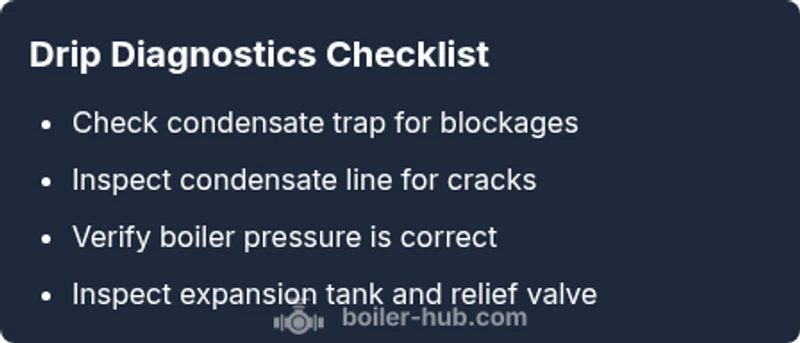
A logical diagnostic approach saves time and reduces risk. Start with the simplest checks: visually inspect for obvious cracks or loose fittings, ensure the condensate trap is seated properly, and verify that the condensate line is free of blockages. Next, check the boiler pressure gauge; if it shows pressure outside the recommended range, the system may force water toward the overflow. Finally, inspect the pressure relief valve and expansion tank for signs of wear or failure. If you encounter gas odors, hissing sounds, or persistent leaks after basic fixes, stop and call a professional immediately. This flow aligns with Boiler Hub guidance on safe, structured troubleshooting.
Prevention Tips: Maintenance to Avoid Future Drips
Regular maintenance reduces the odds of a drip becoming a flood. Schedule seasonal inspections to clean the condensate trap, inspect joints, and verify valve operation. Confirm that the expansion tank is properly charged and the boiler pressure falls within the manufacturer’s range. Keep the area around the boiler clean and dry to spot leaks early. Replace worn gaskets or cracked pipes promptly, and never override safety devices to “temporary fix” a leak. A proactive maintenance habit protects your home from water damage and reduces emergency repair costs.
Steps
Estimated time: 60-90 minutes
- 1
Power down and secure the area
Turn off the boiler power at the breaker and shut off the gas supply if applicable. Place a bucket under the overflow and set up protective gear. This prevents shocks and further water damage while you inspect.
Tip: Never work on a live boiler; ensure the area is dry and well-lit. - 2
Inspect outer pipe and trap
Look for cracks, rust, or loose fittings on the overflow pipe and condensate trap. If accessible, gently wipe away mineral buildup to improve flow and reseat connections if needed.
Tip: Document any visible damage with a photo for reference when buying parts. - 3
Check condensate line for blockages
Follow the condensate line to the main drain. If you see a clog, carefully remove it with a flexible brush or pipe cleaner. Avoid forcing material that could damage the line.
Tip: Do not use harsh chemicals; they can damage plastic drains and pipes. - 4
Verify boiler pressure and relief valve
Read the pressure gauge; ensure it sits within the manufacturer’s recommended range. If the relief valve leaks or the gauge reads high pressure, the system may require professional service.
Tip: If you’re unsure of the safe pressure range, consult the label on the boiler or the manual. - 5
Inspect expansion tank and balance
Check the expansion tank for proper air charge and signs of waterlogging. A low or failed tank can cause pressure instability and dripping from the overflow.
Tip: Do not attempt to recharge a tank without the right tools and instructions. - 6
Reassemble, refill, and test
Seal all joints, refill the system slowly, and bring pressure back to the recommended range. Observe the overflow area for several minutes to confirm the fix.
Tip: Stay with the boiler during the test and watch for sudden changes in pressure. - 7
Document results and plan next steps
Record the new pressure reading and any changes in dripping. If leaks return, or if you noticed new sounds or smells, stop and call a professional.
Tip: Keep your service records for future maintenance. - 8
Call a professional if needed
If you cannot locate or fix the issue, or if the leak recurs after initial fixes, contact Boiler Hub Team for a professional assessment.
Tip: Professional help is recommended for gas-fired boilers or if you encounter fuel smells.
Diagnosis: Boiler overflow pipe dripping
Possible Causes
- highBlocked condensate trap or line
- mediumCracked condensate pipe or loose fittings
- mediumHigh system pressure or faulty relief valve
Fixes
- easyUnblock condensate trap and clean condensate line; reseat trap
- mediumRepair or replace cracked pipe; tighten all joints and seals
- mediumCheck boiler pressure; service expansion tank and relieve excess pressure safely
Questions & Answers
What causes a boiler overflow pipe to drip?
Drips are most commonly caused by a blocked condensate trap, blocked condensate line, cracked pipe, or faulty pressure relief valve. A systematic check helps confirm the exact source without unnecessary part changes.
Most leaks come from a blocked trap, line, or a faulty valve. Check these first.
Is it safe to inspect the overflow pipe myself?
Basic inspection is possible if you follow safety steps: cut power, wear protective gear, and avoid forcing components. For gas boilers or uncertain conditions, call a professional.
You can inspect the basics, but stop if you smell gas or can't determine the issue.
Can a dripping overflow pipe indicate a dangerous problem?
Persistent dripping can signal high pressure or a failing relief valve, which could lead to hazardous conditions. Treat ongoing leaks as urgent and seek professional help if uncertain.
Yes, ongoing drips can be a warning sign. Get it checked promptly.
When should I call a professional?
If the leak persists after basic checks, if you notice gas odors, or if you’re unsure how to safely reduce system pressure, call a qualified boiler technician.
If in doubt, call a pro for safety and accuracy.
How can I prevent future overflow pipe leaks?
Regular maintenance, including condensate trap cleaning, valve inspection, and monitoring boiler pressure, reduces the chance of future drips. Schedule seasonal checks.
Keep up with maintenance to avoid future drips.
Watch Video
Key Points
- Identify the drip source before attempting fixes
- Shut off power and secure the area to stay safe
- Address condensate trap, line, or valve issues first
- Call a profesional if symptoms persist or you smell gas