Dripping Boiler Troubleshooting: Quick Home Fix Guide
Boiler leaking water? Boiler Hub's practical guide helps homeowners diagnose safely, apply quick fixes, and know when to call a pro. Identify the source and prevent leaks.


Boiler dripping water is typically due to a faulty pressure relief valve or a loose joint. Turn off power and water, inspect visible fittings, and contact a professional if you’re unsure. See our full step-by-step guide. If the drip is accompanied by steam or hissing, treat it as urgent and evacuate if needed. Do not ignore the risk.
What causes a boiler to leak water?
A dripping boiler can result from several common faults. According to Boiler Hub, the leading culprits are a faulty pressure relief valve (PRV) that vents under pressure, a failed expansion vessel, or loose joints around valves and pipework. Corrosion or damaged heat exchangers can also produce persistent drips. It’s important to distinguish drips caused by condensation from actual leaks—track the source to fittings, valves, or the drain line. In cramped spaces, gravity may make a small drip look worse than it is. By knowing the typical failure points, you can choose the safest and most effective next step. Remember: even a slow drip can escalate into significant water damage if left unchecked. Boiling water and steam can cause injuries, so treat any leak seriously and keep children and pets away. According to Boiler Hub, most leaks originate at the PRV or expansion vessel, with joint leaks being common in older systems.
Immediate safety actions you should take
Safety comes first when you notice a boiler dripping water. Turn off the power at the switch or circuit breaker to avoid electric shock, then shut off the cold water supply to the boiler if it’s safe to reach the valve. Do not attempt to seal or tighten active valves while the system is pressurized. Keep a towel or bucket ready to catch drips and protect floors. If you smell gas, hear hissing near the boiler, or notice dense steam, evacuate the area and call emergency services. After the area has cooled, test a CO detector and contact a qualified boiler technician to inspect the system. The Boiler Hub team emphasizes safety and professional assessment when there’s any gas risk or uncertainty.
Diagnostic flow overview
When a boiler drips, a structured approach helps you identify the source without wasted time. Start by confirming the drip’s origin—PRV outlet, drain valve, joints, or the boiler shell. Boiler Hub Analysis, 2026 indicates that most leaks originate at the PRV or expansion vessel, with joint leaks being common in older systems. Map the sources: is water coming from the pipework above the boiler, a valve, or a small opening at a seam? Then categorize the likely cause as a pressure problem, valve failure, or pipe damage, and choose a safe fix or plan professional service accordingly. A systematic flow reduces guesswork and speeds up repair decisions.
Prevention and maintenance to avoid leaks
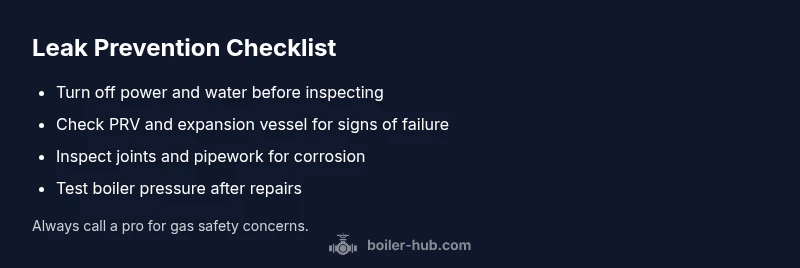
Regular maintenance reduces the risk of future drips. Schedule annual boiler servicing and have the expansion vessel pressure checked. Monitor boiler pressure on the gauge; keep it within the recommended range. Inspect visible joints and pipes for corrosion or loose fittings every 6–12 months. Replace worn seals and gaskets at the first sign of wear. Install or verify a working CO detector, keep the area ventilated, and ensure the vent terminal is free of obstructions. A proactive approach, aligned with Boiler Hub guidance, can dramatically lower leak frequency.
When to call a professional and what to expect
If the leak persists after basic checks, or if you’re unsure about any step, contact a qualified boiler engineer. A professional will isolate power, test pressure, inspect PRV, expansion vessel, and joints, perform a safe repair, and carry out a pressure test to verify the fix. Expect a written estimate and ensure the technician is Gas Safe registered (or the local equivalent). A safety-first approach prevents costly damage or hazardous conditions.
Quick maintenance checklist
Use this quick maintenance checklist to reduce drip risk over time: check boiler pressure monthly and compare to the manufacturer’s recommended range; inspect visible joints for dampness or corrosion and tighten only when safe; test PRV operation during service visits and replace worn components; inspect expansion vessel diaphragm and charge according to technician guidance; ensure drain and vent lines are clear; keep the area around the boiler dry and clean; schedule annual professional service to catch wear before leaks start.
Steps
Estimated time: 45-60 minutes
- 1
Ensure safety before inspection
Power off at the switch and, if safe, shut the cold-water supply. Clear the area and put on protective gloves. Do not touch hot surfaces or pressurized valves.
Tip: If you smell gas or hear hissing, evacuate and call emergency services. - 2
Locate the leak source
Carefully observe the area to determine if water comes from the PRV, drain valve, joints, or the boiler shell. Take photos for reference if you plan to call a pro.
Tip: A bright flashlight can help identify dampness along seams. - 3
Check for simple fixes
If a valve or joint is visibly loose, you may tighten it gently with appropriate tools after verifying depressurization. Do not force stubborn fittings.
Tip: Use thread sealant sparingly and only on compatible connections. - 4
Assess the expansion vessel
Look for signs of a failed diaphragm or loss of charge. A pro should verify proper air pressure on the vessel.
Tip: Do not attempt to replace an expansion vessel without training. - 5
Decide between DIY or pro
If the drip continues or involves the PRV or gas lines, call a licensed technician. Leaks on gas-fired boilers require expert handling.
Tip: Document the leak pattern to show the technician. - 6
Test after repairs
After any fix, slowly repressurize the system and monitor for further drips. Check the pressure gauge and ensure safe operation.
Tip: Keep a towel handy and avoid creating puddles near electrical components.
Diagnosis: Boiler is dripping water
Possible Causes
- highFaulty pressure relief valve (PRV) or high system pressure
- mediumExpansion vessel diaphragm failure
- mediumLoose or worn pipe joints around boiler
- lowCorrosion or damage to heat exchanger
Fixes
- easyShut off power and water and identify the drip source safely
- easyTighten accessible joints or replace worn seals where safe
- hardReplace a faulty PRV or expansion vessel with professional service
- hardProfessional repair and pressure test after any valve replacement
Questions & Answers
What is the most common cause of a dripping boiler?
The leading cause is a faulty pressure relief valve or loose joints. Inspect those parts safely, and plan professional help if needed.
The leading cause is a faulty pressure relief valve or loose joints. Inspect those parts safely.
Can I fix a leak myself?
Minor leaks from loose fittings can sometimes be tightened with the power off, but never work on pressurized valves. When in doubt, hire a pro.
Minor leaks can sometimes be fixed yourself if safe, but never work on pressurized valves.
How urgent is a dripping boiler?
A dripping boiler can indicate a pressure issue or unsafe conditions. Stop using the boiler, call a pro if uncertain.
A dripping boiler can be dangerous; stop using it and call a professional if unsure.
What maintenance prevents drips?
Regular checks on the expansion vessel, PRV, and system pressure reduce dripping risk. Schedule annual servicing.
Regular checks on key components reduce leaks.
When should I replace the boiler?
If leaks are persistent and the boiler is old, replacement is often more economical and safer than constant repairs.
If leaks persist and system is old, consider replacement.
Key Points
- Shut off power and water for safety at first signs of dripping
- Identify root cause before attempting fixes
- Call a pro for PRV, expansion vessel, or gas-related issues
- Maintain proper boiler pressure to reduce leaks
- Schedule annual service to prevent leaks