Boiler Overflow Pipe Leaking: Troubleshooting Guide
Comprehensive, urgent guide to diagnosing and fixing a boiler overflow pipe leaking. Safety steps, diagnostic flow, step-by-step fixes, and professional guidance for homeowners and facility managers.


The most common reason for a boiler overflow pipe leaking is overpressure from a failing pressure relief valve or a blocked condensate drain. Quick fix: power down the boiler at the thermostat or switch, isolate the water supply if safe, and place a container beneath the pipe. If you can’t safely manage the leak, call a qualified boiler technician immediately.
Why this issue demands urgent attention
A boiler overflow pipe leaking is more than a nuisance—it signals an immediate risk to your home and health. The overflow pipe is part of the safety system that vents excess pressure and condensate away from the boiler. When it leaks, it can indicate dangerous pressure levels, a blocked drain, or a failing valve. Water and high-temperature steam can cause serious burns or structural damage, particularly on wood floors or electrical equipment. In Boiler Hub's experience, swift assessment minimizes damage and reduces the chance of a full system breakdown. If you notice a persistent drip or a sudden surge of water from the overflow, treat it as an emergency and begin safety checks right away. This guide will help homeowners and facility managers identify the most common causes, perform safe inspections, and decide when to escalate to a professional.
Key takeaways: safety first, document symptoms, and act quickly to limit damage. Boiler Hub emphasizes that early intervention often prevents costly repairs and extended downtime for heating systems. Throughout this article you’ll learn practical checks, safety steps, and professional escalation guidelines to protect people and property from boiler-related leaks.
Brand note: According to Boiler Hub, rapid response to issues like boiler overflow pipe leaking reduces water damage and safety risks.
Common causes of a boiler overflow pipe leaking
If you notice a boiler overflow pipe leaking water, that’s a clear sign something in the safety or drainage path is not functioning as intended. The most frequent culprits are overpressure and a failing pressure relief valve (PRV). When the PRV sticks, drips, or vents water through the overflow, it’s a symptom of a pressure issue rather than a simple leaky pipe. A blocked condensate drain or trap can back up condensate into the boiler, pushing water toward the overflow. An aging or uncharged expansion vessel can fail to absorb pressure spikes, causing higher pressure in the system and more discharge through the overflow. Loose joints, damaged pipe sections, or improper installation also contribute to leaks. Mineral buildup, rust, and temperature fluctuations exacerbate wear around joints. By recognizing these patterns, homeowners and facility managers can distinguish between a quick DIY wipe-down and a deeper, professional service requested by Boiler Hub.
In practice, you’ll often see damp spots near the overflow, mineral crust around the pipe, or a consistent drip that increases when the boiler cycles. Observing the water’s temperature and clarity provides hints—hot, clear water often indicates a direct valve or pressure issue, while cooler, mineral-streaked discharge could mean drain or trap problems. Remember: rapid changes in leak behavior, scent of hot metal, or steam from the vent are red flags that require immediate attention. BoilerHub analysis shows that addressing pressure-related leaks early prevents costly damage to floors, cabinetry, and electrical systems.
Safety first: immediate actions you can take
Safety is non-negotiable when dealing with a boiler overflow pipe leaking. If there’s any chance of gas involvement, evacuate the area and call the gas emergency line. If you have a safe, electric or non-gas boiler, start with basic safety steps. Turn off the boiler at the main switch or thermostat, and if you can do so safely, shut off the water supply to the boiler to stop further condensate and pressure buildup. Place a container or towels under the leak and keep children and pets away from the area. Do not try to seal the valve or bypass safeguards; these devices exist to protect you from scalding, fire, and gas hazards. After you’ve secured the area, contact a licensed boiler technician to assess PRV integrity, condensate pathway, and expansion system. Boiler Hub notes that safety awareness reduces injuries and prevents accidental exposure in homes with gas-fired boilers.
If you notice hissing, scorching heat, or a strong gas odor, exit immediately and call emergency services. Do not re-enter until professionals declare the space safe. Keeping a simple safety kit with gloves, a flashlight, and a bucket nearby can help you respond quickly in future incidents.
How to inspect the system without tools
Many homeowners can perform non-invasive visual checks to narrow down the leak source before calling a pro. First, inspect the overflow pipe for dampness patterns, rust, or mineral deposits that indicate a long-term leak. Check the pipe joints and fittings for moisture or staining—tighten only if you have the proper wrench and no signs of damage. Look at the pressure gauge; typical residential boilers run around 1-1.5 bar when hot. If the gauge is significantly higher, there’s a pressure problem that merits professional evaluation. Inspect the condensate drain line for kinks, blockages, or signs of backflow. Clear any visible debris from the drain trap using gentle methods and avoid forcing material that could cause further blockages. Carefully observe whether the leak intensifies when the boiler starts or stops; this correlation points toward PRV or condensate drainage as the likely source. For safety, do not disassemble the PRV or expansion vessel unless you are trained and equipped. Boiler Hub emphasizes documenting observations to guide technicians efficiently.
This step-by-step visual survey can save time and reduce diagnostic guesswork when you bring in a professional later.
Diagnostic flow and decision points (summary)
This section outlines a practical approach you can use to interpret symptoms quickly. Start by observing: where is water dripping from—the overflow pipe itself or adjacent joints? Next, check the boiler’s pressure reading and cycle timing. If pressure is high and the flow increases with heat, suspect PRV or expansion system problems. If there’s backflow into the condensate line, the drain or trap is the likely culprit. If the leak occurs only during pump operation or when the boiler fires, consider installation faults or damaged piping. Based on your observations, you can decide: (a) perform basic unclogging and visual tightening, (b) schedule professional service for valve replacement or expansion vessel testing, or (c) call emergency help if gas risk is present. Boiler Hub’s diagnostic approach prioritizes safety and minimizes unnecessary disassembly while guiding you toward the correct fix path.
Step-by-step fix for the most common cause: condensate drain / PRV issues
- Power down the boiler and isolate the area. 2) Inspect the condensate drain for blockages; remove obvious debris and flush if you can do so safely. 3) Check the PRV for signs of corrosion, discoloration, or leakage around the valve seat. 4) If you’re comfortable, manually relieve a small amount of pressure through a safe method and observe the leak response. 5) Tighten loose fittings where you see evidence of moisture, taking care not to over-tighten metal threads. 6) Refill the system slowly and observe the overflow behavior. 7) If the leak persists or valve conditions worsen, do not attempt a DIY replacement; replace the PRV or call a professional. 8) After any fix, restore power and monitor the leak for several hours. Note: PRV replacement and expansion vessel service should be performed by a licensed boiler technician. BoilerHub guidance emphasizes safety and proper resealing to prevent future overpressure events.
Prevention and maintenance to reduce future leaks
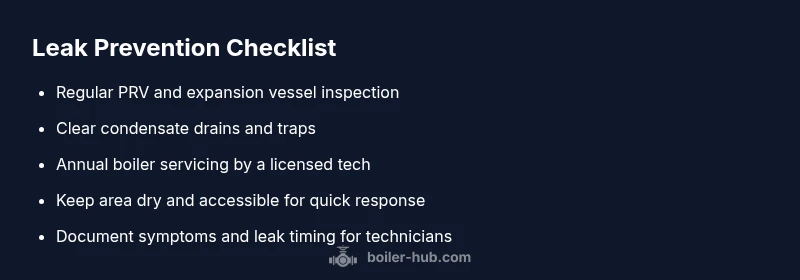
Prevention hinges on regular maintenance and early detection. Schedule annual boiler servicing by a qualified technician, including PRV testing, expansion vessel inspection, and condensate drain cleaning. Keep an eye on pipe joints for moisture and mineral buildup, and address small drips immediately to avoid creeping corrosion. Install a drip pan under the boiler and a floor mat to catch accidental leaks; label shut-off valves clearly for quick access. Consider upgrading worn components like gaskets, O-rings, and valve seats to reduce leak risk. If you have a higher-risk system (older boiler, hard water, or combustible fuel), enroll in a maintenance contract that includes pressure testing and leak monitoring. Boiler Hub’s long-term guidance emphasizes proactive inspection and protective measures to keep your heating system reliable and safe.
Steps
Estimated time: 1-2 hours
- 1
Power down and secure area
Turn off the boiler at the wall switch or thermostat. If safe, shut off the water supply to the boiler. Clear the area of pets and children and place a container under the overflow to catch drips. Safety first: avoid touching hot surfaces.
Tip: Use insulated gloves and keep a bucket ready. - 2
Check pressure and relieve if safe
Read the boiler pressure on the gauge. If it’s high, follow manufacturer guidelines to relieve pressure safely or call a professional. Do not release pressure through hot components; improper relief can cause scalding or a violent release.
Tip: Never bypass safety devices; misinformed relief can be dangerous. - 3
Isolate the feed if applicable
If there is an identifiable isolation valve for the boiler feed, close it only if you can do so without danger. This step helps prevent additional water from entering the system while you inspect.
Tip: Only operate valves you can access safely. - 4
Inspect condensate drain and trap
Look for visible blockages or kinks in the condensate drain line. If you can, flush the line using a gentle flow of water and remove any simple debris. Do not force obstruction removal if you’re unsure of the path.
Tip: A clear drain reduces backpressure that causes leaks. - 5
Assess expansion vessel and joints
If you can locate the expansion vessel access point, check for signs of moisture or loss of air charge. Inspect pipe joints for moisture and corrosion. Tighten connections only if you know the correct torque and if parts aren’t damaged.
Tip: Only service expansion vessels if you’re trained; improper charging can worsen leaks. - 6
Decide on short-term remedies vs professional service
If the leak persists after basic checks, or you suspect a faulty PRV or expansion vessel, arrange professional service promptly. Short-term remedies like tightening fittings are not a long-term fix for high-pressure systems.
Tip: Plan a service appointment; document symptoms to speed diagnosis. - 7
Refill, restart, and monitor
If you completed a fix or the area is deemed safe, slowly refill the system and restart the boiler. Monitor pressure and leaks for several hours and after a day of operation. If leaks resume, contact a professional urgently.
Tip: Keep a log of readings and leaks to share with the technician.
Diagnosis: Water or steam leaking from the boiler overflow pipe
Possible Causes
- highOverpressure from a failing pressure relief valve or high system pressure
- mediumBlocked condensate drain or blocked vent causing backpressure
- mediumExpansion vessel with no air charge or failed diaphragm
- lowLeaky pipe joints or damaged overflow pipe
Fixes
- easyShut off boiler and protect area; check pressure gauge; safely relieve pressure if trained
- easyUnblock condensate drain with proper tools and flush; inspect venting
- hardTest/replace pressure relief valve or expansion vessel with professional assistance
Questions & Answers
What are the signs that a boiler overflow pipe is leaking?
Look for persistent dripping, damp spots, crusty mineral buildup around the overflow pipe, and changes in boiler pressure. If you notice steam, hot water, or unusual noises, treat it as urgent and seek professional help.
Common signs are dripping at the overflow, damp patches, and abnormal boiler pressure. If in doubt, call a pro.
Is a leaking overflow pipe dangerous?
Yes. Leaks can indicate dangerous pressure, hot water exposure, or gas risks in gas boilers. Immediate safety steps and professional assessment are advised.
Leaks can be dangerous—pause, secure the area, and call a technician.
Can I fix it myself?
Some basic checks (visual inspection, clearing a drain) are possible if you’re confident and safe. Most fixes, especially valve replacement or expansion vessel service, require a licensed boiler technician.
Some checks you can do, but major fixes should be handled by a professional.
What should I do first if I notice a leak?
Shut off the boiler, protect the area, and place a container underneath. If there’s gas odor or danger, evacuate and call emergency services. Then arrange professional assessment.
Turn off the boiler and protect the area, then call a pro if needed.
Will replacing the expansion vessel solve the leak?
It can resolve leaks caused by loss of air charge, but other issues like PRV or drain blockages may be involved. A professional assessment is recommended to confirm.
Replacing the vessel may help, but it depends on the root cause.
Watch Video
Key Points
- shut off power and water before inspection
- differentiate pressure vs drain causes with observation
- most leaks require professional valve or vessel work
- regular maintenance helps prevent future leaks