Pressure Valve Boiler Leaking: Troubleshooting Guide
Learn how to diagnose and fix a pressure valve boiler leaking safely. This urgent guide covers common causes, step-by-step fixes, safety tips, and when to call a professional.


Most pressure valve boiler leaking is caused by a faulty expansion or relief valve, worn seals, or a stressed boiler connection. Start by turning off the boiler and isolating the water supply, then carefully inspect the external valves for drips. If you notice active dripping or high pressure, relieve pressure following your boiler’s manual and call a pro if the leak persists.
Understanding the risk of a leaking pressure valve
A boiler's pressure valve is a safety device designed to release excess pressure. When you see water dripping or hear a hiss near the valve, it signals a potential leak. The phrase pressure valve boiler leaking describes a symptom homeowners encounter when the safety components fail or are under overload. According to Boiler Hub, leaks around this valve are often caused by wear, poor seals, or incorrect system pressure. In many homes, the valve will dribble water first, then escalate if the system continues to overpressure. Before acting, ensure you know the difference between small drips and a persistent stream, because relief valves are designed to vent in controlled ways but should not be relied on as a long-term fix. This guide helps homeowners and facility managers assess risk quickly and decide on immediate actions and next steps.
Common causes of a leaking pressure valve
Leaks around the pressure valve can stem from several common issues. The most frequent is a faulty or worn relief valve or expansion valve that cannot seal properly. Overpressure in the boiler due to high feed water temperature, a malfunctioning pressure regulator, or a failing expansion tank can force the relief valve to vent water or steam. Loose or corroded fittings near the valve, or incorrect pipe sizing, can also produce damp spots. Finally, long-term mineral buildup and corrosion can degrade seals, creating slow leaks that worsen over time. Identifying the exact source requires careful inspection of the valve, piping, and reservoir components while the system is cold and depressurized.
Immediate safety steps you should take
If you notice a leak, prioritize safety and prevent water damage. First, switch off power to the boiler and shut the cold water feed to stop new water from entering the system. Do not attempt to operate or test the relief valve while the system is hot. Allow the unit to cool, then assess the area for dripping and the valve’s condition. If discharge continues or pressure seems high, avoid attempting to reseal the valve and call a qualified technician. Place towels and a bucket to manage drips, and keep children away from the area. Document the observed symptoms, including the color and consistency of the discharge, to aid a service visit.
How to inspect source and gather information before calling a pro
A rapid, structured inspection helps you communicate the issue clearly. Note the boiler model, current system pressure, and whether the leak is ongoing or intermittent. Check the relief valve outlet for black residue (which may indicate corrosion) and verify that nearby fittings are tight. If you can access the expansion tank, look for signs of moisture around its connections. Photograph loose connections, and record when the leak started and any recent changes in boiler use, such as heavy loads or new equipment. This information speeds up diagnosis while you arrange for professional service.
Maintenance tips to prevent future leaks
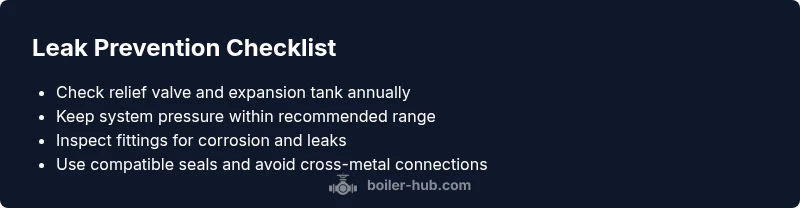
Regular maintenance reduces the chance of recurring leaks. Schedule annual professional checkups to test the pressure relief valve, test the expansion tank, and verify system pressure remains within safe range. Use a high-quality, compatible thread sealant for any resealing work, and replace worn gaskets or fittings promptly. Keep the boiler area clean and free of clutter that could mask a developing drip. Consider installing a secondary drain pan or drip tray in high-risk spots and ensure the area has proper ventilation. These preventative steps help you catch issues early and minimize costly damage.
When to call a professional and what to expect
If a leak persists after basic tightening, the valve or expansion components may be defective and require replacement. A licensed technician will depressurize the system safely, replace the faulty valve, and pressure-test the boiler for leaks. They may inspect the expansion tank, piping, and mounting brackets to rule out secondary causes. Expect a written assessment with recommended parts and a quote. If the boiler is older or has multiple issues, you may need a more comprehensive service plan or component replacement.
Steps
Estimated time: 60-120 minutes
- 1
Shut down the boiler safely
Power off the boiler and shut the cold water feed to stop new water from entering the system. Allow the unit to cool before touching any metal components. This minimizes scald risk and misreads on pressure gauges.
Tip: Never work on a live boiler; wait for it to cool. - 2
Check the pressure gauge
Read the boiler pressure while cold to establish a baseline. Note whether the gauge shows unusually high or fluctuating pressure, which often triggers relief-valve venting.
Tip: Document the reading for service records. - 3
Locate the leak source
Follow the drip line to its source, inspecting the relief valve outlet, nearby pipe joints, and the expansion-tank connections for signs of moisture or corrosion.
Tip: Use a flashlight and clean area to spot tiny leaks. - 4
Tighten or reseal fittings
If you find a loose fitting, tighten it gently with the correct wrench. If the seal is damaged, replace the gasket or seal with components rated for your boiler model.
Tip: Avoid over-tightening; metal threads can strip. - 5
Relieve pressure safely (if directed)
If the system is dangerously pressurized and your manual allows it, use the boiler’s bleed mechanism or radiator valves to ease pressure. Do not open the discharge valve manually on a hot unit.
Tip: Wear protective gear and keep others clear. - 6
Replace faulty components
If the leak remains after tightening and pressure adjustments, the relief valve or expansion tank likely needs replacement by a qualified technician.
Tip: Ensure replacement parts match the boiler model. - 7
Test and plan follow-up
Rebuild pressure, power on the unit, and monitor for continued leaks. Schedule a follow-up check if leaks recur or the system pressure becomes unstable.
Tip: Keep a service log for future reference.
Diagnosis: Visible leakage around the pressure relief valve or nearby piping when the boiler is in operation or depressurized.
Possible Causes
- highFaulty relief valve or expansion valve
- highOverpressure in the boiler
- mediumDamaged piping or loose fittings
- lowFaulty expansion tank
Fixes
- easyShut off boiler and isolate power; relieve pressure if safe
- easyTighten loose fittings or replace seals where appropriate
- mediumReplace the relief valve or expansion valve with a qualified technician
- mediumInspect or replace the expansion tank; check system pressure with a gauge
Questions & Answers
Why is my boiler leaking from the pressure valve?
Leakage from the pressure valve is usually due to a worn or faulty relief valve or expansion valve, system overpressure, or damaged fittings. A clear diagnosis requires checking valve condition, pressure, and nearby piping when the system is cold. If the leak persists after basic checks, professional service is advised.
Leaks from the valve are typically caused by a faulty safety valve or overpressure; a professional should inspect if the leak continues.
Can I fix a leaking pressure relief valve myself?
Some loose fittings can be tightened safely, but the relief valve itself should generally be replaced by a qualified technician. Do not attempt major disassembly or venting on a live system. If unsure, contact a professional to avoid injury or boiler damage.
You should ideally contact a professional; only small, safe adjustments are advisable if you follow the manual.
What does it mean if boiler pressure is high?
High pressure indicates the system is holding more water than normal or a malfunctioning expansion mechanism. This can trigger the relief valve to vent water to relieve pressure. Persistent high pressure warrants inspection by a technician to prevent damage.
High pressure usually means something’s off with expansion or regulation, so a service check is wise.
Is a leaking valve an emergency?
A significant leak or continuous discharge should be treated as urgent. Shut off power and water if safe, ventilate the area, and call a professional promptly to avoid boiler failure or water damage.
Yes—treat it as urgent and get a pro on the case quickly.
When should I replace the expansion tank?
If the expansion tank shows signs of corrosion, loss of air charge, or persistent leaks around connections, replacement is often needed. A professional can verify proper air charge and system compatibility during service.
If you see corrosion or damp spots, a pro should assess replacement.
Watch Video
Key Points
- Shut off power and water before inspecting.
- Most leaks come from the relief valve, expansion valve, or fittings.
- Do not ignore consistent leaks or high pressure.
- Call a professional for persistent or complex issues.
- Regular maintenance reduces future leaks.