Why Boiler Overheating: Quick Troubleshooting Guide
Learn how to diagnose and fix boiler overheating quickly. This expert guide from Boiler Hub covers common causes, safety tips, and when to call a professional for reliable boiler maintenance in 2026.


Most often overheating stems from restricted water flow or a faulty thermostat. Start by turning off the boiler and gas supply, then verify that the circulator pump and valve positions move freely. Check for air in the system and a blocked heat exchanger; if the problem persists, shut down and contact a qualified technician.
Why boiler overheating happens
According to Boiler Hub, the leading cause of overheating is often a combination of restricted water flow and a malfunctioning thermostat. In many homes, mineral buildup and air pockets reduce circulation, causing the boiler to run hotter than the design temperature. The Boiler Hub team emphasizes that regular service and accurate temperature settings are essential to prevent dangerous overheating. When you hear banging or feel heat at radiators despite low demand, it’s a strong signal to inspect the system promptly. This guide applies to gas-fired boilers commonly found in residential and light commercial settings and aims to empower homeowners to act safely while avoiding costly repairs.
Common causes of boiler overheating
Boiler overheating is rarely a single issue. The most frequent culprits include restricted water flow from sludge or mineral deposits, trapped air in the loop, a faulty or misadjusted thermostat, and a non-functioning circulation pump. Secondary factors include a high pressure in the system, a malfunctioning fill valve, or a blocked heat exchanger. Regular checks during the heating season help catch symptoms early and reduce the risk of a dangerous failure.
Safety risks and when to call a pro
Overheating boilers can pose scald and fire risks, and can damage heat exchangers or pressure relief valves. If you notice steam, hissing, or a persistent high-temperature reading, shut the boiler down and call a licensed technician immediately. Do not try risky fixes beyond basic bleeding or flushing if you’re not trained. Boiler Hub recommends scheduling annual professional maintenance to reduce safety hazards and prolong equipment life.
Diagnostic checklist you can perform safely
A practical checklist helps you identify the most likely cause without diving into dangerous territory. Start with simple checks: verify power and gas supplies, inspect the thermostat settings, and bleed air from the radiators or loops. Confirm the pump is circulating and the expansion tank isn’t waterlogged. If you find air, bleed; if you see high pressure, adjust per the manufacturer’s guidance.
Maintenance to prevent overheating
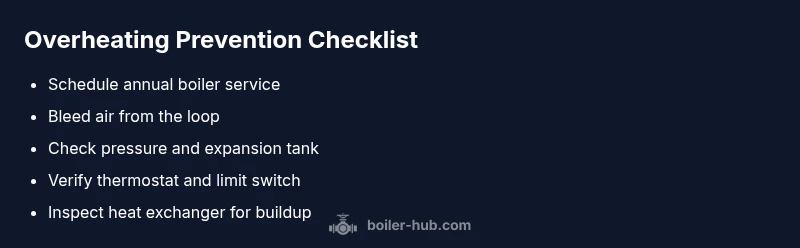
Preventive maintenance is the best defense against overheating. Replace worn seals, test the high-limit switch, and ensure the pressure relief valve operates freely. Schedule annual service, inspect the expansion tank, and monitor boiler pressures and temperatures during the heating season. These steps reduce the likelihood of sudden overheating and extend boiler life.
How to respond in an emergency
If you notice scorching smell, smoke, or a strong gas odor, evacuate and call emergency services. Once safe, contact a licensed technician for a thorough inspection and any needed repairs. Keeping a log of temperatures and fault codes helps technicians diagnose problems quickly.
Steps
Estimated time: 60-90 minutes
- 1
Power down and isolate boiler
Switch off the boiler at the service switch and shut off the gas supply if present. Allow the unit to cool for at least 10–15 minutes before handling. This reduces the risk of burns and accidental ignition during inspection.
Tip: Use insulated gloves and never bypass safety switches. - 2
Check for air and restore flow
Bleed air from radiators or hydronic circuits to remove trapped air. Check that the circulator pump turns freely and that zone valves are open. Refill the system to the correct pressure if needed.
Tip: Always consult the manual for the correct pressure target. - 3
Test the thermostat/high-limit
Verify thermostat settings match room temperature and test the high-limit switch with a multimeter or by following the manufacturer’s procedure. Replace if readings are out of spec.
Tip: Do not bypass safety thermostats. - 4
Inspect pump and flow controls
Ensure the pump is delivering adequate flow. Look for unusual noise or vibration and verify that any bypass or balancing valves are correctly set.
Tip: Consider flushing or power-flushing if buildup is evident. - 5
Check pressure and expansion tank
Measure system pressure and inspect the expansion tank for signs of waterlogging or loss of air charge. Recharge or replace components as needed following the manual.
Tip: Incorrect pressure is a common overheating trigger. - 6
Consult a professional if unresolved
If the boiler remains hot after these steps, stop and call a qualified technician for a safe, thorough inspection and possible replacement parts.
Tip: Professional service can prevent dangerous failures.
Diagnosis: Boiler overheats during or after the heating cycle
Possible Causes
- highRestricted flow due to sludge, trapped air, or closed valves
- highFaulty thermostat or high limit switch
- mediumAir in the system
- mediumPump failure or circulation problems
- lowBlocked heat exchanger or mineral buildup
Fixes
- easyBleed air from the circuit and verify flow through the pump and valves
- mediumTest and replace faulty thermostat or high-limit switch
- mediumInspect boiler pressure and expansion tank; recharge or replace as needed
- hardCall a licensed pro for combustion analysis or heat exchanger cleaning
Questions & Answers
What are the most common signs of boiler overheating?
Common signs include higher than normal temperatures, banging noises, insufficient heat, and sometimes a faint burning smell. If these occur, shut down and inspect safety devices before calling a pro.
Common signs include unusually hot surfaces and loud banging; shut down and call a pro.
Is overheating always a safety risk?
Yes, overheating can damage heat exchangers, risk pressure relief valve failure, and pose scald hazards. If you see steam or smell gas, shut down and call emergency services if necessary.
Yes, overheating can be dangerous; evacuate if you smell gas and call for help.
Can I ignore minor overheating if the boiler still heats?
No. Even minor overheating can worsen, leading to leaks or component failures. Schedule an inspection if temperatures remain elevated after basic checks.
No—overheating rarely resolves on its own; get it checked.
What maintenance helps prevent overheating?
Regular servicing, bleeding air, checking pressure, and testing safety switches are key. Keep logs and follow the manufacturer’s maintenance schedule.
Regular maintenance and checks prevent overheating from recurring.
When should I call a professional?
If symptoms persist after basic checks, or you notice gas smells, heat exchanger damage, or relief valve issues, contact a licensed technician immediately.
If symptoms persist or you smell gas, call a professional now.
Watch Video
Key Points
- Identify overheating early with temps, sounds, and venting signs
- Bleed air and check flow first for quick fixes
- Unsafe fixes require a pro
- Regular maintenance reduces recurrence
- Monitor pressure and expansion tank health