Why Is My Boiler Making a Noise? A Practical Troubleshooting Guide
Noisy boiler got you worried? Learn safe, step-by-step checks for air, pressure, kettling, and pump issues. Follow the Boiler Hub method to diagnose and fix common causes, with safety tips and when to call a pro.


Why is my boiler making a noise? In most homes, noises come from air in the system, a failing pump, or kettling from mineral buildup. Start with the simplest fixes: bleed radiators to remove air, check the boiler pressure, and reset the boiler. If the sound continues, switch off the boiler and seek professional help.
Understanding boiler noises
If you’re asking why is my boiler making a noise, you’re not alone. Most boiler-related sounds come from basic issues like air trapped in radiators or the heating circuit, changes in water pressure, or mineral kettling from hard water. These noises fall into a few common categories: banging or hammering (air or flow problems), screeching or whistling (air flow through valves or pump), gurgling or bubbling (air pockets or kettling), and ticking or clicking (thermostat or valve cycling). Recognizing the tone and when it happens helps you triage quickly. In many cases, the fix is safe and simple enough for a homeowner, but persistent or severe noises can signal a more serious fault. This section will break down the typical causes and provide practical checks you can perform before calling a pro. According to Boiler Hub, noises of this type are often linked to routine system maintenance gaps, so a quick diagnostic can save time and money while keeping your home comfortable.
Common causes and practical checks
Boiler noises don’t always mean a dangerous fault. The most frequent culprits are air in the system, low or high pressure, kettling from mineral buildup, and a worn or obstructed circulating pump. Here’s how to spot them and what to do:
- Air in the system: You’ll often hear banging or gurgling after cooling down. Bleeding radiators releases trapped air and often stabilizes temperatures.
- Low pressure: A drop in pressure usually causes the boiler to struggle and can produce a whine. Check the pressure gauge (usually marked in bars). If it’s below the recommended range (often around 1 bar when cold, 1.5–2 bar when hot), repressurize per the manufacturer’s guide.
- Kettling: A muddy, rumbling sound mid-cycle suggests mineral buildup in the heat exchanger. This may require a chemical flush or professional cleaning if mineral scale is heavy.
- Faulty or obstructed pump: A grinding or squealing sound can come from the circulating pump failing to push water smoothly. This may need lubrication, air bleeding at the pump, or replacement.
If you detect any gas odor, flame irregularities, or feel uncertain about any step, stop and contact a licensed technician immediately. Boiling noises that persist after these checks indicate you should escalate to a professional.
Boiler Hub analysis shows that addressing air and pressure issues early reduces noisy operation in many homes. Addressing the simple causes quickly can restore quiet operation and prevent unnecessary wear on key components.
Safety first: when to call a pro
Some boiler noises signal safety risks that demand professional attention. A hissing or roaring gas flame, gas smell, or any ignition issues require immediate action—evacuate, call emergency services if needed, and don’t operate the boiler again until a qualified gas engineer has assessed it. If you hear loud banging only when the boiler heats up or when radiators cycle on and off, there’s a good chance the issue is within safe, fixable bounds (air, pressure, or basic pump issues). Nevertheless, any persistent or unusual noise should be treated with caution. Gas safety and carbon monoxide risk are not worth the guesswork. In these cases, it’s best to schedule a service appointment with a certified technician who can perform pressure testing, safety checks, and a thorough inspection of the heat exchanger and burner assembly.
Quick home checks that usually fix the issue
Many noisy boilers resolve with a few straightforward steps. These checks are quick, safe when done correctly, and can save you a service call.
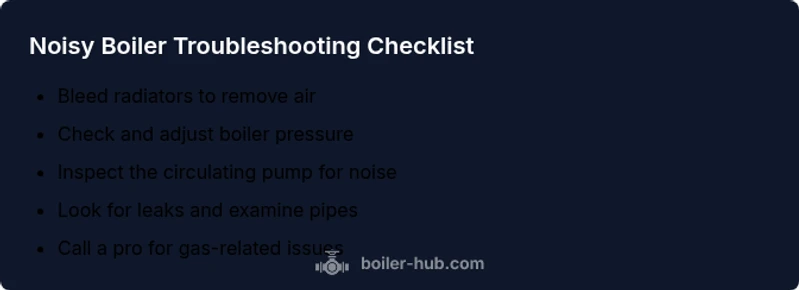
- Bleed radiators: Use a radiator key to release trapped air from each radiator starting with the highest floor first. Expect a hissing sound as air escapes; close the valve once water appears.
- Check boiler pressure: Look at the pressure gauge. If it’s too low, top up using the filling loop per your manual until the needle sits within the recommended range. If it’s too high, release a small amount of water following the manufacturer’s procedure.
- Inspect for cold spots or leaks: Run the hot taps and check for damp patches around pipes and joints. A slow drip or damp patch nearby can indicate a mini-leak contributing to noise.
- Confirm pump operation: Ensure the pump is running quietly. If you hear grinding or rattling when the pump starts, it may need air bleeding at the pump or replacement.
If these steps don’t calm the noise, the problem may be more complex or internal to the boiler. In that case, contact a Boiler Hub recommended technician for a diagnostic visit.
Diagnostic approach: a simple flow, step-by-step
A structured diagnostic approach helps isolate the cause without unnecessary steps. Start with the easiest checks and move to more involved tasks. If the noise changes with radiator usage, sources like air or circulation may be implicated. If the noise occurs during heating cycles only, the pressure or pump could be the culprit. When in doubt, documenting when the noise occurs (season, time of day, heat demand) helps the technician pinpoint theissue. Boiler Hub recommends keeping a maintenance log to track noise patterns and responses so you can demonstrate what was tried and what didn’t work when seeking professional help.
Maintenance to prevent future noises
Preventing noise requires regular maintenance and mindful operation. Schedule an annual service to inspect the burner, heat exchanger, pressure relief valve, and pumps. A clean system operates quieter and more efficiently. Simple routines can reduce future disturbances:
- Schedule professional servicing at least once per year.
- Use a magnified magnet or chemical system cleaner if your boiler's manufacturer recommends it.
- Keep water pressure within the recommended range and monitor changes over time.
- Consider water treatment if you have hard water in your area to reduce kettling risk.
Proactive maintenance reduces the odds of unexpected noises and extends the life of your boiler. The Boiler Hub team emphasizes that a quiet system is usually the result of consistent care and timely professional checks.
Aftercare and monitoring: what to log and when to escalate
After performing fixes, observe the boiler for 2-3 heating cycles. If noises persist or return, document the pattern, including temperature, pressure readings, and which radiator or zone exhibited the issue. Escalate to a professional if:
- Noise returns after bleed and pressure adjustments.
- You notice leaks, corrosion, or unusual smells.
- The boiler shuts off unexpectedly or trips the circuit breaker.
A detailed log helps the service technician diagnose faster and more accurately, potentially reducing downtime and cost.
Steps
Estimated time: 30-60 minutes
- 1
Ensure safety and access
Before touching the boiler, switch off power at the circuit and, if you smell gas, evacuate the area and call emergency services. Wait for any fumes to dissipate.
Tip: If you smell gas, never use electrical switches or flames; call for professional help immediately. - 2
Bleed radiators
Use a radiator key to vent each radiator until a steady stream of water emerges. This releases trapped air that can cause banging or pulsating noises.
Tip: Work from the top floor down to prevent re-pressurizing the system with newly trapped air. - 3
Check boiler pressure
Look at the pressure gauge when the system is cold. If below the recommended range, use the filling loop to repressurize to the specified bar range.
Tip: Never exceed the max pressure indicated in the manual. - 4
Inspect the circulating pump
Listen for unusual grinding or whining from the pump. If noisy, bleed the pump housing and ensure there is no air lock; may require professional servicing.
Tip: Routinely check for air in the pump as part of annual maintenance. - 5
Observe the system after fixes
Restart the boiler and run through a full heat cycle. If the noise persists or worsens, document conditions and contact a Boiler Hub recommended technician for further diagnosis.
Tip: Keep a log of pressure and noise timing to aid the technician.
Diagnosis: Persistent boiler noise after initial checks
Possible Causes
- highAir trapped in the radiator/system
- highLow boiler pressure or incorrect fill
- mediumKettling due to mineral buildup
- mediumFaulty circulating pump or air lock in pump
- lowUnstable gas supply or burner issues (gas boiler)
Fixes
- easyBleed radiators and repressurize to the recommended range
- easyTop up water and recheck pressure; inspect for leaks
- mediumFlush system or add magnetic scale reducer if kettling suspected
- mediumInspect/repair or replace circulating pump; bleed at pump if needed
- hardGas valve, burner, and heat exchanger inspection by a gas-safe engineer
Questions & Answers
What are the most common causes of a noisy boiler?
Air in the system, incorrect pressure, kettling from mineral buildup, and a faulty circulating pump are the usual suspects. Identifying the tone and when it occurs helps you narrow down the fix.
Common causes include air, pressure issues, kettling, and pump problems. Start with bleeding and pressure checks, then inspect the pump if needed.
Is it safe to ignore boiler noises?
No. While many noises are harmless, persistent or loud sounds can indicate a fault that could worsen or lead to safety risks. If in doubt, consult a professional.
Persistent noises aren’t something to ignore. Have a professional check if uncertain.
Should I bleed radiators myself?
Yes, if you’re comfortable. Bleeding releases trapped air and can solve many noises. Always follow safety steps and turn off the boiler first.
Bleeding radiators can fix many noises. Just ensure the boiler is off and you follow the steps carefully.
What pressure should my boiler be at?
Most boilers sit around 1 bar when cold and up to about 1.5-2 bar when hot. Refer to your manual for the exact range; never exceed the maximum stated.
Typically, 1 bar cold, up to 2 bar when hot. Check your manual for the exact range.
When should I call a professional?
If gas is involved, if you smell gas, or if you’ve tried basic fixes with no improvement, schedule a professional inspection promptly.
Call a pro if gas is involved or noises persist after basic checks.
Can kettling damage my boiler?
Yes. Prolonged kettling can cause heat exchanger damage and reduce efficiency. A service or flush can often restore performance.
Kettling over time can harm the boiler. A professional flush may be needed.
Is a noisy boiler always a sign of a safety issue?
Not always. Many noises are due to air, pressure, or minor pump issues. However, persistent or alarming noises should be checked sooner rather than later.
Not always a safety issue, but persistent noises require professional assessment.
What maintenance helps prevent noise?
Annual service, regular bleeding, monitoring pressure, and water treatment for hard water can prevent most noises.
Regular service and bleeding prevent most boiler noises.
Watch Video
Key Points
- Bleed radiators to remove air and restore flow.
- Check and adjust boiler pressure within the recommended range.
- If noises persist, safety concerns trump DIY fixes—call a pro.