Why Is My Boiler Making a Loud Vibrating Noise? A Troubleshooting Guide
A loud vibrating boiler can signal air, pressure, or component wear. This Boiler Hub guide walks homeowners through safe checks, a diagnostic flow, and step-by-step fixes to quiet the boiler and restore reliable heat.


A loud vibrating boiler noise is usually caused by trapped air, pressure imbalances, or worn pump parts. Begin with safe checks like bleeding radiators, verifying boiler pressure, and listening for water hammer. If the sound persists after air removal and pressure adjustments, shut down the boiler and contact a professional. Follow our structured diagnostic flow for best results.
Why a loud vibrating boiler noise happens
If you’re asking why is my boiler making a loud vibrating noise, you’re not alone. According to Boiler Hub, loud vibrations are most often caused by trapped air, pressure imbalances, or worn components that develop with age. Homeowners typically notice the issue when the boiler begins its cycle or when zones demand a heat surge. In many cases the cause is not a dangerous failure but a solvable nuisance, especially if addressed early. This section explains the common culprits and how to approach them with caution, so you can restore quiet operation without compromising safety. The Boiler Hub team emphasizes safety first: never bypass pressure relief devices or make radical changes to gas valves without proper training. Properly diagnosing the source saves time and money while reducing the risk of accidental damage.
Quick checks homeowners can safely perform
Before you call for service, perform these safe checks to narrow down the cause and potentially quiet the noise.
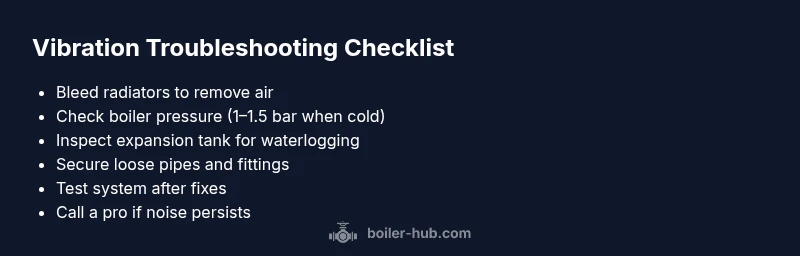
- Bleed radiators to remove trapped air; start with the radiator farthest from the boiler and work toward the nearest.
- Check the boiler pressure gauge when the system is cold; typical residential boilers operate around 1–1.5 bar when cold and up to 2 bar when hot. If pressure is low, add water slowly using the filling loop and recheck.
- Listen for water hammer (loud banging with quick pipe movement) versus a continuous vibrating hum. Water hammer often comes from pipe movement or air in the lines, while a sustained vibration may point to pump or expansion-tank issues.
- Inspect for obvious leaks, corrosion, or loose mounting bolts on the boiler, pump, and nearby pipes. A loose part can amplify vibration significantly.
- Secure any loose piping or brackets. Vibrations can travel through mounting points and manifest as a louder overall sound in the boiler cabinet.
- If your system uses an expansion tank, verify it isn’t waterlogged; a failed tank can cause abnormal pressure swings and vibration.
These checks are typically safe for a handy homeowner, but if you encounter gas odors, live electrical components, or you’re unsure, stop and call a professional. Boiler Hub’s guidance is to methodically verify each potential source rather than guess, which reduces the risk of accidental damage and keeps you safer.
Water hammer vs vibration: how to tell the difference
Water hammer is a common related issue that mimics vibration. It happens when steam or water moves rapidly through the pipes and suddenly stops, causing a sharp banging sound. Vibrations, by contrast, tend to be steadier and are often tied to the boiler’s burner cycle, the circulating pump, or pressure changes. Identifying which symptom you have helps you target fixes more accurately. If you’re unsure, document when the noise occurs (on startup, during running, when zone valves open) and share that with a technician for a faster diagnosis.
Diagnostic flow at a glance
To avoid trial-and-error guessing, follow this concise flow: (1) Is there a gas odor or ignition issue? If yes, evacuate and call emergency services. (2) Check pressure and bleed air if needed. (3) Listen for water hammer; if present, focus on pipe supports and air removal. (4) Inspect expansion tank and pump for signs of wear. (5) If vibration persists after these steps, schedule professional service for a deeper check (impeller wear, motor bearings, or control valve issues).
Step-by-step fix: air in the system
Air is the most frequent cause of vibration and can often be resolved without a technician. Follow these steps:
- Turn off the boiler and allow it to cool. Safety first: never bleed when components are hot. 2) Locate each radiator bleed valve with a radiator key. 3) Begin at the radiator farthest from the boiler and work inward. 4) Slowly open the valve until you hear air hiss and water appears, then close promptly. 5) Recheck the system pressure; it should settle near the 1–1.5 bar range when cool. If you see persistent air pockets after bleeding, repeat the process once more. 6) Start the system and listen for quieter operation. Pro tip: keep a cloth handy to capture any water that escapes and avoid scalding.
This method addresses the majority of vibrating-noise complaints caused by trapped air and is a good first-line fix supported by Boiler Hub.
Step-by-step fix: pressure and expansion tank adjustments
When air removal doesn’t resolve the vibration, pressure issues often lie behind the noise. Here’s how to address them safely:
- Check the boiler’s pressure gauge when the system is cold. If below 1 bar, you’ll need to top up using the filling loop, following your boiler’s manual. 2) Recheck after a short run; if pressure rises above 2 bar, stop and bleed air or reduce the fill rate. 3) Inspect the expansion vessel (tank); a waterlogged tank can cause pressure instability and vibrate. 4) If you suspect a faulty expansion tank, consult a professional to assess recharging or replacement options. 5) Verify isolation valves and check that the pump pressure is appropriate for your system; improper pump pressure can create continuous vibration. 6) After any adjustment, monitor for quiet operation and safe pressure levels.
Boiler Hub notes that most homeowners see the best results from a careful, staged approach to pressure management rather than rushing through fixes.
Safety, best practices, and when to call a pro
Always prioritize safety when dealing with boilers. If you smell gas, hear hissing, or notice a flame that won’t light, cease work and evacuate. Do not attempt to adjust gas valves or service internal burner components unless you’re trained and authorized. For vibrations that persist after air removal and pressure adjustments, contact a licensed heating technician. Regular service helps detect worn bearings, seized impellers, or failing pressure relief valves before they cause bigger problems. If you’re unsure about any step, pause and seek professional help rather than risking injury or appliance damage.
Prevention and maintenance routine
Preventive maintenance reduces the chance of future vibrating noises. Create a simple annual schedule: (a) Bleed radiators at least once per heating season; (b) Check boiler pressure and refill if needed; (c) Inspect pump and expansion tank for signs of wear; (d) Schedule a professional service every 12–24 months depending on usage and manufacturer recommendations; (e) Keep the boiler area clear of dust and debris, which can interfere with airflow and cooling. Consistent maintenance aligns with Boiler Hub guidance to minimize disruption and maximize efficiency.
Steps
Estimated time: 60-90 minutes
- 1
Power down and cool the system
Shut off the boiler and wait for it to reach a safe temperature. This prevents scalding and protects components during air bleeding or pressure checks.
Tip: Keep a log of temperature and any observed changes to compare after fixes. - 2
Bleed radiators
Starting with the farthest radiator, open the bleed valve slowly until air escapes and water appears. Close when a steady stream of water flows.
Tip: Use a cloth to catch drips and avoid burns from hot metal. - 3
Check boiler pressure
If pressure is below 1 bar, add water via the filling loop until it reaches about 1–1.5 bar when cold. Do not exceed 2 bar when hot.
Tip: Re-check after cooling down to ensure stability. - 4
Inspect expansion tank and pump
Look for signs of a waterlogged expansion tank or a failing circulating pump. Signs include inconsistent pressure, banging, or persistent vibration.
Tip: If you hear grinding or grinding-like noise, stop and contact a pro. - 5
Tighten or secure components
Ensure all mounting bolts, brackets, and pipe connections are snug. Loose parts can amplify vibrations dramatically.
Tip: Avoid over-tightening; you can damage threads and seals. - 6
Restore power and test
Turn the boiler back on and observe for a period of 15–20 minutes. Listen for quieter operation and verify no new leaks.
Tip: If noise returns after a short interval, record time and conditions to aid diagnosis.
Diagnosis: Boiler makes a loud vibrating noise during operation
Possible Causes
- highAir trapped in the heating system
- mediumWater hammer due to pipe movement or valve closure
- lowExpansion tank or pump wear/defect
- mediumLow boiler pressure or improper fill
Fixes
- easyBleed radiators to remove air
- easyCheck and adjust boiler pressure; top up if needed
- mediumInspect expansion tank and pump for wear; replace if indicated
- easySecure loose pipes or fittings; re-seat vibration-prone components
Questions & Answers
What causes a boiler to vibrate loudly?
Loud vibration is commonly caused by trapped air, pressure issues, or a failing pump. It can also stem from a water hammer or an aging expansion tank. Start with safe air bleeding and pressure checks, then move to more involved checks if the noise persists.
Common causes are trapped air, pressure issues, or a failing pump. Start with bleeding air and checking pressure, then call a pro if it continues.
Can I continue using the boiler if it’s vibrating?
If the boiler vibrates but doesn’t show leaks or a gas smell, you can power it down and perform basic checks. Do not ignore persistent noise, as it can indicate problems that worsen over time. If in doubt, contact a licensed technician.
If it keeps vibrating, switch it off and check basics, but don’t delay professional help if it continues.
How do I know if it’s water hammer vs air in the system?
Water hammer often sounds like a sharp bang, while air in the system causes a humming or vibrating sound. Observing when the noise occurs (startup, running, or valve changes) helps distinguish them. Bleeding radiators first to rule out air.
Bang is usually water hammer; hum or vibration points to air or pump issues. Start with bleeding radiators.
When should I call a professional?
Call a professional if bleeding radiators and adjusting pressure don’t quiet the noise, if you smell gas, or if you notice leaks or corrosion. A licensed technician can inspect the pump, expansion tank, and safety devices safely.
If the noise remains after basic checks or you detect gas or leaks, call a pro.
Can regular maintenance prevent vibrating noises?
Yes. Regular maintenance helps identify worn components and pressure irregularities before they become loud noises. A biannual professional service combined with routine home checks keeps the system quieter and more efficient.
Regular maintenance reduces the chance of loud noises and keeps your boiler efficient.
Is it safe to bleed radiators myself?
Bleeding radiators is generally safe for homeowners if they follow basic safety steps and ensure the boiler is cool. Always turn off the boiler and use the correct bleed valve key to avoid burns or damage.
Bleeding radiators is usually safe if you follow the steps and keep the boiler cool.
Watch Video
Key Points
- Bleed air from radiators to reduce vibration
- Keep boiler pressure in the 1–1.5 bar range when cold
- Distinguish water hammer from normal vibration for targeted fixes
- Call a pro if vibration persists after safe checks