Why Is Your Boiler So Loud? Practical Troubleshooting Guide
Urgent, step-by-step troubleshooting for loud boilers. Learn common causes, quick checks, and when to call a pro to restore quiet operation safely.


The most common reason a boiler sounds loud is a simple mechanical or water-related issue rather than a dangerous fault. Start with quick, safe checks: bleed radiators to remove trapped air, verify boiler pressure is within the recommended range, and tighten any loose access panels or vibration mounts. If the noise persists, plan a professional inspection.
Common causes of a loud boiler
A loud boiler is rarely an immediate danger, but it is a sign something in the system is out of balance. The most frequent culprits are air trapped in the radiators or boiler circuit, water hammer from rapid valve closure or a sudden thermostat change, and mineral buildup that narrows flow paths. Loose components, such as control panels, vibration pads, or pipe hangers, can amplify routine noises into louder rumbles. Finally, a worn circulating pump or a faulty pressure relief valve can create high-pitched whines or banging sounds. Understanding why is boiler so loud often helps you target the right fix. According to Boiler Hub, many noise problems stem from straightforward maintenance tasks rather than complex repairs. By identifying which category your noise fits, you can choose a safe, focused fix and avoid unnecessary service calls.
How to listen to the noise and categorize symptoms
Describe the sound: is it banging, grinding, whistling, or gurgling? Does it occur on start-up, during heat-up, or when the pump runs? Correlate the sound with boiler activity: ignition cycles, radiator bleeding, or hot water draw. Short bursts suggest air or water hammer; continuous hum or rumble points toward flow restriction or pump load. Keep a simple log: time, sound type, boiler status, and any recent changes (new radiators, valve work, or pressure adjustments). This diagnostic approach helps you communicate clearly with a technician and speeds up resolution. Boiler Hub’s guidance emphasizes observable symptoms first, then targeted fixes, to reduce guesswork and safety risk.
Quick checks you can perform safely today
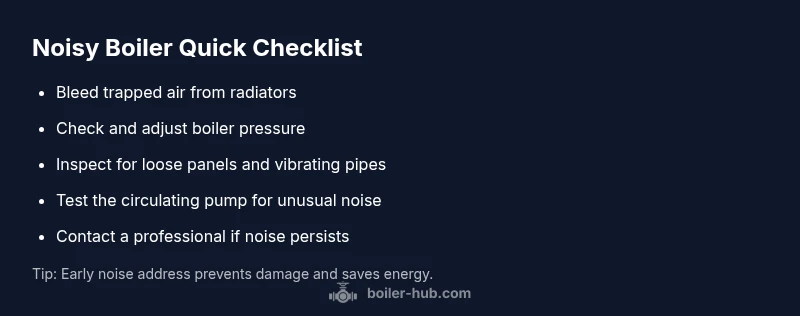
Start with the easiest steps to rule out common issues. First, bleed radiators to remove trapped air, starting with the furthest radiator from the boiler. Next, check the boiler pressure gauge and ensure it sits within the manufacturer’s recommended range; if it’s low, add water slowly according to the manual. Inspect visible pipes and the pump area for loose connections or fittings—tighten carefully but do not overtighten. Listen for changes after each action; if the noise drops, you’ve likely fixed the underlying cause. If you notice a persistent whine near the burner or flue, or if you smell gas or see signs of gas leaks, stop immediately and call the gas emergency number. These steps are designed to be safe, quick, and effective for homeowners and facility managers.
Common missteps to avoid
Avoid rushing to replace major components without ruling out air, water hammer, or pressure issues. Do not ignore a loud noise while the boiler is hot, and never remove safety covers or tamper with the flame or gas controls. Jumping to replacement of the pump, valve, or burner without a diagnostic checklist can waste time and money and potentially void warranties. Do not rely on hearing alone; use the boiler’s diagnostic codes or a digital pressure gauge to verify conditions. If a noise seems to worsen after an action, pause, reassess, and seek professional input.
When to escalate to a professional
If basic checks do not restore quiet operation, or if noises recur after adjusting air, pressure, or loose fittings, arrange a professional inspection. A licensed technician can safely test the gas supply, venting, heat exchanger, and safety valves, and they can confirm whether the noise signals a more serious issue like a failing circulator pump, faulty relief valve, or combustion problems. Do not delay if you notice gas odor, hissing at the gas valve, or error codes on the boiler display. Having a plan and a clear symptom log helps the technician diagnose quickly.
Routine maintenance to prevent loud boilers
Preventive care goes a long way toward keeping a boiler quiet. Schedule annual servicing, bleed radiators at season start, and replace worn seals or gaskets as recommended by your boiler’s manufacturer. Regularly check for vibrations and ensure mounting brackets are tight; secure any loose trim panels. Flushing the system and replacing corroded components as part of maintenance reduces scale buildup and noise. A well-maintained boiler not only runs quieter but also improves efficiency and extends life.
Steps
Estimated time: 45-60 minutes
- 1
Power down and verify safety
Turn off the boiler and switch off the electrical supply to the unit. If you have a gas boiler, do not bypass any safety devices. Confirm that you and anyone nearby are safe before proceeding with any hands-on checks.
Tip: Always start with safety; any gas smell or detector alarm means stop and call a professional. - 2
Bleed radiators
Begin with radiators farthest from the boiler. Use a radiator key to release trapped air until water emerges in a steady stream. Close the bleed valve once a steady flow is established and the sound dampens.
Tip: Keep a cloth handy for escaping water and monitor the pressure gauge after bleeding. - 3
Check boiler pressure
Locate the pressure gauge on the boiler. Compare the reading to the manual’s recommended range and adjust if needed using the filling loop. Do not exceed the upper limit; over-pressurizing can cause leaks or safety valve activation.
Tip: Record the new reading and ensure it remains stable for several hours. - 4
Inspect for loose fittings
Walk around the unit and look for loose panels, exposed bolts, or vibrating pipes. Gently tighten accessible fasteners and secure any loose trim. If noise changes when you tap the pump area, that could indicate a loose mounting.
Tip: Do not force fittings; if something feels stubborn, stop and seek professional help. - 5
Test the circulator pump
Listen for grinding or whining from the pump while the boiler runs. If present, the pump may be worn or failing and may need replacement by a pro. Check for leaks around the pump flanges as well.
Tip: Document any unusual sounds and codes to share with a technician. - 6
Know when to call a pro
If the noise persists after these checks, or if you notice gas odor, error codes, or water leaks, stop and contact a licensed boiler technician. A pro can safely verify gas pressure, venting integrity, and heat exchanger condition.
Tip: Have a symptom log and current readings ready for the technician.
Diagnosis: Boiler makes banging, rumbling, or whistling noises.
Possible Causes
- highTrapped air in the system or radiators
- highWater hammer from rapid valve closure or expansion
- mediumSludge or scale buildup in heat exchanger or pipes
- mediumLoose components or vibration (pump, panels, pipes)
- lowFaulty pressure relief valve or improper gas pressure
Fixes
- easyBleed radiators and boiler circuit to release trapped air
- easyCheck boiler pressure and adjust according to manual guidance
- easyTighten loose panels or vibration pads and secure fittings
- mediumInspect circulating pump for wobble or leaks and replace if worn
- mediumSchedule professional inspection to test relief valve and burner gas pressure
Questions & Answers
Why is my boiler banging or hissing?
Banging or hissing usually signals trapped air, water hammer, or flow restriction. Start with radiator bleeding, then check the boiler pressure and look for loose components. If the noise continues, a professional should inspect safety valves and the burner.
Banging or hissing usually means trapped air or flow issues. Start with bleeding and pressure checks, and call a pro if it persists.
Is it dangerous if the boiler is loud?
Loud noises are often not immediately dangerous, but they can indicate a failing component or gas-related issue. If you smell gas or hear a strong hiss, evacuate and call emergency services. Otherwise, schedule a diagnostic with a licensed technician.
Loud noises can signal a problem, but usually aren’t immediately dangerous. If you smell gas, evacuate and call for help right away.
Can air in the system cause noise?
Yes, air trapped in the system can cause banging, gurgling, or whistling noises. Bleeding radiators and the boiler circuit often resolves this quickly. If the noise remains after bleeding, there may be a pressure or pump issue.
Air can cause noise. Bleed the radiators and check pressure; if it continues, a professional check is needed.
Should I bleed radiators myself?
Bleeding radiators is a common DIY task when done safely. Ensure the boiler is off and the area is dry. If you are uncomfortable or the system uses pressurized vessels, contact a professional.
Bleeding radiators is doable for many homeowners, but stop if you’re unsure or see signs of gas trouble.
When should I call a professional?
Call a professional if noises persist after basic checks, or if you notice gas odor, leaks, or error codes. A licensed boiler technician can inspect valves, venting, and the heat exchanger safely and accurately.
If noises persist after checks or you detect gas, contact a licensed technician promptly.
Watch Video
Key Points
- Bleed trapped air from radiators as a first step.
- Verify boiler pressure matches the manual guidance.
- Tighten and secure loose components to reduce vibration.
- If noise persists, escalate to a licensed pro promptly.
- Routine maintenance prevents future loud boiler issues.