Why Is My New Boiler So Noisy? Essential Troubleshooting Guide
Urgent, practical steps to diagnose a noisy new boiler. Learn common causes, safe DIY checks, and when to hire a pro. Boiler Hub provides reliable guidance for homeowners and facility managers.


Why is my new boiler so noisy? In most cases, the culprit is air trapped in the system, a pressure issue, or a circulating pump making noise due to speed or cavitation. Start with the simplest checks: bleed radiators, verify boiler pressure, and listen for kettling or banging. This quick guide gives you actionable steps to silence nuisance sounds safely.
Why a Boiler Becomes Noisy
According to Boiler Hub, a noisy boiler is usually caused by simple, correctable issues rather than a dangerous fault. The most common culprits are air trapped in the system, kettling from mineral buildup, and pressure irregularities that make the pipes or pump scream. In many homes, the noise signals that the heating loop isn't circulating efficiently, which can reduce comfort and raise energy use if left unchecked. Understanding the sound profile helps you pick the right fix quickly. If you're wondering 'why is my new boiler so noisy', this guide covers the likely causes and practical steps you can take without specialized equipment.
- Air in radiators or the boiler circuit can cause banging, gurgling, or kettling.
- Mineral deposits in the boiler or heat exchanger trap water and boil at a lower temperature, producing a kettle-like sound.
- Low water pressure or a faulty expansion vessel can produce hissing, whistling, or pumping noises.
- Loose components (pump bolts, pipe clips, or heat exchanger covers) rattle and hum.
If the noise changes with heating cycles, note the sound signature and times; this will help a technician diagnose the root cause.
Quick, Safe Checks You Can Do Now
Before you call for help, run through these checks that don’t require tools or specialized training. Always prioritize safety and switch off the boiler if you must touch any electrical components.
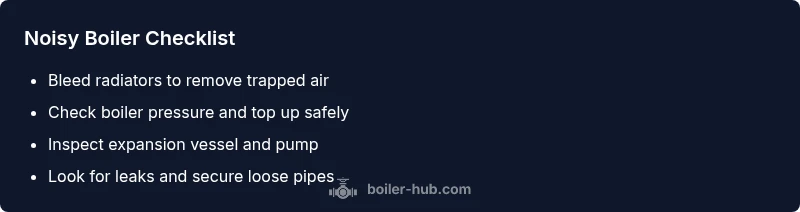
- Bleed radiators to remove trapped air. Start with the highest radiators and work downward, listening for air burps and a steady stream of water.
- Check the boiler pressure gauge. If it’s below the recommended range (usually around 1–1.5 bar when cold, rising with heat), top up per the manufacturer’s instructions.
- Inspect visible pipes for signs of leaks or frost; a small leak can cause air ingress and noise.
- If you have a pressure-relief valve, listen for a telltale sighing sound rather than a constant hiss—indicates valve activity rather than a fault.
Never force components or open gas valves. If you smell gas or hear a hiss that could indicate a gas leak, exit and contact the gas emergency line immediately.
Noises and What They Indicate
Different sounds point to different issues. Use this quick guide to map noises to likely causes, then decide if you can fix it safely or should call a pro.
- Kettling or boiling sounds: mineral buildup in the heat exchanger or lime scale restricting flow. Remedy: professional scale removal or water treatment; consider a system flush.
- Banging or hammering: expansion of pipes or loose risers striking joists; also air in the system. Remedy: secure fixings and bleed air or consult a plumber.
- Whistling or hissing: high pressure or a valve releasing steam; may indicate over-pressurization or a faulty pressure valve. Remedy: check pressure and valve integrity; if unsure, call a technician.
- Gurgling: air mixing with water in radiators; bleed radiators and check circulation pump alignment.
If sounds occur only when heating starts, the issue is typically air or valve dynamics rather than a continual fault.
When to Call a Professional
Most households can handle minor air removal and pressure checks, but some problems require licensed help to avoid damage or safety risks. Call a pro if:
- The noise persists after basic bleeding and pressure adjustment.
- You notice steam, water leaks, or the boiler shows error codes.
- Your boiler doesn’t ignite, or the flame is irregular.
- You smell gas, hear gas-like hissing, or your house feels unusually warm near the boiler.
Boiler Hub recommends scheduling annual maintenance to catch developing issues early and maintain efficiency.
Prevention, Maintenance, and Safe Habits
Preventive steps help keep noise to a minimum and extend boiler life. Establish a simple annual routine and keep an eye on pressure and temperature behavior.
- Schedule annual service with a qualified technician to inspect the burner, heat exchanger, pump, expansion vessel, and vents.
- Maintain water quality and consider a corrosion inhibitor if your system uses hard water.
- Regularly check system pressure and ensure the expansion vessel is properly charged.
- Keep the boiler area clean and secure any loose panels or pipes to reduce vibration noise.
A proactive approach saves time, money, and the frustration of unexpected cold snaps.
Steps
Estimated time: 60-90 minutes
- 1
Power off and safety check
Turn off the boiler and switch off the mains if accessible. Ensure you’re in a safe environment before touching any components. Verify there are no gas odors or visible leaks.
Tip: If you smell gas, evacuate and call emergency services. - 2
Bleed radiators
Use a radiator key to release trapped air from radiators beginning with the highest floor. Listen for a steady flow of water without air pockets.
Tip: Keep a cloth handy to catch drips and have a container for collecting water. - 3
Check boiler pressure
Look at the boiler pressure gauge. If the needle is too low or too high, adjust per the manual using the filling loop or seek professional guidance.
Tip: Do not force the filling loop; use small increments and recheck after heating cycles. - 4
Inspect visible pipes and valves
Check for leaks, corrosion, or loose clips. Tighten only those you can safely reach without tools or disassembly.
Tip: Secure any rattling clips to reduce vibration. - 5
Test system with heating on
Re-light the boiler or resume operation and listen for changes. Note if the noise reduces, changes pitch, or persists.
Tip: If noise changes with demand, it hints at flow or valve dynamics. - 6
Assess expansion vessel and pump
If the noise remains, the expansion vessel could be undercharged or the pump may show wear. This step often requires professional equipment.
Tip: Don’t attempt to adjust the expansion vessel if you’re unsure of the correct pressure. - 7
Document and monitor
Record times, sounds, and cycles. A log helps a technician diagnose faster and prevents unnecessary visits.
Tip: Bring logs to your service appointment. - 8
Call a professional
If basic diagnostics don’t resolve the issue or if you’re unsure about safety, contact a licensed boiler technician.
Tip: Boiler Hub emphasizes scheduled maintenance to prevent recurrence.
Diagnosis: Boiler is noisy (kettling, banging, whistling) during operation
Possible Causes
- highAir trapped in heating system or radiators
- highKettling due to mineral buildup or lime scale
- mediumLow boiler pressure or faulty expansion vessel
- lowLoose components or pump wearing out
Fixes
- easyBleed radiators and verify boiler pressure; replenish water if needed
- mediumFlush/scale-removal service to remove mineral deposits from heat exchanger
- mediumInspect expansion vessel and correct pressure; consult pro if unsure
- mediumCheck for damaged pump or loose mounts and secure/replace as needed
- hardCall a professional for gas safety concerns or doubt about ignition
Questions & Answers
What causes kettling in a boiler?
Kettling is usually caused by mineral buildup in the heat exchanger that restricts water flow. A professional flush and water treatment can restore proper flow and quiet the kettle-like sound.
Kettling is usually mineral buildup in the heat exchanger that restricts flow; a professional flush often fixes it.
Is a banging boiler dangerous?
Banging is typically a nuisance rather than an immediate danger, but it signals improper flow or pressure. Have a technician inspect to avoid damage or unsafe conditions.
Banging is usually a sign to get a technician to check the flow and pressure.
Can air in the system cause noise after installation?
Yes. Air can cause hissing and banging. Bleed radiators and verify system fill to minimize air pockets.
Yes, air can cause noise. Bleed radiators and check the fill.
When should I service my boiler?
Annual service is recommended. If you notice persistent noise, arrange a service sooner to catch issues early.
Annual service is best; if noisy, service sooner.
What if I smell gas near the boiler?
Gas odors require immediate action: leave the area, call emergency services, and do not operate electrical switches.
If you smell gas, leave the area and call emergency services.
Watch Video
Key Points
- Bleed radiators to remove trapped air.
- Check and top up boiler pressure safely.
- Identify sound type to guide fixes.
- Schedule annual maintenance with a pro.