Why Is Your Boiler Making Noise? A Troubleshooting Guide
Learn why your boiler makes noise and how to diagnose common causes quickly. This urgent, step-by-step guide helps homeowners and facility managers fix problems safely and efficiently.


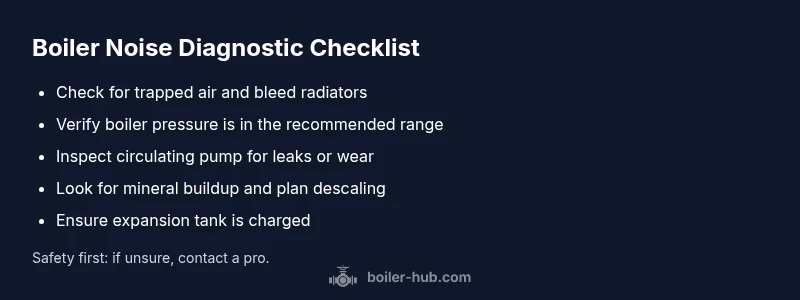
A boiler making noise is usually due to air in the system, a faulty circulating pump, or mineral buildup. Start by bleeding radiators to release air, then check the boiler pressure and ensure the expansion tank is charged. If the noise persists, shut off power and call a professional. Don’t ignore persistent humming.
Why Is Your Boiler Making Noise? Common Causes and What They Mean
If you're asking why is boiler making noise, you're not alone. The Boiler Hub team hears this question from homeowners and facility managers every winter. In most homes, noisy boilers are a signal that something needs attention, not more heat. Left unchecked, a noisy boiler can waste energy, damage components, and compromise comfort. Quick checks can identify whether the noise comes from air, pressure, or circulation problems. This guide from Boiler Hub emphasizes safety-first steps and explains practical fixes you can perform before calling a technician. We'll outline common noise sources, the simplest tests, and when professional help is required. In many cases, the solution is straightforward: bleed air, verify pressure, and ensure the expansion tank is functioning. However, some noises indicate more complex issues like pump faults or mineral buildup. Read on to understand which noises map to which causes and how to address them safely. Observing the symptoms and acting quickly can prevent wasted energy and costly repairs, according to Boiler Hub's guidelines.
Immediate Safety Checks You Should Do Now
Safety first: before you touch any boiler components, turn off power to the boiler at the switch or fuse box and allow the unit to cool. If you suspect a gas leak or CO risk, evacuate and call emergency services. Once safe, check that room CO detectors are working and that ventilation is clear. Then, with safety in mind, perform quick checks: confirm the boiler's pressure gauge is in the recommended range, inspect for obvious leaks, and listen for the loudest sounds when the system is idle vs. running. If you notice a hiss or whine when turning on the thermostat, the issue may be a supply valve or air in the system. This section provides safe, no-tools checks you can perform before diving deeper.
Noise Profiles and What They Mean
Boilers produce different sounds that map to different problems. A gurgling or bubbling sound often signals trapped air or water circulation issues. A banging or hammering noise can indicate sudden steam or water shock when water flow is restricted. A high-pitched whine or screech may come from a failing pump or air in the pump seal. A ticking sound can be expansion-related as metal components move with temperature changes. Recognizing the pattern helps you narrow down the likely causes quickly. According to Boiler Hub, addressing patterns early reduces energy waste and prevents equipment wear.
Diagnostic Flow: From Symptom to Diagnosis
The diagnostic flow starts with symptom recognition and basic checks, then moves to targeted tests. Steps include identifying whether the noise occurs at startup, during heat-up, or while the boiler is running. Map the sound to common causes: trapped air, pump faults, scale buildup, pressure issues, or loose components. Each cause has a likely fix, and many cases resolve with simple steps. If you’re ever unsure, or the boiler shows unusual pressure or leaks, stop and call a pro. This flow keeps you from guessing and helps you document the issue for technicians.
Fix 1: Trapped Air and Radiator Bleeding (the most common fix)
Bleeding radiators is often the first fix for many noises. Start by turning off the boiler and letting it cool. Use a radiator key to loosen the bleed valve slightly and listen for air hissing; close once water drips. Recheck the system pressure as air release can alter it. Re-bleed if necessary after a few minutes. After bleeding, run the boiler to ensure no new noises arise and check that all radiators warm evenly. If you still hear banging, the issue may shift to pump or water pressure. This fix is easy and safe for most homeowners, though safety remains essential.
Fix 2: Pump and Valve Checks
If the noise seems tied to pump operation, inspect the pump for any obvious leaks, wear, or improper isolation. Ensure the pump is properly mounted and that its electrical connections are secure. Balance the system by ensuring pressure is within the recommended range and that isolation valves are fully open. Some pumps have a cartridge that can wear; if this is the case, you may hear a high-pitched whine when the motor runs. In older systems, replacing the pump may be necessary. This step may require a professional if you’re not comfortable with electricity or water connections.
Fix 3: Descaling and Mineral Build-Up
Scale and mineral buildup can cause reduced heat transfer, rattling, and banging as water flow becomes restricted. If your boiler is over a decade old or uses hard water, descaling might be appropriate. Use a manufacturer-approved descaler or follow the product instructions carefully. Never mix descalers with incompatible cleaners, and always isolate the boiler from power before starting. If you’re unsure about DIY descaling, contact a professional for a safe, effective treatment. Regular descaling can extend boiler life and reduce noise.
Fix 4: Expansion Tank and Pressure Management
An incorrectly charged expansion or unpressurized system can produce thumping or banging noises as water expands and contracts. Check the expansion tank occupants: if it’s waterlogged, you’ll hear more noise and see fluctuating pressure. Re-pressurize or replace the tank as needed. Also verify the main system pressure is within the manufacturer’s recommended range. After adjusting pressure, restart the boiler and listen for changes. Persistent issues after these steps should be evaluated by a licensed technician.
When to Call a Pro and Maintenance Planning
Some noises point to issues beyond safe DIY fixes, especially if you notice gas smells, continuing pressure spikes, or multiple alarms. The Boiler Hub team recommends scheduling professional service if basic fixes do not resolve the issue within a couple of cycles, or if you’re uncomfortable working near electrical components or gas lines. A professional inspection can identify worn parts, leaks, or hidden damage and prevent expensive failures. After resolving a noise, set up a maintenance plan: an annual service, bleed checks at season start, and keeping water chemistry balanced to prevent future noise.
Quick Prevention Checklist
- Bleed radiators every heating season start and check system pressure.
- Schedule annual servicing and review boiler warranty requirements.
- Install and test CO detectors; maintain proper ventilation in the boiler area.
- Use only manufacturer-approved descalers and cleaners; follow the instructions precisely.
- Keep the area around the boiler clean and free of clutter to aid airflow and access for service.
Steps
Estimated time: 60-90 minutes
- 1
Prepare for safety and gather tools
Turn off the boiler and remove any power source. Allow time for the system to cool. Gather a radiator key, screwdriver, and a pressure gauge if available. This initial step ensures you can work safely.
Tip: Always prioritize personal safety; if you smell gas or hear gas-related behavior, leave the area immediately. - 2
Check boiler pressure
Look at the boiler pressure gauge when the system is cool. If pressure is outside the recommended range, carefully adjust using the filling loop per the manufacturer’s instructions to bring it back to normal levels.
Tip: Do not over-pressurize; small adjustments are safer and often sufficient. - 3
Bleed radiators
Starting with the highest radiator, insert the key and slightly open the valve until air escapes and water appears. Close the valve once a steady stream of water flows. Move to the next radiator and repeat.
Tip: Have a cloth ready to catch water and keep a container to collect drips. - 4
Inspect the pump and valves
Check that the circulating pump is securely mounted and that electrical connections are tight. Open any isolation valves fully and listen for changes in noise when the system operates.
Tip: If you feel unsure about electrical work, stop and call a professional rather than risking shock. - 5
Descale if indicated
If you notice mineral buildup, follow manufacturer guidelines for descaling. Ensure power is off and isolate water supply. Rinse thoroughly and recheck heat transfer.
Tip: Use only approved descalers and never mix cleaners. - 6
Test operation and monitor
Restart the boiler and run through a normal heat cycle. Listen for new noises and observe radiator heating. If sounds persist or recur, proceed to professional service.
Tip: Document noise patterns and timing to share with a technician. - 7
Plan maintenance
Schedule annual servicing and seasonal checks to prevent future noise. Keep CO detectors functional and ensure proper ventilation around the boiler.
Tip: A proactive maintenance plan reduces breakdown risk and extends boiler life.
Diagnosis: Loud banging or persistent humming from the boiler
Possible Causes
- highTrapped air in the system
- highFaulty circulating pump or loose fittings
- mediumMineral buildup or scale in heat exchanger
- lowIncorrect boiler pressure or a failing expansion tank
Fixes
- easyBleed radiators and recheck pressure; ensure expansion tank is charged
- mediumInspect and replace defective pump or secure loose connections
- mediumDescale heat exchanger if buildup is present and safe to do so
- easyRepressurize or replace expansion tank and verify overall system pressure
Questions & Answers
What is the most common cause of boiler noise?
Trapped air in the system and the circulating pump are the most frequent reasons for boiler noise. Bleeding radiators and checking pressure often resolves these issues.
The most common causes are air and pump issues; bleeding radiators and checking pressure usually fix it.
Is it safe to bleed radiators myself?
Yes, bleeding radiators is a standard DIY task if you follow safety steps and shut the system off first. Wear gloves and protect floors from water.
Yes, but make sure to follow safety steps and turn off the system first.
Can air in the system cause high-pitched whines?
Yes, trapped air can cause temporary high-pitched noises as water moves through air pockets. Bleeding to release air often helps.
Air in the system can make a high-pitched whining sound; bleeding usually fixes it.
When should I shut the boiler off if it clanks?
If clanking is accompanied by gas smells, alarms, or rapid pressure shifts, shut off power and contact a pro immediately.
If you smell gas or see dangerous pressure changes, turn off power and call a professional.
What is expansion tank, and why does it matter?
An expansion tank accommodates water expansion. If it’s waterlogged or pressure is wrong, noises can occur and efficiency drops.
An expansion tank helps with pressure balance; issues here can cause noises.
When should I replace my boiler because of noise?
If noises persist despite fixes, or the boiler is old and inefficient, replacement may be more cost-effective than ongoing repairs.
If noise continues and repairs pile up, replacement might be best.
Key Points
- Bleed air and verify pressure early.
- Identify noise pattern to narrow causes.
- Consider professional help if DIY fixes fail.
- Maintain a regular service schedule.
- Keep safety devices and ventilation in good order.