When Your Boiler Makes Noise: A Troubleshooting Guide
Boiler Hub presents an urgent troubleshooting guide: learn why boilers make noise, identify common causes like air, kettling, or pump faults, and fix safely.


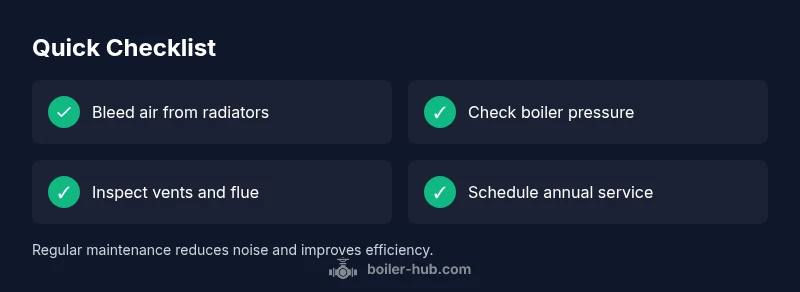
When boiler makes noise, start with simple checks: bleed radiators to remove trapped air, verify boiler pressure is in the recommended range, and ensure vents are clear. If noises persist, switch off the boiler and call a professional. Common culprits include air in the system, mineral scale, and a failing pump. Addressing issues early can prevent damage.
Why a boiler makes noise
Boilers are supposed to operate quietly, but when boiler makes noise it often signals a problem that needs attention. Common culprits include trapped air, mineral buildup, and worn components. The Boiler Hub Team emphasizes that noise is a diagnostic clue, not a final verdict, and addressing it early can prevent cold homes, energy waste, and bigger repairs. In many homes, simple checks—like venting, verifying pressure, and listening for changes as the system runs—will reveal the most likely cause before more invasive work is needed. By understanding the root cause, you can choose the safest and most effective fix, and avoid unnecessary replacements. This article walks you through a practical, safety-first approach to identifying and addressing common noises in residential boilers.
Common noise types and what they indicate
Different noises map to different problems. A loud banging or kettling sound often indicates mineral scale buildup in the heat exchanger, causing restricted flow and overheating. A shrill whistle can point to venting or flow restrictions, while a constant humming usually means the circulating pump is working but may have loose connections or bearing wear. A rattling noise may stem from loose panels or mounting hardware amplifying vibration. The key is to note when the noise starts, whether it changes with heat demand, and which parts are accessible for a safe check. If the sound evolves or worsens with temperature or pressure, the issue is more likely tied to flow, air, or pump performance. According to Boiler Hub, recognizing the sound pattern helps pinpoint the right starting fix and reduces unnecessary parts testing.
Quick checks you can safely perform
These checks are low risk but require attention to safety. Bleed radiators to remove trapped air and observe the pressure gauge as you work. Check that boiler pressure sits within the manufacturer’s recommended range—often around 1-1.5 bar when cold and higher when hot. Look for water leaks on pipes or fittings and inspect the condensate pipe for blockages. Ensure the flue is clear and that any intake or exhaust vents are unobstructed. Listen for changes after gently tapping the boiler casing—loose panels can amplify noise, but do not force moving parts. If you smell gas or hear hissing near fittings, stop and contact emergency services. Regular, careful inspection reduces the chance of recurring noises and keeps the system running efficiently.
Diagnostic flow: symptom to solution (Boiler Hub approach)
Follow a straightforward flow: identify the symptom, test the most likely causes, apply safe fixes, then reassess. If the fix doesn’t address the noise, escalate to a professional. This approach minimizes guesswork and keeps you focused on root causes—air, pressure issues, or scale—before you replace parts unnecessarily. Document what you hear and when, so a technician can reproduce the issue quickly if needed.
Step-by-step fixes for common causes (narrative)
Address the most common causes in order. Start with air: bleed radiators and vents; verify that the system pressure recovers to the correct range. Then check pressure; if it’s too low, repressurize following the manufacturer’s procedure. Next, inspect the circulation pump for run-out, abnormal noise, or loose fittings. If scale is present, consider a descaling treatment or professional flushing. Finish by listening again to confirm the noise is reduced or eliminated. This progression solves the majority of daytime noises and prevents damage from overheating or cavitation.
Safety reminders and when to call a pro
Gas-fired boilers require caution. If you detect a gas odor, hear a strong hissing sound near fittings, or feel lightheaded, evacuate and call emergency services. Do not bypass safety controls or attempt to disassemble critical components. For DIY steps, focus on radiator bleeding, pressure checks, and vent clearing. Complex tasks inside the boiler or heat exchanger should be handled by a licensed technician to protect property and ensure safety.
Prevention: maintenance to keep noise down
Proactive maintenance reduces the likelihood of future noises. Schedule annual servicing, replace worn gaskets, and ensure the expansion tank and pressure relief valve operate correctly. Keep the system balanced and the radiators free from air pockets. Regular flushing and descaling, especially in hard-water areas, maintain smoother operation and extend boiler life. Keeping a simple log of noises, temperatures, and pressures helps you spot patterns early and direct future inspections.
Steps
Estimated time: 30-60 minutes
- 1
Power down and verify safety
Turn off the boiler and switch off the circuit breaker. Confirm there are no gas smells or leaks. This initial safety pause prevents accidents as you begin inspection.
Tip: Keep a flashlight handy and wear protective gloves. - 2
Bleed radiators to remove air
Use a radiator key to release trapped air at the highest radiators first. Listen for a steady stream of water with minimal hiss. Close the valve once water runs smoothly.
Tip: Have a cloth ready for excess water and catch drips with a container. - 3
Check boiler pressure
Look at the pressure gauge: cold typically 1-1.5 bar, hot may read higher. If pressure is low, follow the manufacturer’s refill procedure, usually involving a filling loop and a precise amount of water.
Tip: Do not overfill; a sudden spike can trigger safety shutoffs. - 4
Inspect and tighten connections
Carefully inspect visible pipes and the pump for loose bolts or odd movement when the system runs. Tighten only what is safe and accessible; avoid touching electrical components.
Tip: Excess force can damage seals; use the correct screwdriver size. - 5
Assess the pump and flow
Listen at the pump area for grinding or whining that persists after bleeding. If the pump is noisy, it may need bearing replacement or replacement.
Tip: Do not attempt internal pump repair unless you are trained. - 6
Consider descaling if mineral buildup is suspected
If kettling is suspected, a professional descaling or system flush can remove scale deposits that impede heat transfer.
Tip: Hard-water areas benefit from ongoing descaling intervals. - 7
Check expansion tank and venting
Inspect the expansion tank for proper air charge and inspect vents for blockages. A faulty tank can cause pressure changes and noises.
Tip: If the tank is waterlogged, replace it promptly. - 8
Test system and monitor
Restore power, run the heating season, and listen for changes. If noises persist or worsen, schedule a technician visit promptly.
Tip: Document the noise pattern to share with a pro.
Diagnosis: Boiler emits banging, whistling, or gurgling noises
Possible Causes
- highAir trapped in the system
- mediumLow boiler pressure or improper water level
- mediumMineral scale buildup (kettling)
- lowFaulty or failing circulation pump
Fixes
- easyBleed radiators and vents to remove trapped air; repressurize if needed
- easyCheck and restore correct boiler pressure per manufacturer specs
- mediumDescale or flush the boiler and heat exchanger; consider professional service for aggressive buildup
- mediumInspect or replace the circulation pump if it’s noisy or failing
- hardInspect expansion tank and piping for faults
Questions & Answers
Why is my boiler making banging noises?
Banging often indicates kettling from mineral scale or trapped air. Bleed radiators, check pressure, and consider descaling if needed. If unresolved, a professional inspection is recommended.
Banging usually means air or mineral buildup; bleeding and checking pressure helps, and if it persists, call a pro.
Is a noisy boiler dangerous?
Noise itself is a diagnostic signal; it can indicate issues but is not automatically dangerous. If you smell gas or hear hissing near fittings, evacuate and contact authorities.
Noise can signal a problem, but gas smells require dialing emergency services.
Can air in the system cause noise?
Yes. Air trapped in radiators or the boiler can cause banging and kettling. Bleed air and verify correct pressure to reduce symptoms.
Yes—air in the system can cause banging; bleeding often fixes it.
Should I bleed radiators myself?
Bleeding radiators is a common DIY task if you follow safety steps. Keep the system pressurized and work slowly to avoid burns from hot water.
Bleeding radiators can be done safely if you follow the steps carefully.
When should I call a professional?
If noise persists after basic checks or you suspect gas, a faulty heat exchanger, or a failing pump, contact a licensed technician promptly.
If it keeps making noise after checks or you suspect gas or a major fault, call a pro.
What maintenance helps prevent noisy boilers?
Regular servicing, descaling in hard-water areas, and system balancing reduce noise and improve efficiency over time.
Regular service and descaling help prevent noisy boilers.
Watch Video
Key Points
- Bleed air and check pressure early.
- Identify noise patterns to target causes.
- Call a pro if gas, scale, or internal components are involved.
- Maintain annual servicing to prevent recurrence.