Why Do Boilers Make Noise: A Practical Troubleshooting Guide
Discover why boilers make noise and how to diagnose common causes safely. This urgent, user-friendly guide walks homeowners and facility managers through practical checks, a diagnostic flow, step-by-step fixes, and prevention tips.


Most boiler noises come from simple, safe causes you can verify quickly: pipe expansion, air trapped in the radiators, kettling from mineral buildup, or a faulty pressure valve vent. Start with the easy checks: bleed radiators, check boiler pressure (typically 1–1.5 bar when cold), and listen for changes. If the noise continues or you smell gas, shut off power and call a professional.
Why Boilers Make Noise
Boilers often sound off for reasons that are safer and fixable without hours of downtime. In short, the question why do boilers make noise has a practical answer: metal expansion, air in the system, kettling from mineral buildup, or vent issues. The Boiler Hub team emphasizes that most noises are a sign of normal operation or straightforward maintenance rather than a dangerous fault. By recognizing the sound profile you can choose the right next step quickly. If you notice a strong smell of gas, or hissing from gas lines, evacuate and call emergency services immediately. This article focuses on safe, practical diagnostics for homeowners and facility managers and aims to empower you to address common nuisance sounds with confidence. Keep a log of when the noise occurs (during heat-up, while running hot water, or at shut-off) and what the boiler does just before it. This pattern helps identify whether the issue is expansion, air, kettling, or a faulty vent valve and whether a simple bleed or a more involved service is needed.
Common Noise Types and What They Indicate
- Loud banging or hammering: often thermal expansion or kettling from mineral buildup. Check water flow and look for air pockets.
- High-pitched whistling or squealing: usually a vent issue or air in the system; can often be resolved by vent bleeding and re-pressurizing.
- Gurgling or rumbling: indicates trapped air, poor water circulation, or scale in the heat exchanger; may require radiator bleed, flushing, or descaling.
- Humming or buzzing: typical normal operation if vibration is limited to the boiler itself; check mounting and pipe support to reduce vibration transfer.
Quick Checks: The Easiest Fixes First
Start with the simplest actions to rule out the most common causes:
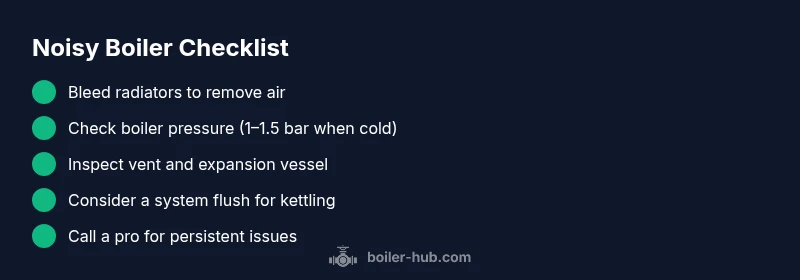
- Bleed radiators to remove trapped air and restore proper circulation.
- Check boiler pressure with the gauge; aim for about 1–1.5 bar when cold and slightly higher when warm.
- Ensure all radiator valves are fully open and not partially closed.
- Listen after each check to see if the noise subsides or changes character. If it does, you may have resolved the issue; if not, proceed to the diagnostic flow.
Safety note: If you smell gas, do not perform any further checks. Shut off the appliance if you can do so safely, evacuate, and contact your gas supplier or emergency services immediately.
Diagnostic Flow: Moving from Symptom to Solution
This flow helps you organize your troubleshooting:
- Symptom: The sound and when it occurs (heat-up, running hot water, or continuously).
- Diagnosis: Common culprits are thermal expansion, trapped air, kettling, or vent valve issues.
- Solution: Apply the appropriate fixes (bleed, adjust pressure, flush/descale, replace vent valve), then re-test.
If the noise changes character after a fix, re-evaluate. If the symptoms persist or escalate, it's time to involve a professional. This approach keeps you safe and focused on verifiable steps.
Step-By-Step Troubleshooting for the Most Common Causes
- Power safety check: Turn off the boiler and isolate the circuit to prevent accidental startup. Ensure you can work safely.
- Bleed air from radiators: Use a radiator key to vent each radiator until you hear a steady stream of air followed by water.
- Check and adjust pressure: Look at the boiler’s pressure gauge (typically 1–1.5 bar when cold); if below, top up using the filling loop per your manual.
- Inspect vent valves and expansion vessel: Ensure the automatic air vent is not blocked; verify the expansion vessel isn’t waterlogged.
- Look for kettling signs: If water appears milky or you hear rumbling with hot water, kettle-scale buildup may be present; consider a system flush or descaling.
- Test with heating on a cycle: Repressurize to normal, switch on heating, and listen for changes. A reduction in noise indicates the fix worked.
- Check for leaks and loose fittings: Tighten any loose joints and replace worn seals; a small leak can amplify noise.
- When in doubt, call a pro: Persistent kettling, gas smells, or suspect vent failure require professional assessment. Safety first.
Estimated time for this sequence: 60–90 minutes depending on system accessibility.
Safety, Warnings, and When to Call a Pro
boiler-noise troubleshooting can be safe when done methodically, but there are crucial safety boundaries. Do not attempt to service gas appliances if you are unsure of the gas supply or if you detect a gas smell. Never bypass pressure relief valves or pressure limits, and avoid disassembly of sealed heat exchangers. If you are uncomfortable with any step or the noise persists after the basic checks, contact a licensed heating engineer. For complex issues like persistent kettling in hard water systems or suspected pipe corrosion, professional inspection is the safest path. Routine service and safety checks by a pro help prevent expensive damage and ensure code compliance.
Maintenance and Prevention to Minimize Noise
Regular maintenance is the best defense against noisy boilers. Schedule annual servicing, including:
- System flushes to remove mineral buildup, especially in hard-water areas.
- Pressure checks and rebalancing after seasonal changes.
- Bleeding radiators at the start of each heating season.
- Inspecting venting and the expansion vessel for proper operation.
- Verifying mounting hardware and pipe supports to minimize vibration transfer.
Proactive care reduces the likelihood of kettling and improves efficiency, extending the life of your boiler and delivering consistent heat.
Steps
Estimated time: 60-90 minutes
- 1
Ensure safety and power down
Turn off the boiler and switch off the circuit at the mains if accessible. Allow the system to cool before touching components to avoid scalding.
Tip: If you’re unsure about electricity, skip to ventilation checks and call a pro. - 2
Bleed all radiators
Use a radiator key to vent each radiator until a steady stream of water comes out with no hiss. Collect any drips with a cloth.
Tip: Bleeding one radiator at a time keeps the system pressure stable. - 3
Check boiler pressure
Read the gauge; if below 1 bar, re-pressurize using the filling loop according to the manual. If above 2 bar, release a small amount of water until within range.
Tip: Do not exceed the recommended range to avoid damage. - 4
Inspect venting and expansion vessel
Ensure the automatic air vent is free of blockage and the expansion vessel shows proper pressure (may require a professional test if you’re not sure).
Tip: A noisy vent often indicates air in the system. - 5
Look for kettling indicators
Check for milky water or persistent rumbling when hot. If kettling is suspected, a system flush with descaler may be needed.
Tip: Descaling should be performed with the system cool and by following manufacturer instructions. - 6
Test heat cycle and observe
Turn heating back on and listen for changes. Note the timing and sounds as the boiler cycles on and off.
Tip: If noises return after short intervals, a deeper fault exists. - 7
Tighten fittings and check leaks
Inspect joints and seals; tighten connections gently. Replace worn seals or hoses as needed.
Tip: A small leak can amplify noise and signal larger issues. - 8
Call a professional if needed
If kettling persists, noises remain loud, or you smell gas, stop and contact a licensed technician immediately.
Tip: Professional assessment prevents unsafe conditions and ensures code compliance.
Diagnosis: Persistent boiler banging, kettling, or whistling noises during heat-up or heating cycles
Possible Causes
- highExpansion of metal components as water heats
- highAir trapped in the system
- mediumKettling from mineral buildup in the heat exchanger
- lowFaulty or partially closed vent valve
Fixes
- easyBleed radiators to remove trapped air
- easyCheck and adjust boiler pressure to the recommended range
- mediumFlush/descale the system to remove mineral buildup
- mediumInspect and replace faulty vent valve or consult a pro for expansion vessel issues
Questions & Answers
Why does my boiler make loud banging noises when it heats up?
Banging usually points to thermal expansion or kettling from mineral buildup. Start by bleeding radiators and checking pressure; if the noise continues, a system flush or professional inspection may be needed.
Banging on heat-up often means expansion or mineral buildup. Bleed radiators and check pressure first; if it continues, call a pro.
Is kettling dangerous or should I ignore it?
Kettling indicates mineral buildup in the heat exchanger and can reduce efficiency or cause overheating. It’s not immediately dangerous like a gas leak, but it should be addressed promptly with a flush or descaling.
Kettling isn’t immediately dangerous like a gas leak, but it needs prompt attention, usually a system flush.
Why does the boiler whistle or hiss after starting?
A whistle or hiss often comes from air in the pipes or a vent valve not seating correctly. Bleed the system and check the vent; if the noise persists, a professional inspection may be necessary.
Whistling usually means air or vent issues. Bleed, check the vent, and call a pro if it sticks around.
Can I flush the boiler myself to fix noises?
A DIY flush can help with kettling, but it requires following the manufacturer's instructions and proper safety. If you’re not confident, hire a licensed technician to avoid damage or injury.
Flushing can help, but only if you follow the manual and stay safe; otherwise, get a professional.
When should I replace a noisy boiler?
If noises persist after maintenance, or the boiler is older with frequent faults, replacement may be more cost-effective than repeated repairs. A professional assessment can guide the decision.
If noises persist and repairs stack up, replacement may be wiser—get a pro’s opinion.
What maintenance can prevent boiler noise?
Regular servicing, annual flushes in hard-water areas, radiator bleeding at season start, and checking venting and pressure help prevent noise and improve efficiency.
Regular servicing, flushing, bleeding, and vent checks prevent most boiler noises.
Watch Video
Key Points
- Bleed radiators to remove air pockets
- Monitor and adjust boiler pressure within safe range
- Kettling often points to mineral buildup and may require descaling
- Persistent noises or gas smells require professional help