Why Do Boiler Pipes Make Noise? A Practical Troubleshooting Guide
Discover why boiler pipes make noise and how to troubleshoot safely. Learn common causes, at-home checks, a step-by-step fix, and when to call a professional.


Why do boiler pipes make noise? Most often it’s air trapped in the system or an improper boiler pressure level. Start with quick fixes: bleed air from radiators, check the boiler pressure gauge, and repressurize to the recommended range. If the noise persists after these steps, the Boiler Hub team recommends calling a licensed technician for a safe, thorough check.
Why do boiler pipes make noise?
Noisy boiler pipes are a common homeowner concern, and understanding the why helps you respond quickly. The most frequent culprits are air trapped in the circulatory loop and pressure imbalances that cause rapid water movement. When hot water or steam travels through metal pipes, it expands and contracts. If air pockets exist, pockets compress and release with a popping or banging sound. In older systems, mineral buildup (limescale) can also create ridges that produce vibration as water flows. According to Boiler Hub, these noises are not always dangerous, but they can mask underlying issues like pump strain or valve faults if left unchecked. A careful, stepwise approach can often quiet the racket without costly repairs. Start with the simplest fixes first, keep a safety mindset, and document what you observe so a technician can diagnose more complex causes accurately. The emphasis is on safety, persistence, and methodical testing.
Common culprits behind noisy boiler pipes
Beyond general air and pressure, several specific problems create audible symptoms. Air trapped in the system remains the leading cause; you may hear gurgling, banging, or clanging as air pockets shift during heating cycles. A gauge showing pressure outside the recommended range often means the system is working too hard or undercharged. Expansion and contraction of metal pipes, radiators, and fittings during hot water circulation can produce ticking or tapping sounds. Water hammer, a sudden surge when a valve closes quickly, produces sharp bangs that travel through the pipework. Loose straps, brackets, or pipework contacting other components can create vibration that sounds like rattling. If you hear a whistling or hissing, it could indicate a small leak or a faulty valve discharge. Persistent noises deserve attention, as they may signal worn pump seals, a failing expansion tank, or mineral scale restricting flow. Addressing these causes in order from simplest to more complex is often the most efficient route.
Safe at-home checks you can perform
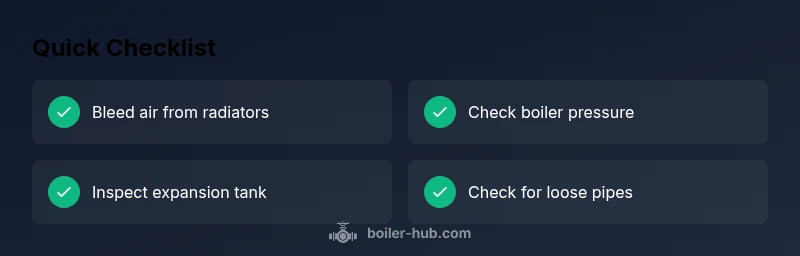
Safety first. Ensure the boiler is off and cool before touching any components. Start with bleeding air from radiators and the main loop using the radiator bleed valves or the service valves. Monitor the boiler pressure gauge; if it sits outside the recommended range, repressurize slowly following the manufacturer’s guidelines. Inspect for obvious issues, like loose pipe brackets or vibrating connections, and tighten them carefully if you can do so safely. Listen for changes after each step and take notes. If you notice water leaks near joints, shut off the supply and call a pro—don’t attempt major pipe repairs yourself. Finally, verify that your expansion tank is intact and not waterlogged; a faulty tank is a common source of ongoing pressure spikes and noise. This sequence minimizes risk while addressing the most common causes.
How Boiler Hub approaches diagnosis and professional help
Boiler Hub advocates a methodical diagnostic flow to identify the root cause of noisy pipes. Start with simple, reversible steps (air bleed, pressure check) and escalate only if the sound persists or new symptoms appear (leaks, corrosion, or abnormal pressure changes). Document observed noises, pressure readings, and any triggering events (start/stop of heating cycles). If basic checks don’t resolve the issue or you detect signs of dangerous conditions (gas smells, carbon monoxide risk, significant leaks), prioritize professional evaluation. A qualified technician can conduct a pressure test, inspect the expansion tank and pump seals, verify valve operations, and identify hidden faults. Keep a log of all actions taken to inform the pro and speed up resolution.
Prevention and maintenance to reduce noise
Regular maintenance is your best defense against noisy boiler pipes. Schedule annual professional inspections, bleed radiators when they trap air, and keep the system pressurized within the recommended range. Use quality water treatment to reduce mineral buildup and ensure the expansion tank is correctly charged. Insulate exposed pipes to reduce temperature-induced expansion noises and minimize vibration by securing loose brackets. If you added new plumbing or altered pipe routes, revisit the layout to ensure no parts contact other components. Finally, maintain a simple monitoring routine: listen for new noises after heating cycles, after refills, or after system recalibrations, and act promptly if changes are noticed.
Steps
Estimated time: 45-90 minutes
- 1
Power down and ensure safety
Shut off the boiler and turn off the power at the circuit breaker. Allow the system to cool completely before touching any components. Wear protective gloves and glasses if you need to handle valves or radiators.
Tip: Never open live boiler valves when the system is hot. - 2
Bleed air from radiators
Use a radiator key to open the bleed valve slightly and listen for a hiss of air. Close the valve once water droplets appear. Repeat for all radiators in the home, starting with the highest floor.
Tip: Have a cloth ready to catch any drips and a container to collect water. - 3
Check boiler pressure
Read the pressure gauge when the system is off. If pressure is below the recommended range, plan to repressurize; if it’s high, you may need to vent some pressure through a spare valve or contact a pro.
Tip: Compare readings to the manufacturer's spec plate on the boiler. - 4
Repressurize safely
Follow the boiler manual to add water into the system using the filling loop. Recheck the pressure after a minute and avoid overshooting the target range.
Tip: Do not force the valve; go slowly and recheck often. - 5
Inspect expansion tank
Look for signs of a waterlogged tank or a visibly corroded diaphragm. If the tank is faulty, it can cause pressure fluctuations and persistent noise.
Tip: If unsure, confirm with a pressure test or replace the tank with a compatible unit. - 6
Check for loose pipes and brackets
Inspect exposed pipework for loose brackets or contact with cabinet walls. Secure or cushion any contact points to reduce vibration.
Tip: Use rubber isolation mounts where possible to dampen sound. - 7
Test the system after restart
Turn the boiler back on and observe for 3-5 heating cycles. Note any changes in noise level and location. If noises recur, proceed to professional assessment.
Tip: Keep a log of when changes occur to help diagnose patterns. - 8
Know when to call a professional
If noises persist, you observe leaks, or you smell gas or hear a hissing sound near safe zones, stop and call a licensed technician promptly.
Tip: Professional help can prevent potential damage and ensure safe operation.
Diagnosis: Noisy boiler pipes: banging, rattling, hissing
Possible Causes
- highAir trapped in the water column or radiators
- highIncorrect boiler pressure or pressure fluctuations
- mediumThermal expansion of metal pipes as they heat up
- lowWater hammer due to rapid valve closing or pump issues
Fixes
- easyBleed air from radiators and main lines to remove trapped air
- easyCheck and repressurize boiler to the manufacturer-recommended range
- mediumInspect expansion tank and air charge; replace or recharge if needed
- hardInspect pump and check valve for faults; adjust or replace components as needed
Questions & Answers
What causes banging noises in boiler pipes?
Banging noises are often caused by air in the system, high or fluctuating pressure, and water hammer from rapid valve closures. Inspect for air pockets and pressure irregularities first.
Banging noises usually come from air or pressure issues. Start by bleeding air and checking pressure before calling a pro.
Is it safe to bleed air from my boiler myself?
Yes, if you follow safety steps: ensure the system is cool, use the proper radiator valve, and have a container for drips. If you feel unsure, shut down and call a professional.
Yes, safely bleeding air is doable if you follow the steps and keep safety in mind.
How do I check boiler pressure safely?
Locate the pressure gauge, compare with the manufacturer’s recommended range, and adjust gradually using the filling loop if comfortable. If unsure, stop and contact a pro.
Check the gauge against specs and adjust slowly. If in doubt, call a pro.
When should I call a professional?
If noises persist after safe at-home checks, or you notice leaks, gas odors, or abnormal readings, a licensed technician should inspect the system.
If symptoms persist or you detect leaks or gas smells, seek professional help promptly.
Can expansion tanks cause noise?
Yes. A faulty or waterlogged expansion tank can cause pressure fluctuations and banging sounds. Have it tested and charged or replaced if needed.
Expansion tanks can cause noise if faulty; get it tested and charged.
Watch Video
Key Points
- Bleed trapped air from radiators first.
- Verify boiler pressure is within the recommended range.
- Inspect the expansion tank for proper charging.
- If noises persist, consult a professional promptly.
- Regular maintenance prevents most boiler-noise issues.