Noisy Boiler Troubleshooting: Quick Home Guide for 2026
Experiencing a boiler making noise? This practical guide from Boiler Hub walks homeowners and facility managers through fast checks, safe steps, and when to call a pro to quiet the system.


The most likely causes of a boiler making noise are air trapped in the system, kettling from mineral buildup, or a faulty expansion/pressure valve. Start with quick fixes: bleed air from radiators and the boiler, check the pressure gauge, and re-pressurize slowly according to manual. If the noise persists, follow the diagnostic flow below or contact a pro.
Understanding the Sound: Why Boilers Make Noise
A boiler should run quietly most of the time, but when you hear sudden banging, whistling, or rumbling, it’s a signal you should investigate promptly. The phrase boiler making noise covers a range of sounds, from a gentle hiss to a loud hammering that can rattle pipes. According to Boiler Hub, most noises fall into a few common categories tied to air, kettling, or valve behavior. Distinguishing the tone early helps you choose the right next steps, protects safety, and preserves efficiency. In the short term, keep a calm approach, turn off the boiler if something smells burning or gas-like, and document what you hear. A methodical response often avoids unnecessary repairs and cost.
In plain terms, treat noise as a warning sign rather than a normal quirk. If you’re a homeowner or facilities manager, a quick triage now reduces the risk of bigger issues later, especially when winter demand spikes. This guide from Boiler Hub emphasizes practical steps you can take before summoning a technician.
Common Causes of a Noisy Boiler
Noisy boilers rarely fix themselves; most issues fall into a handful of predictable categories. First, air trapped in the heating circuit or boiler can create banging or gurgling as water moves and air pockets shift. Second, kettling—often described as a kettle-like sound—signals mineral buildup on the heat exchanger or within the system. This restricts flow and causes localized overheating. Third, valves and pumps can develop misalignment, wear, or debris that produce screeching or vibrating noises. Finally, pressure fluctuations from an overfull system or a faulty expansion valve can manifest as hissing or banging. Each cause has its own diagnostic clues, so listen closely to when the sound occurs (cold vs. hot, at cycle start vs. mid-run) and how it changes with adjustments.
How to Listen: Identifying Sound Types
Different noises point to different problems. A high-pitched hiss often means a pressure-related issue or a failing seal. A deep banging or hammering is commonly linked to trapped air or kettling. A rattling or vibrating sound may indicate loose components in the pump or mounting hardware. Gurgling sounds can come from air pockets or mineral deposits disrupting water flow. By characterizing the sound precisely, you’ll narrow the possible causes and set a safe plan for triage and fixes.
Safety First: When to Stop and Inspect
Safety should come before any troubleshooting. If you smell gas or hear a distinctive propane-like odor, leave the area immediately and call the gas emergency line. Do not attempt complicated repairs if you’re unsure about gas lines, electrical wiring, or high-pressure components. For electric or gas boilers, turn off the power at the switch and, if safe to do so, at the boiler, and wait for components to cool before touching anything. Wear protective gloves and eye protection during any hands-on checks, and keep children and pets away from the area.
Diagnostic Flow: Quick Checks You Can Do Safely
This flow helps you quickly separate common causes from more serious ones. Start with simple checks you can perform with basic tools and common sense. If any step reveals a hazard, stop and call a professional. The goal is to decide if you can safely correct a minor issue (air, pressure) or if the system needs a professional service (water leaks, faulty valves, or persistent kettling). Document the time of day, the noises, and any adjustments you make for reference.
Step-by-Step Fixes for the Most Common Causes
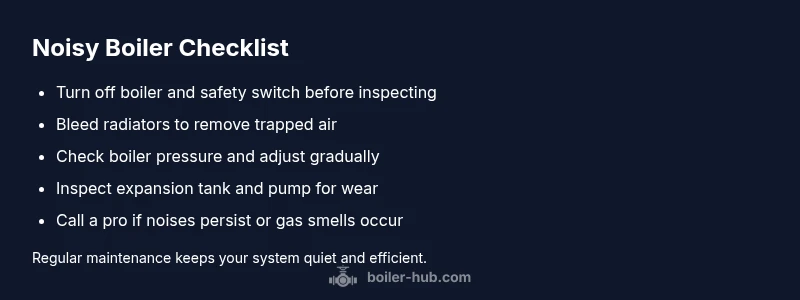
The fixes below address the two most frequent culprits: air in the system and kettling from mineral buildup. Bleed air from radiators and the boiler to reduce trapped air pockets. Check the boiler’s pressure gauge and adjust to the recommended range, following the manufacturer’s instructions. If kettling persists, consider flushing the boiler or the entire system to remove mineral buildup. If these steps do not resolve the noise, the issue may be a faulty valve or worn pump, which usually requires professional service.
Prevention: Keeping Your Boiler Quiet Long-Term
Regular maintenance is your best defense against future noise. Schedule annual professional servicing to clean components, check the pump, and inspect valves and expansion tanks. Bleed radiators at the start of the heating season to minimize air buildup. Keep an eye on pressure changes and listen for new sounds after service. A simple log of noises and dates can help technicians diagnose patterns over time and prevent recurring issues.
Quick Next Steps and What to Expect
If you’ve followed the steps above and the boiler is still noisy, prepare for a professional visit. A technician will typically check heat exchangers, pressure relief valves, and the circulating pump, and may perform a controlled flush to remove mineral buildup. Expect a diagnostics window that includes pressure testing and observation of sound patterns under different operating conditions. Timely service saves energy, reduces risk, and preserves boiler lifespan.
Steps
Estimated time: 60-90 minutes
- 1
Power down and cool the boiler
Turn off the boiler and switch off the electricity at the wall or fuse box. Allow the unit to cool before handling any components. This reduces burn risk and makes checks safer.
Tip: Use insulated gloves and avoid touching hot surfaces. - 2
Bleed the radiators
With a radiator key, open the bleed valve on each radiator until air escapes and water appears. Close the valve as soon as a steady stream of water runs, indicating air release is complete.
Tip: Keep a cloth handy to catch drips and prevent water damage. - 3
Check boiler pressure
Look at the boiler pressure gauge. Most systems run around 1-1.5 bar when cold; if pressure is too low or too high, follow the manual to adjust or refill gradually.
Tip: Do not force the pressure; excess pressure can cause more issues. - 4
Inspect expansion tank
Ensure the expansion tank isn’t waterlogged and that its air charge matches the system pressure. A water-filled tank can cause pressure swings and noise.
Tip: If unsure, leave this to a professional to avoid damaging the tank. - 5
Check the circulating pump
Listen for grinding or humming from the pump and inspect for loose mounting hardware. Tighten any loose fittings and check for air pockets in the pump housing.
Tip: Never run dry or force air out of the pump; call a pro if the noise persists. - 6
Flush or descale if needed
If kettling sounds persist, a controlled flush may be required to remove mineral buildup in the heat exchanger or boiler loop.
Tip: This can be risky; prefer professional service for mineral deposits. - 7
Re-pressurize and refill
After checks, re-fill the system slowly to the recommended pressure. Monitor the gauge as the system stabilizes.
Tip: Avoid sudden pressure changes; steady adjustments yield the best results. - 8
Test run
Turn the boiler back on and observe if the noise returns. Run for several cycles to verify stability and confirm no leaks.
Tip: Listen for changes as different zones call for heat. - 9
Document and monitor
Record the noises, times, and any actions taken. This helps with future maintenance decisions and technician visits.
Tip: Note weather, system load, and recent work for context. - 10
Professional diagnosis if needed
If sounds persist or you notice leaks, corrosion, or gas odors, schedule a professional service immediately.
Tip: A pro will test with diagnostic tools and ensure safety.
Diagnosis: Boiler won't start or makes banging/hissing noises when cycling
Possible Causes
- highAir trapped in the system
- mediumKettling from mineral buildup
- lowFaulty expansion/pressure relief valve
- mediumWorn or vibrating circulating pump
Fixes
- easyBleed radiators and boiler to release trapped air
- easyCheck and adjust boiler pressure to the recommended range
- mediumFlush or descale the system to remove mineral buildup
- mediumInspect pump, tighten connections or replace faulty components
Questions & Answers
What are the most common causes of a noisy boiler?
Most noises come from air in the system, kettling from mineral buildup, or valve issues. A quick check of air, pressure, and water flow often resolves the issue.
Air, kettling, or valve issues are the typical culprits; start with bleeding and pressure checks.
Is a noisy boiler dangerous?
Noise alone is not always dangerous, but it can indicate problems. If you smell gas or hear unusual flame behavior, leave the area and call emergency services.
Noises can signal issues; if you smell gas or hear irregular flames, get to safety and call a pro.
Can I fix a noisy boiler myself?
Some safe checks like bleeding air are doable for homeowners. Most repairs—especially involving gas lines or pressure components—should be handled by a licensed technician.
Some safe checks are okay, but don’t attempt major repairs on gas or pressure systems.
When should I call a professional?
If noises persist after basic checks, you notice leaks, or you have any gas-related concerns, contact a professional promptly.
Call a professional if the noise continues or you suspect gas safety issues.
What maintenance helps prevent boiler noise?
Annual servicing, regular bleeding of radiators, and periodic flushing when indicated by maintenance checks help prevent noise and extend boiler life.
Regular maintenance and simple checks can prevent many noises from returning.
Watch Video
Key Points
- Bleed air from system first
- Check and adjust boiler pressure calmly
- Persistent noise needs professional inspection
- Regular maintenance prevents kettling
- Document noises to assist future service