Is it Normal for Boiler to Make Noise? Troubleshooting Guide
Urgent, practical guide to diagnose noisy boilers. Learn common causes, quick safety checks, and when to call a pro. Boiler Hub analysis informs effective, safe fixes.


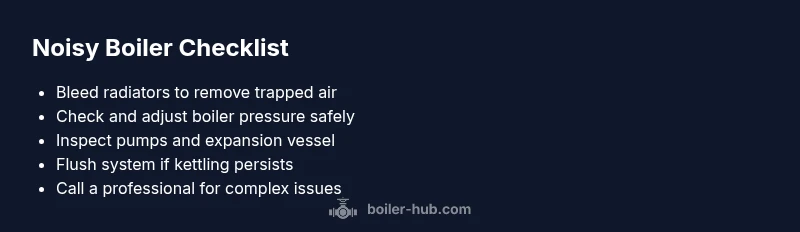
Yes, some boiler noises are normal, but loud banging, screeching, or grinding usually signal a problem. Start with quick checks: bleed radiators to remove air, verify boiler pressure (typically around the normal range when cold), and top up water if needed. If noises persist, shut off the boiler and call a professional for a safe inspection. Avoid ignoring recurring sounds.
is it normal for boiler to make noise
You might wonder: is it normal for boiler to make noise? In many homes, modest hums and occasional ticking come from normal operation. However, persistent loud banging, screeching, or kettling should not be ignored. According to Boiler Hub, most noises fall into a few categories: air in the system, pressure irregularities, circulation issues, or worn components. The difference between normal and dangerous sounds lies in duration, intensity, and whether you also notice leaks, cold spots, or a drop in heating performance. If you smell gas, see soot, or hear gas escaping, evacuate and call emergency services immediately. Regular maintenance performed by a qualified technician can reduce noise and extend boiler life. This guide provides safe checks and clearly indicates when professional help is required.
Common noise types and what they mean
Noises come in several distinct flavors, and each often points to a different underlying cause. A gentle, rhythmic hum or a steady boiler cycle can be normal, especially with older systems. Distinct problems, however, include:
- Banging or hammering: usually linked to sudden pressure changes, a closed mains feed, or mineral buildup that causes water to slam against heat exchangers (water hammer).
- Kettling: a rumbling, kettling-like sound typically indicates mineral scale or sludge restricting flow in the heat exchanger, causing localized boiling.
- Screeching or high-pitched whistling: often from air leaks, a faulty pump seal, or a blocked condensate pipe.
- Gurgling or slurping: air pockets in the system or improper radiator balancing. According to Boiler Hub analysis, the most common culprits are trapped air, low or high pressure, and worn pump parts. Pinpointing the sound helps you choose the safest next steps and reduces the risk of unnecessary disassembly. Always differentiate live gas concerns (odor, flame color changes) from boiler noises; if in doubt, treat it as urgent and contact a pro.
Quick checks you can do safely
These checks require no special tools and avoid opening sealed gas or electrical components. They help you separate quick, fixable issues from something that requires a pro.
- Bleed radiators: trapped air is a frequent cause of cold spots and banging. Use a radiator key at the bleed valve and listen for a steady stream of water.
- Check pressure gauge: most boilers prefer a mild pressure when cold. If the needle sits too low or too high, consult the manual for the correct target range and adjust with the filling loop if safe.
- Inspect flow and valves: make sure the automation and zone valves are in the correct position for heating. A mis-set valve can cause unusual cycling noises.
- Listen for pump issues: a buzzing or grinding sound often indicates a failing pump bearing or an air-locked impeller.
- Look for obvious leaks: damp patches, rust, or wet patches around joints can worsen noise and signal a bigger problem.
Important safety notes: do not tamper with gas lines, electrical wiring, or the gas valve itself. If you smell gas or hear hissing from the gas supply, evacuate and call emergency services. If you cannot resolve the issue quickly, shut off power to the boiler safely and contact a licensed technician promptly. This action plan aligns with Boiler Hub guidance on safe troubleshooting.
Diagnostic flow overview
A structured diagnostic flow reduces guesswork and speeds up repairs. Start with symptom, then test plausible causes in order of likelihood. For noise symptoms, begin with air in the system, then pressure checks, followed by pump or valve issues, and finally mineral buildup. Each step should be checked against the next: does bleeding radiators reduce the noise? Did pressure rise or fall after topping up? If not, proceed to inspect the pump and expansion vessel with caution. This flow mirrors best practices and helps homeowners decide when to call a pro. Remember: if at any point you feel unsafe or the gas is involved, stop and seek professional help. Boiler Hub emphasizes safety-first while tackling noise problems.
Prevention and maintenance to avoid noise
Preventing noise starts with regular maintenance and smart operation. Schedule annual servicing to catch worn components and mineral buildup before they cause loud noises. Keep an eye on the pressure gauge and top up as needed following the manufacturer’s guidelines. Radiator balancing helps even water flow, reducing hotspots that lead to kettling or banging. If you notice recurring sounds during a specific season, it may reflect changes in heating demand or valve operation. By prioritizing routine servicing and early warning signs, you can minimize unexpected disturbances and extend boiler life.
When to call a pro and what's next
If noises persist after you complete the basic checks, or you detect gas odors, leaks, or a failure to heat, contact a licensed technician promptly. Do not attempt complex repairs yourself on gas or high-pressure systems. The Boiler Hub team recommends documenting symptoms, dates, and any changes you made during troubleshooting to help the technician diagnose faster. After a professional service, request a complete safety check and confirm the recommended maintenance plan to prevent future issues.
Steps
Estimated time: 45-75 minutes
- 1
Turn off and cool down
Switch off the boiler and let it cool before touching components.
Tip: Never service a hot boiler; risk of burns. - 2
Bleed radiators
Use a bleed key at each radiator to release trapped air until water appears, then tighten the valve.
Tip: Have a cloth ready to catch water. - 3
Check boiler pressure
Look at the pressure gauge; if below the minimum, top up with the filling loop following the manual.
Tip: Do not overfill; rise gradually. - 4
Inspect for leaks
Check pipes and joints for damp patches; tighten connections only if safe to do so.
Tip: If unsure, stop and call a pro. - 5
Test operation
Restore power, set to heating mode, and listen for changes in noise.
Tip: If noise remains, stop and call a professional.
Diagnosis: Boiler makes loud banging or kettling noises
Possible Causes
- highAir in system
- mediumHigh pressure or low pressure
- mediumKettling from mineral buildup
- lowFaulty pump or diverter valve
Fixes
- easyBleed radiators and repressurize boiler
- easyCheck and adjust boiler pressure to the recommended range
- mediumFlush or chemically clean the system if kettling persists
- hardInspect or replace pump/diverter valve
Questions & Answers
What causes kettling in a boiler?
Kettling is usually caused by mineral buildup in the heat exchanger. Flushing the system can help, but severe buildup may require professional service.
Kettling is usually mineral buildup; flushing can help, but you may need a pro for heavy buildup.
Is a loud bang dangerous?
A loud bang can indicate dangerous pressure changes or gas-related issues. Shut off power and call a licensed technician if it recurs or is accompanied by gas odors.
A loud bang can signal a serious problem; switch off and call a technician if it happens again.
Can I bleed radiators myself?
Yes, bleeding radiators is a simple, safe operation if you follow steps and wear protection. If unsure, have a pro guide you.
Bleeding radiators is doable if you follow steps carefully. If in doubt, get a pro to assist.
When should I call a professional?
If noises persist after basic checks, or if you notice gas smells, leaks, or loss of heating, contact a professional promptly.
Call a professional if noises persist or you smell gas or see leaks.
Does boiler noise mean imminent failure?
Not always, but persistent or worsening noises can indicate a developing fault. Regular maintenance helps catch issues early.
Noise can signal a fault, so monitor and maintain regularly.
Can expansion vessel problems cause noise?
Yes, a faulty expansion vessel can cause banging or pressure fluctuations. A pro should diagnose and replace if needed.
Expansion vessel issues can cause noisy pressure changes; have a pro check.
Watch Video
Key Points
- Identify the noise type to narrow causes
- Bleed radiators and check pressure first
- Do not ignore persistent or gas-related sounds
- Call a pro if unsure or safety concerns arise