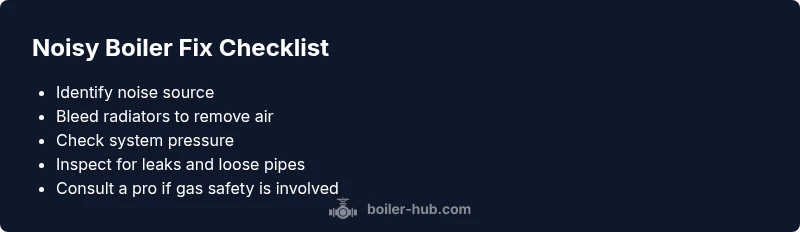
Noisy Boiler Troubleshooting: Fast, Safe Fixes
Diagnose and fix a noisy boiler quickly with safe, step-by-step checks for air, kettling, and pressure issues. Practical, expert guidance from Boiler Hub.


Frequently, a noisy boiler is caused by air trapped in the system, kettling from mineral buildup, or pressure issues. Start with quick, safe checks: bleed radiators to release trapped air, verify boiler pressure on the gauge (usually 1-1.5 bar when cold), and reset the boiler if needed. If unsure, call a pro.
Causes of a Noisy Boiler
A noisy boiler is not just annoying—it can signal developing problems that affect efficiency and safety. In most homes, the noise comes from three main sources: trapped air, kettling from mineral buildup in the boiler or heat exchanger, and improper water pressure. According to Boiler Hub, these issues are the most frequent culprits for bangs, pops, whistles, and hums you hear when the boiler cycles on. Understanding the signal can save you money and prevent damage.
- Trapped air in the system creates puffing or whooshing sounds as water moves past air pockets.
- Kettling happens when mineral deposits (limescale) create hot spots that boil the water unevenly, producing grinding or rumbling noises.
- Pressure problems occur when the system pressure is too high or too low, causing the pump and valve to work harder or rattle.
- Loose components, such as the pump, pressure relief valve, or pipework, can also vibrate and generate metallic sounds.
Early, light noises are usually harmless if they’re short-lived and disappear after the boiler has run for a few minutes. Persistent or escalating sounds require closer inspection and possibly professional service.
Common Noise Types and What They Mean
Boilers produce several distinct noises, and each often maps to a different issue. A high-pitched whine or hiss often points to a pressure valve or a restricted flow. A banging or kettling sound usually indicates limescale buildup or restricted water flow. A bubbling or gurgling sound can come from air in the radiators or the feed-and-expansion pipe. A deep rumble or vibration might indicate a loose pump or loose mounting bolts. Boiler Hub's analysis shows that matching the noise to a source helps isolate the fix, reducing unnecessary parts replacement.
- Whine/hiss: check pressure and inspect for leaks around the filling loop.
- Banging/kettling: flush the system, consider a descaling treatment.
- Bubbling: bleed radiators, ensure air from the expansion tank is removed.
- Rumble: tighten or secure pump and piping; isolation mounts may be needed.
- Vibrations: ensure the boiler is level and secured.
Note: Some noises may indicate dangerous conditions (gas-related issues, carbon monoxide risk). If you smell gas or hear a distinct gas smell, leave the premises and call emergency services.
Quick Safe Checks You Can Do
Before you call a technician, run through these quick checks. They’re safe for most homeowners if you follow guidance from Boiler Hub and your boiler’s manual. Start with the simplest actions: ensure the boiler is not overloaded, all radiators are bled, and the expansion vessel is not over-pressurizing the system.
- Check the pressure gauge when the boiler is cold; typical residential systems run around 1-1.5 bar. If it’s below 1 bar, you may need to re-pressurize according to your manual.
- Listen for changes after bleeding radiators; air removal often stops the tapping sound.
- Inspect for visible leaks around the filling loop, pressure relief valve, and pipe joints.
- Ensure the pump is not making grinding noise by briefly feeling for vibration on the outer case; if the pump is hot, switch off and let cool before touching.
If the noise continues after these checks, avoid major DIY attempts and call Boiler Hub or a licensed gas engineer.
Diagnostic Flow: From Noise to Diagnosis
This diagnostic flow helps translate sound into a cause and fix. Start with the simplest explanation (air in the system) and move toward more complex issues (pressure or flow problems). If at any point you’re unsure, stop and seek professional advice.
-
Symptom: A consistent banging sound when the boiler starts.
-
Likely cause: kettling from hard water deposits.
-
Immediate fix: flush the system or install a descaler if you’re comfortable; otherwise call a pro.
-
Symptom: A high-pitched whine when heat is on.
-
Likely cause: pressure-relief valve or high boiler pressure.
-
Immediate fix: check the gauge and reduce pressure only if you know how; otherwise, call a pro.
-
Symptom: Continuous bubbling in the radiator valves.
-
Likely cause: air in the system or expansion vessel fault.
-
Immediate fix: bleed air; verify system is properly charged.
Boiler Hub notes that if you cannot confirm the noise source or if the noise returns after fixes, professional service is recommended.
Step-by-Step Fixes for the Most Common Causes
- Identify Noise Type: Listen closely to categorize the noise (banging, hissing, bubbling, or rumbling). This shapes the next steps. Tip: Use your phone to record a brief clip for reference when you call a technician.
- Bleed Radiators: If air is present, bleeding radiators can release trapped air and quiet the system. Tip: Place a cloth and bowl to catch drips and avoid scalding.
- Check and Adjust Boiler Pressure: Use the boiler’s pressure gauge. If pressure is low, re-pressurize with the filling loop following the manual; if high, you may need to vent some water via the filling loop or have a pro adjust it. Tip: Never open high-pressure valves with the system hot.
- De-kettle the System: Mineral buildup causes kettling. Descale or flush the system if you’re comfortable, or schedule a professional descaling. Tip: Regular service can prevent scale buildup.
- Inspect for Leaks and Loose Components: Look for leaks around joints and ensure the pump, mounting bolts, and pipes are secure. Tighten loose connections if you know what you’re doing. Tip: If bolts are corroded, don’t force — call a pro.
- Test After Fixes: Restart the boiler and observe for continued noise. If noises persist, progression to more advanced checks or professional service is warranted. Tip: Record performance after fixes for future reference.
Safety Considerations and When to Call a Pro
Fuel- and gas-fired boilers carry safety risks. If you smell gas, hear a loud hissing or see condensation near the gas line, evacuate immediately and contact emergency services. Do not attempt gas valve work yourself. Always switch off power at the mains before inspecting electrical components. If the boiler is under warranty, consult the manufacturer’s service guidelines to avoid voiding coverage. In cases of frequent cycling, unusual flames, or CO alarms, call a licensed gas engineer promptly.
- Always prioritize gas safety; CO detectors should be present and tested regularly.
- Do not bypass safety devices or remove casings to access internal parts.
- If you’re unsure about any step, stop and seek professional help.
- Schedule annual servicing to maintain efficiency and safety.
Preventive Maintenance to Reduce Future Noise
Preventing noise starts with a simple maintenance habit. Schedule an annual boiler service; regular servicing helps identify wear on pumps, valves, and heat exchangers before they become noisy problems. Keep the system balanced by ensuring radiators are bled and the expansion vessel is functioning correctly. Use an approved descaler or water treatment if your area has hard water, and consider upgrading to a more robust pressure-relief strategy if your system is consistently over-pressurized. Finally, track noise patterns—new sounds after weather changes or plumbing work can signal a developing issue that deserves attention.
Steps
Estimated time: 60-90 minutes
- 1
Identify noise type
Listen closely to the sound and note when it occurs (on startup, during heat, or while circulating). This helps narrow down the likely cause and guides the next steps.
Tip: Record a short clip for reference when discussing with a pro. - 2
Bleed radiators
Carefully bleed each radiator to remove trapped air. Start with the highest floor radiators and work downward.
Tip: Have a cloth ready to catch water and prevent burns. - 3
Check boiler pressure
Watch the pressure gauge with the system cold. If pressure is too low, re-pressurize using the filling loop per the manual; if too high, vent a small amount of water or call a pro.
Tip: Never open hot valves; wait for the system to cool. - 4
Address kettling if present
If kettling is suspected, consider flushing or descaling the heat exchanger, or use a water treatment approved for your system.
Tip: Descaling is best done by someone experienced with boilers. - 5
Inspect and secure components
Check the pump, pressure relief valve, and piping for looseness or wear. Tighten connections within your comfort and safety limits.
Tip: If connections look corroded, stop and call a professional. - 6
Test operation
Restart the boiler and listen for changes in noise. If it’s quieter, monitor for recurrence over a few days; if not, escalate to professional service.
Tip: Keep notes of the noise pattern for the technician.
Diagnosis: Boiler makes unusual noises during operation
Possible Causes
- highAir in the system
- mediumKettling from mineral buildup
- lowLow or high boiler pressure
- lowLoose pump or mounting bolts
Fixes
- easyBleed radiators to remove air pockets
- mediumFlush/descale the boiler to remove mineral deposits
- easyRepressurize or vent system to proper pressure
- mediumTighten loose components or replace faulty pump
Questions & Answers
What is the most common cause of a noisy boiler?
The most common cause is trapped air in the heating system or kettling from mineral buildup. Both can create distinct noises, and addressing air first often resolves the issue. If the noise persists, it may indicate a pressure or pump problem requiring professional assessment.
The most common cause is trapped air or mineral buildup. Air first, then check pressure if it continues.
Can I fix a noisy boiler myself?
Some safe checks, like bleeding radiators and confirming pressure, can be done by homeowners. However, complex issues such as kettling, high pressure, or gas-related noises should be handled by a licensed professional to avoid safety hazards.
Some checks are DIY-friendly, but for complex issues, call a licensed professional.
When should I call a professional?
If bleeding radiators doesn’t stop the noise, if you detect gas odor, or if the pressure gauge reads outside the safe range repeatedly, contact a heating engineer. A pro can safely descale, diagnose pressure faults, and inspect the circulatory pump.
Call a heating engineer if the noise continues or you smell gas.
Is kettling dangerous for my boiler?
Kettling indicates mineral buildup and hot spots that can reduce efficiency and shorten boiler life. While not immediately dangerous, it’s a sign to descale and check the system promptly with a professional if simple fixes fail.
Kettling isn’t immediately dangerous, but it’s a sign to descale and inspect the system.
Can water pressure affect noise?
Yes. Boiler pressure that’s too high or too low can cause vibrations or banging. Regularly check the gauge, keep within the recommended range, and re-pressurize only as the manual directs.
Pressure levels matter; keep them within the manual’s safe range.
What maintenance prevents noisy boilers?
Annual servicing, timely descaling, bleeding radiators, and inspecting the expansion vessel all help prevent noise. Keeping your system clean reduces future kettling and flow-related noises.
Regular service and maintenance prevent most boiler noises.
Watch Video
Key Points
- Bleed air and check pressure to quiet most noises
- Kettling requires descaling or flushing for relief
- Gas safety takes precedence; call a pro if unsure
- Regular servicing prevents future noise and saves energy
- Document noise changes for future reference