What to do if your boiler is making a loud noise
Urgent, actionable steps to diagnose and fix a loud boiler. Learn common causes (air, sediment, loose components), safe home fixes, when to call a pro, and how to prevent future noises.


A loud boiler usually indicates trapped air, sediment, or a loose component, or a failing pump. Start with safety: turn off the boiler, bleed radiators to release air, and check the pressure. If the noise persists, call a professional.
Why a loud boiler happens
According to Boiler Hub, a loud boiler is a signal that something in your heating system isn’t behaving quietly. The most common culprits are trapped air in radiators or pipes, mineral sediment buildup in the boiler’s heat exchanger, or a loose pump, valve, or pipe that vibrates when water flows. In some homes, rapid expansion when the boiler starts or stops can create banging or thudding noises. Understanding these causes helps you apply the right fix without unnecessary trial-and-error.
- Air in the system reduces flow and causes hammering or gurgling.
- Sediment can insulate heat transfer, leading to pressure spikes and noise.
- Loose components vibrate when pressure surges.
If you’re unsure about any step, pause and plan for professional help; gas appliances require licensed technicians.
Common noise types and what they mean
Different noises indicate different issues: banging or kettling often means restricted flow or mineral scale; gurgling is usually air trapped in the system; whistling or screeching can come from a faulty pump, valve, or flow restriction. Note when noises occur: during ignition, while heating, or when the thermostat cycles. Each sound will guide your next steps.
- Banging or kettling often points to mineral buildup or restricted flow.
- Gurgling usually signals air in the water jacket or pipes.
- A whistle or screech can indicate a faulty pump or faulty valve.
Safety-first steps you can take now
Before touching boiler internals, ensure safety. If you smell gas, evacuate the area and call emergency services. Do not attempt gas work yourself. If there’s no gas odor, switch off the boiler and let it cool before inspecting. Wear eye protection and avoid live electrical components. Always refer to your boiler’s manual for model-specific cautions.
- If you smell gas: leave immediately and call emergency services.
- Do not disassemble gas appliances yourself.
- When safe, allow the boiler to cool before touching anything.
- Use proper PPE and follow the manual’s safety notes.
The Boiler Hub team emphasizes following gas-safety guidelines and having annual service to prevent issues.
Diagnostic flow: quick path from symptom to fix
Symptom → probable cause → fix. Start with the simplest checks: is the boiler pressure in the recommended range? Are radiators warm at the bottom and cool at the top? If you identify air, prioritize bleeding. If water looks dirty or you hear grinding, consider flushing. If the issue persists after basic fixes, escalate to professional service.
- If pressure is low, top up using the filling loop.
- If radiators need frequent bleeding, there may be ongoing air ingress.
- If sounds persist after bleeding and pressure check, a professional should inspect the pump, expansion tank, and heat exchanger.
Step-by-step fixes for the most common cause
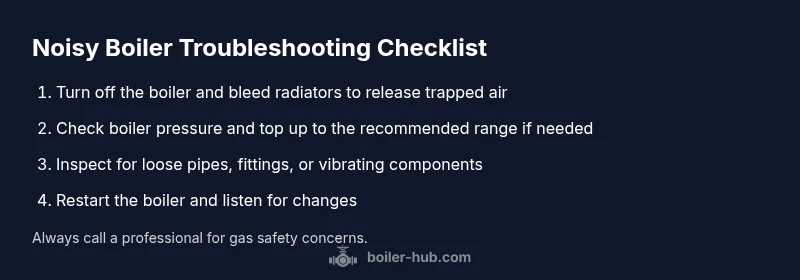
Most loud noises are caused by trapped air. Steps: 1) Power off and let the boiler cool. 2) Bleed radiators starting from the highest radiator, collecting water in a container. 3) Recheck and adjust boiler pressure to the recommended range. 4) Restart and listen; if noise reduces, monitor for recurrence. 5) Inspect visible fittings for looseness and tighten carefully. 6) If the noise persists, seek professional help to inspect the heat exchanger and pump.
- Temperature and pressure changes should be gradual.
- Do not force valves; use a proper bleeding key and cloth.
- Keep a log of pressure readings and noises to share with a technician.
Prevention tips to avoid future noise
Regular maintenance is the best defense. Schedule an annual boiler service, especially if you have hard water or mineral-rich supply. Bleed radiators once or twice a year and after major heating usage. Check the expansion tank and pressure relief valve for proper operation. Keep the system clean by flushing when recommended by a professional. Maintaining consistent thermostat settings helps avoid rapid cycling and associated vibrations.
- Annual service reduces the risk of buildup and loose components.
- Regular radiator bleeding prevents air pockets.
- Use treated water or softeners if you have hard water to reduce mineral deposits.
- Record any recurring noises to catch trends early.
When to replace or upgrade
If your boiler is older than 12–15 years and noise keeps returning despite fixes, or repair costs approach or exceed the price of a new unit, replacement is worth considering. A newer model is typically quieter, more efficient, and less prone to breakdowns. Have a qualified technician provide a cost-benefit estimate based on your system and usage.
- Consider efficiency ratings and potential energy savings when upgrading.
- Factor in installation costs and any necessary new venting or ventilation.
- Explore modern, quieter models with compatible controls for better comfort.
Boiler Hub recommends evaluating long-term costs and safety when deciding on replacement.
Safety reminders and professional help
This guide offers basic safety steps but is not a substitute for professional service. For gas appliances, only qualified engineers should perform inspections or repairs. If you’re unsure at any point, stop and call a licensed technician. Regular maintenance prevents many issues that cause loud noises. The Boiler Hub team notes that prompt, professional evaluation protects against escalation and ensures safe operation.
Quick maintenance routine you can perform this season
Create a simple seasonal checklist: test boiler ignition, inspect for corrosion, bleed radiators, check pressure, and listen for unusual sounds after a heating cycle. Keeping notes helps track trends and decide when to call a pro. Consistent maintenance is your best defense against noisy boilers.
Steps
Estimated time: 60-90 minutes
- 1
Power down and let the boiler cool
Turn off the boiler and allow it to cool completely before inspecting. This reduces the risk of burns or scalding and makes it safer to handle fittings.
Tip: Always disconnect power at the switch or breaker before touching wiring. - 2
Bleed the radiators to release trapped air
Use a radiator key on each radiator, starting from the highest floor. Open the valve until water runs steadily, then close firmly.
Tip: Have a cloth or tray ready to catch water to avoid spills. - 3
Check boiler pressure and top up if needed
Look at the pressure gauge; typical cold-range is around 1-1.5 bar. If low, use the filling loop to bring it up slowly to the correct level.
Tip: Consult your manual for the exact recommended range for your model. - 4
Inspect for loose fittings and vibrating components
Check visible pipes, pumps, and valve connections for looseness. Gently tighten where safe and audible rattles subside.
Tip: Do not overtighten; damaged threads or stripped fittings require professional repair. - 5
Run a test cycle and listen for changes
Restart the boiler and observe for changes in noise. Note any new sounds and whether the temperature and pressure stay stable.
Tip: Keep a log of times and noises to discuss with a technician. - 6
Call a professional if the noise persists
Persistent noises, especially with gas appliances, indicate internal issues that require expertise to diagnose safely.
Tip: If you sense a gas issue (smell, hissing), evacuate and call emergency services.
Diagnosis: Loud banging or rumbling after heating starts
Possible Causes
- highAir trapped in the heating system
- mediumSediment buildup in the heat exchanger
- lowLoose fittings or vibrating components
Fixes
- easyBleed radiators to release trapped air and restore proper flow
- easyCheck boiler pressure and top up to the recommended range
- mediumInspect for and tighten loose pipe fittings or vibrating components
- hardIf noises persist after basic fixes, schedule professional service to inspect heat exchanger and pump
Questions & Answers
Why is my boiler making banging noises?
Banging usually comes from trapped air, mineral buildup, or restricted water flow. Start with bleeding radiators and checking the pressure, then seek professional help if the noise continues.
Banging usually means air or deposits; bleed radiators and check pressure first, then call a pro if it doesn’t improve.
Can a noisy boiler be dangerous?
Some noises can signal gas or pressure problems. If you smell gas or hear hissing from the gas line, evacuate and call emergency services immediately.
Yes, certain noises can be dangerous; exit the area and call for help if you suspect a gas issue.
Should I bleed the system myself?
Bleeding radiators is a common DIY task, but if you’re unsure or dealing with gas, hire a professional. Never open gas lines or the boiler internals without proper training.
Bleed radiators if you’re comfortable; otherwise contact a pro for safe handling.
What causes a high-pitched whistle from a boiler?
A high-pitched whistle can come from a faulty pump, air in lines, or a pressure issue. Stop operation if unsure and seek pro support.
A whistle often means pump or air problems; a professional check is advised.
When should I replace my boiler due to noise?
If the boiler is old, noisy after fixes, or repairs are costly, replacement is often more economical and safer. A professional can provide a personalized recommendation.
If it’s old and noisy despite fixes, replacement is usually a good plan.
Watch Video
Key Points
- Bleed radiators and check pressure to quiet most noises.
- Sediment, wear, or loose parts may require professional service.
- If noises persist after basic fixes, don’t delay professional evaluation.
- Regular maintenance prevents future noisy boiler issues.