Why Does My Boiler Bang? Troubleshooting Guide for Homeowners
Struggling with a banging boiler? This Boiler Hub guide explains common causes, quick fixes, and a step-by-step diagnostic flow to restore safe, quiet heating and prevent damage.


Most banging noises from a boiler come from kettling, air in the system, or low water pressure. Start with bleeding radiators, checking the pressure gauge, and ensuring correct boiler venting. If the banging persists after these quick fixes, switch off the boiler and call a qualified technician. In some cases air locks or sludge buildup can worsen the noise.
Why does my boiler make a banging noise?
In many homes, a banging boiler is not a mystery. The most common causes are kettling from mineral buildup, air trapped in the system, and low boiler pressure. According to Boiler Hub, these issues account for the majority of banging noises in residential boilers. Left unchecked, they can reduce efficiency and shorten equipment life. Addressing them quickly can restore quiet operation and prevent further damage.
Other contributors include rapid temperature changes, scale buildup on heat exchangers, and faulty or blocked expansion valves. If you notice the noise occurs during heating cycles only, it may point to water hammer or boiler piping expansion. A structured approach helps isolate the cause without unnecessary risk.
Quick checks you can safely perform
Start with non-invasive steps that won’t void warranties or risk safety:
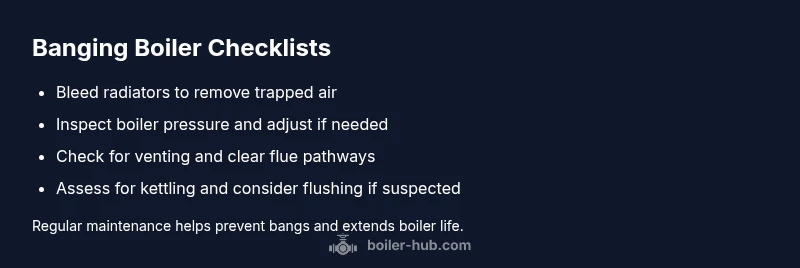
- Inspect the boiler’s pressure gauge. Most boilers operate within a safe range printed on the gauge; if it’s below or above, address it according to the manufacturer’s instructions.
- Bleed radiators to remove trapped air that can cause banging when the system heats up.
- Check that vents and flue outlets are unobstructed and that the boiler is venting properly during operation.
- Ensure the area around the boiler is clear and accessible; clutter can hide a leak or contribute to overheating.
If these checks don’t quiet the noise, proceed with the diagnostic steps. Never open combustion chambers or service internal seals unless you are trained and authorized to work on gas appliances.
Diagnostic-flow overview
This section outlines a practical flow to diagnose the source of a banging boiler:
- Symptom: banging occurs during heat-up, ignition, or when radiators warm. 2) Check for simple causes first (pressure, air, venting). 3) Move to moderately involved checks (radiator bleeding, sludge, expansion tank). 4) If the issue persists after safe, non-invasive steps, escalate to flushing the system or professional service. Following the flow helps you avoid unnecessary disassembly and keeps safety priority number one.
Step-by-step fixes for the most common causes
Resolution usually begins with the easiest fix. Here are the most common culprits and how to address them in order:
- Kettling from mineral buildup: turn off the boiler, let it cool, then perform a gentle power-flush or have a professional descale the heat exchanger. This reduces the mineral scale and improves efficiency.
- Air trapped in the system: bleed the radiators starting from the top floor down. Re-check the boiler pressure after finishing. Tip: keep a cloth handy to catch spurts of water.
- Low water pressure: inspect the pressure gauge and repressurize the system following manufacturer guidelines. If the gauge doesn’t hold pressure, a leak may exist and requires further investigation. Tip: record the correct pressure target for your boiler.
- Expansion valve or sludge in pipes: if noise aligns with temperature changes, a professional service may be needed to replace expansion components or flush the pipes. Tip: do not attempt to replace parts without proper tools.
- Dry-run or ignition issues: if banging occurs immediately after ignition, there could be gas supply or burner problems; call a pro.
- If none of the above quiets the noise, schedule a professional boiler service and safety check. Tip: regular annual servicing reduces future bangs and keeps safety high.
Safety, prevention, and when to call a pro
Safety is non-negotiable with gas appliances. If you smell gas, oxygen-deprivation odors, or notice scorch marks, evacuate and call emergency services. Do not attempt to operate or disassemble fuel-burning components if you are not qualified. Regular maintenance, including annual servicing and timely fixes, reduces the risk of kettling and air-related banging. When in doubt, a licensed technician can safely diagnose and repair complex issues beyond basic bleeding and pressure checks.
Steps
Estimated time: 45-60 minutes
- 1
Power off and ensure safety
Before touching the boiler, switch off the power at the thermostat and the mains. If you have a gas boiler, turn the gas supply valve to off only if you are trained and it is safe to do so. Allow the unit to cool completely before touching any components. A quick safety check now prevents accidents later.
Tip: Keep a flashlight handy and take note of any unusual smells or scorch marks before you start. - 2
Check pressure and repressurize
Look at the boiler pressure gauge when the unit is cold. Most boilers operate around 1 bar; if it’s well below or above the recommended range, repressurize according to the manual using the filling loop. After adjusting, recheck the pressure once the system has warmed a bit.
Tip: Open the filling loop slowly to avoid sudden pressure spikes. - 3
Bleed the radiators
Starting with the highest radiator, use a bleed key to release trapped air until water (not air) escapes. Close the valve when a solid stream of water is steady. Repeat on all radiators, then recheck boiler pressure and top up if needed.
Tip: Have a cloth ready to catch splashes; bleed valves are small and can feel stiff. - 4
Inspect expansion and venting
If banging occurs with temperature changes, the expansion vessel or venting might be faulty. Check for signs of corrosion, waterlogged vessels, or discharge from the pressure relief valve. These issues typically require professional servicing.
Tip: Do not attempt to replace an expansion vessel without the correct tools and knowledge. - 5
Flush or descale when necessary
If kettling or sludge is suspected, a professional flush or descaling can restore flow and efficiency. This is especially important in older systems or if multiple radiators remain cold or noisy after basic bleeding.
Tip: Consider a full system assessment to prevent future buildup. - 6
Know when to call a pro
If the banging continues after the above steps, or if you detect gas odors, call a licensed heating engineer. Persistent noise can indicate hidden faults that require diagnostic equipment and expertise to fix safely.
Tip: Keep a log of pressure readings and noise patterns to aid the technician.
Diagnosis: Boiler makes banging noises during heating cycle
Possible Causes
- highKettling due to mineral buildup and limescale
- mediumAir trapped in the system
- highLow boiler pressure
- mediumSludge or corrosion in heat exchanger or pipes
Fixes
- easyBleed radiators to remove trapped air and recheck system pressure
- easyRepressurize the boiler using the filling loop per manufacturer instructions
- mediumFlush the radiator circuit or power-flush the system to remove sludge
- hardInspect/replace expansion vessel or pressure-relief components; call a professional if needed
Questions & Answers
What causes a boiler to bang only when heating turns on?
Bangs that occur during heating often point to kettling, air in the system, or pressure issues. Start with bleeding radiators and checking pressure, then inspect for sludge and venting problems. If the noise continues, seek professional help.
Banging during heating usually means kettling or air in the system. Bleed radiators and check pressure, then consult a pro if it doesn’t stop.
Is kettling dangerous for my boiler?
Kettling can cause overheating and long-term damage if ignored. It often indicates mineral buildup and requires flushing or descaling. A professional should assess persistent kettling.
Kettling can damage the boiler over time; it often needs flushing and a professional check.
Can air in the system cause banging?
Yes. Trapped air creates pressure differences that produce banging noises as the system heats. Bleeding radiators usually resolves this unless air pockets recur.
Air trapped in radiators is a common cause of banging; bleed them to fix it.
Should I bleed radiators myself?
Bleeding radiators is a common DIY task if done carefully. Ensure the boiler is off and pressures are managed. If you’re unsure, hire a pro to avoid injury or damage.
Bleeding is doable for many homeowners, but do it safely or call a pro if unsure.
When should I call a professional for a banging boiler?
Call a professional if bleeding and pressure checks don’t quiet the noise, if you notice gas odors, or if there are signs of leaks, cracks, or unusual flames. A trained technician can diagnose safely.
Call a pro if the banging persists after basic checks or you detect gas odors.
Watch Video
Key Points
- Bleed air and recheck pressure promptly
- Identify whether banging happens on startup or during heating
- If noise persists after safe fixes, call a pro
- Regular maintenance prevents future bangs