Why Is My Boiler Humming? A Practical Troubleshooting Guide
Learn why a boiler hums, identify common causes, and follow a step-by-step troubleshooting plan from Boiler Hub to diagnose safely and restore reliable heating.


A humming boiler is usually a symptom of vibration rather than an immediate danger. The most common causes are a loose pump, air in the system, or a failing motor. Start with the simplest checks: power and gas safety, inspect visible connections, and listen for the exact source of vibration to guide the next steps.
Understanding the Humming Boiler: What It Signals
If you're wondering why is my boiler making a humming noise, you're not alone; this sound often signals issues with water flow, air in the system, or vibration from mechanical components rather than an immediate gas leak. According to Boiler Hub, humming can result from trapped air in the pipes, a worn circulating pump bearing, or loose mounting nearby that lets the unit resonate. The good news is that many humming noises are solvable with a methodical, safety-conscious approach and basic maintenance. In this guide, we walk through practical checks, common culprits, and clear next steps to keep your heating running smoothly. The Boiler Hub Team emphasizes safety first and provides step-by-step guidance you can follow with confidence.
Common Causes: Air in the System and Venting
Air in a hydronic system is a frequent source of vibration and humming. When air pockets form, water flow can become choppy, and the pump will struggle to push water through radiators or baseboards. Bleeding radiators and using the boiler’s automatic air vents are your first lines of defense. Regularly checking that vents are clear and valves are open can prevent persistent humming. In addition to air, a loose valve or pump connection can reverberate through the cabinet, producing a steady, annoying tone. If you hear a gurgling or crackling sound in addition to the hum, air is very likely involved.
Common Causes: Circulating Pump Bearings and Mounting
The circulating pump is the heart of the system’s water movement. Worn bearings or a loose pump mounting can create a consistent hum that seems to come from inside the unit. If the hum is most noticeable when the heating cycle starts or when the pump speeds up, this is a strong hint the pump is the source. Tightening any accessible mounting bolts (without over-tightening) or replacing a worn bearing may resolve the issue. If you can access the electrical connection safely, check for a loose plug or wiring that could amplify vibration. Remember, the pump is a moving part and is more prone to wear after several seasons of use.
Common Causes: Expansion Vessel and System Pressure
An expansion vessel that has lost its charge or is waterlogged can produce a high-pitched or constant hum as the system pressures fluctuate. Incorrect pressure too high or too low can cause the boiler to fight to maintain temperature, leading to audible vibration. You can often verify pressure on the boiler gauge and compare it with the manufacturer’s recommended range. If the vessel seems weak or the pressure is outside the safe range, it may need recharging or replacement. Handling pressurized components should be done with care and, if in doubt, by a qualified technician.
Other Mechanical Sources: Inducer/Fan and Heat Exchanger Vibrations
In condensing boilers, the inducer fan can vibrate if its bearings are worn or if debris is lodged in the housing. You may notice the hum changing with burner operation or when the boiler cycles on and off. The heat exchanger itself can transmit vibrations that create a humming tone if scale buildup or partial blockages impede water flow. These issues often require more detailed inspection and, in some cases, professional cleaning or replacement. A careful, non-destructive inspection can help pinpoint whether the sound is isolated to a component or radiates through the entire unit.
Safety First: Safety Considerations Before Troubleshooting
Before you begin any hands-on checks, ensure your safety. Turn off the boiler and switch off the power at the main disconnect. If you suspect gas smell, gas leaks, or any burning odor, evacuate and call emergency services immediately. Do not attempt to disassemble gas lines or burner assemblies unless you are trained. Use appropriate PPE if you have to touch exposed components. If you’re unsure about any step, contact Boiler Hub for guidance. Safety is the priority as you diagnose a humming boiler.
Safe, Quick Checks You Can Perform Now
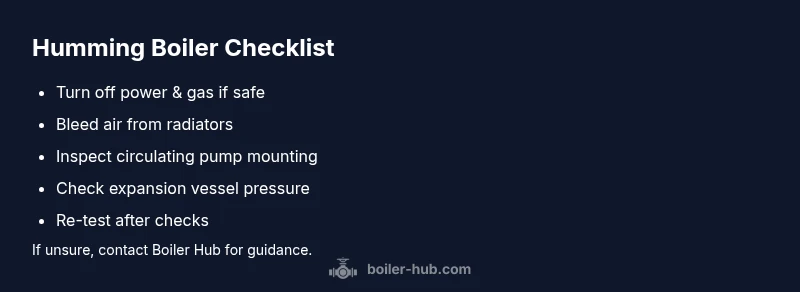
- Visually inspect for loose panels, pipes, and mounting brackets and tighten gently if safe to do so.
- Locate the pump and ensure it is mounted securely and wired correctly.
- Bleed air from the system using the air vent on radiators or the boiler’s automatic vent.
- Check the system pressure on the gauge; compare to the recommended range and adjust if necessary.
- Listen closely to identify whether the hum comes from the pump, the vent, or a distant pipe.
How to Interpret Sounds and Localize the Source
Sound localization is a powerful tool. If the hum is loudest near the pump cabinet, the pump bearings or mounting are likely the culprit. If the sound intensifies when radiators are vented, air in the system is a prime suspect. If the hum is tied to boiler cycling, the pressure or expansion vessel may be at fault. A careful walk-around, combined with simple checks described above, will help pinpoint the source before you take further steps.
When to Call a Professional
If the humming persists after completing the simple checks, or if you detect gas odors, unusual flames, or a sudden change in water pressure, contact a licensed heating technician immediately. Professionals can safely test flame quality, electrical isolation, gas pressure, and appliance boundaries without putting you at risk. Boiler Hub recommends staged troubleshooting: start with basic safety checks, then address air and pump issues, and escalate to expansion vessel or burner evaluation if needed.
Prevention: Keep Humming from Returning
Regular maintenance dramatically reduces the likelihood of humming. Schedule annual boiler service, bleed radiators at the start of the heating season, and have the expansion vessel and system pressure checked periodically. Clean, sealed pipe connections minimize vibration transfer. Keeping a simple log of noises, time of year, and boiler cycling can help your technician diagnose issues quickly in the future. Following a routine maintenance calendar is the best defense against recurring humming noises.
Steps
Estimated time: 60-90 minutes
- 1
Power down & ensure safety
Turn off the boiler and ISO-mount power from the main switch. If you smell gas, evacuate and call emergency services. Safety first sets the stage for a safe diagnostic.
Tip: Double-check all electrical disconnects before touching components. - 2
Locate the noise source
Listen near the pump and vent locations to identify where the hum originates. A simple stethoscope or a long screwdriver used gently can help localize without touching hot surfaces.
Tip: Never place tools against moving parts while powered. - 3
Bleed air from radiators
Use a radiator key or the boiler vent to release trapped air. Do not over-bleed; close vent when water begins to run steady.
Tip: Keep a cloth handy to catch any sputtering water. - 4
Check the circulating pump
Inspect mounting bolts and electrical connections. If the pump spins freely but still hums, the bearings may be worn.
Tip: Only perform if you can safely access the pump with power off. - 5
Inspect expansion vessel & system pressure
Check the expansion vessel charge and boiler pressure gauge. Pressure outside the recommended range can cause vibration.
Tip: Do not attempt to recharge the vessel unless you’re trained. - 6
Inspect for loose panels or piping
Tighten any loose brackets and pipes that could transfer vibration to the cabinet. Small, gradual tightening is safer than forcing parts.
Tip: Use a torque-limiting approach to avoid over-tightening. - 7
Test burner and flame quality (if trained)
If you have knowledge of boiler flames, verify that the burner is clean and the flame is stable. A malfunctioning flame can cause humming when combustion variations occur.
Tip: Never reach into the burner housing with powered equipment. - 8
Re-test the system
Power the unit back on and observe if the hum persists. Note any changes in volume or pitch with temperature and cycling.
Tip: Keep a log of timings and symptoms for reference. - 9
Call a professional if unresolved
If the humming continues after basic checks, a licensed technician can safely assess the pressure vessel, gas valve, and burners.
Tip: Don’t push beyond your comfort zone—professional tools and training are essential.
Diagnosis: Boiler makes a loud humming or vibrating noise during operation
Possible Causes
- highAir trapped in the heating system or boiler
- mediumWorn or loose circulating pump bearings or motor coupling
- lowVibration transmitted from expansion vessel or clogged/dirty heat exchanger
Fixes
- easyBleed radiators or use manual air vent to remove trapped air
- mediumInspect and secure the circulating pump, replace worn bearings or tighten mounting bolts
- mediumCheck expansion vessel pressure; reseat or replace as needed
- hardIf noise persists, consult a qualified technician to inspect burner and gas valve
Questions & Answers
What is the most common cause of a humming boiler?
Air in the system or a loose/malfunctioning circulating pump are the most frequent culprits. Start with bleeding air and inspecting the pump connections.
Most often, a humming boiler is due to air in the system or a loose pump. Bleed air and check the pump to start.
Is a humming boiler dangerous?
A humming boiler is usually not immediately dangerous, but it can indicate issues that affect efficiency or safety, especially if gas or flame problems are involved. If you smell gas or see flames, evacuate and call emergency services.
It's usually not dangerous, but gas smells or flames require immediate help. If in doubt, get a pro.
Can I fix a humming boiler myself?
You can perform basic, safe checks like bleeding air and tightening loose panels. More complex tasks like inspecting the burner, expansion vessel, or gas valve should be done by a qualified technician.
Basic checks are okay, but more complex tasks should be done by a pro.
Why does the hum change when I bleed radiators?
Bleeding changes the system’s air balance, which can alter the hum. If the noise lessens after bleeding, air was contributing to the vibration.
Bleeding can adjust the hum; if it stops, air was a factor.
When should I call a professional?
If basic checks don’t fix the noise, or you notice gas odors, erratic flames, or pressure changes, contact a licensed technician promptly.
Call a professional if the noise persists or you detect gas issues.
What maintenance helps prevent humming?
Annual boiler service, regular radiator bleeding, and checking expansion vessel pressure help prevent humming and maintain efficiency.
Regular maintenance is the best prevention.
Watch Video
Key Points
- Identify the source of the hum before attempting fixes.
- Air in the system and pump issues are the most common culprits.
- Safety always comes first; call a pro if unsure.
- Bleed air and inspect the pump as first-line steps.
- Prevent hums with annual maintenance and system checks.