Boiler Is Humming? Quick Troubleshooting Guide for Homeowners
Diagnose and fix a boiler that is humming with practical steps, safety guidelines, and when to call a professional. From air in the pipes to faulty valves, get clear, actionable guidance.


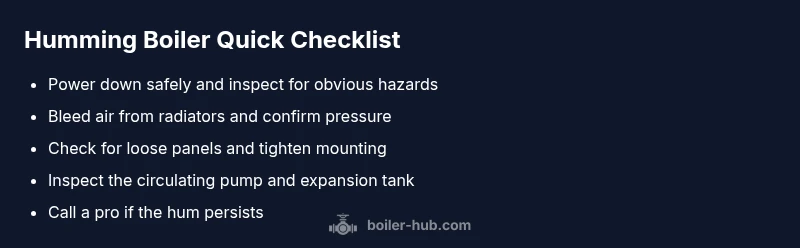
Most humming in a boiler is caused by air in the system, a failing circulating pump, or loose components vibrating against the cabinet. Start by turning off power and gas for safety, then secure any loose panels and wiring, bleed air from radiators if needed, and recheck pressures. If the hum persists after basic steps, call a qualified technician.
Understanding the Hum: What a humming boiler means
A boiler that is humming is signaling that something in the heating loop is vibrating or circulating abnormally. Often this is a symptom rather than a failure in itself. In many homes, the hum comes from air trapped in the system, a failing circulating pump, or a loose component that isn’t secured properly. The goal is to identify whether the sound is a harmless vibration or a sign of an impending problem. When you hear a consistent hum, it’s wise to act promptly to prevent damage, reduce energy waste, and maintain comfort. According to Boiler Hub, early attention to a humming boiler protects both system longevity and home safety. Remember: never ignore unusual boiler noises, especially if you notice changes in heating performance, increased energy use, or rising pressure in the expansion unit.
Common Causes of a Hum in a Boiler
Hums and buzzes don’t all come from the same place. Here are the most frequent culprits you’ll encounter:
- Air in the system: Air trapped in pipes or radiators can create a humming or gurgling sound as water moves past pockets of air.
- Faulty circulating pump: A worn impeller or a failing pump can produce whining or humming by fighting against the water flow.
- Loose components: Panels, brackets, or pipe supports that aren’t snug can allow metal to vibrate against other parts.
- Water flow restriction: Blocked filters or closed valves may cause the pump to work harder, generating a hum.
- Pressure and expansion issues: If the expansion tank or pressure valve is misadjusted, you may hear persistent noise as pressure fluctuates.
In many cases, you can resolve the issue with simple checks, but persistent or loud hums deserve professional evaluation. Boiler Hub’s guidance emphasizes safety first and a methodical approach to diagnosing the root cause.
Safety First: When to Call a Pro
If you detect any of the following, stop work immediately and call a licensed technician:
- Gas odor or the smell of rotten eggs accompanying the hum.
- The boiler or vent area feels very hot to the touch, or you notice scorched wiring.
- A rise in pressure that indicates the expansion tank may be failing.
- Water leaks around the boiler, radiators, or valves.
These situations require professional assessment to avoid fire, explosion, or carbon monoxide exposure. Even if the hum seems minor, ongoing noise can mask a hazardous condition that worsens over time. Boiler Hub recommends erring on the side of caution and scheduling a service if any doubt remains.
Quick Safety Checklist Before You Dig In
- Power down the boiler and, if safe, switch off the circuit breaker.
- If you suspect gas smell, evacuate and call the gas emergency number.
- Check for obvious loose panels or mounting hardware and tighten carefully (do not over-tighten).
- Visually inspect pipes for signs of leakage or corrosion.
- Confirm the system pressure on the gauge is within the manufacturer’s recommended range.
These basic steps help you reduce risk and set the stage for a productive diagnosis. If you cannot safely perform any step, contact a professional.
Diagnostic Flow: How We Approach a Humming Boiler
Diagnosing a humming boiler involves moving from simple checks to more detailed investigations. Start with the most accessible issues (air, loose parts) and progress to pump health and pressure concerns. If at any point the sound changes character (from hum to hiss, crack, or bang), reassess and consider shutting down and calling a pro.
Step-By-Step: Fixes for the Most Common Cause
- Power down and secure access: Ensure the boiler area is safe and clear of clutter. Inspect for loose panels and tighten as needed.
- Bleed air from the system: Use the bleed valves at radiators or follow the boiler manual to remove trapped air. Refill and repressurize to the correct level.
- Check the circulating pump: Listen for a whine when the pump runs; if it remains loud, the pump may need inspection or replacement by a professional.
- Inspect pressure and expansion components: Verify gauge pressure matches the spec; inspect the expansion tank for proper function; replace if waterlogged or damaged.
- Tighten mounting and pipe supports: Secure any loose brackets or pipes to reduce vibration and hum.
If you’ve completed these steps and the hum persists, a professional assessment is advised to avoid further damage.
Prevention: Keeping Your Boiler Quiet and Reliable
- Schedule regular maintenance with a licensed technician at least once a year.
- Bleed radiators at the start of heating season to remove trapped air.
- Check and maintain correct boiler pressure; replace the expansion tank as needed.
- Replace aging or noisy pumps and components before faults develop.
- Keep the area around the boiler clear for safe access and proper ventilation.
Ongoing maintenance reduces the likelihood of a disruptive hum and extends system life. Boiler Hub emphasizes proactive care to protect your investment and comfort.
What If the Hum Persists? Next Steps
If you’ve tried the steps above and the boiler is still humming, it’s time to involve a pro. A licensed technician can perform a thorough diagnostic, check for hidden issues like internal leakage or gas valve wear, and verify that electrical safety protocols are followed.
Persistent hums may indicate symptoms that worsen with time, potentially increasing energy bills or risking system damage. Schedule a service promptly or request a Boiler Hub recommended technician to ensure a safe, lasting fix.
Steps
Estimated time: 30-60 minutes
- 1
Power down and access the boiler
Turn off the boiler and switch off the circuit breaker if accessible. Ensure the area is well-ventilated and free of clutter. This initial safety step protects you from electrical or gas hazards.
Tip: Never work on a live boiler; wait for components to cool and use a non-conductive tool when adjusting screws. - 2
Check for obvious loose components
Inspect the cabinet panels, brackets, and piping for loose screws or mounting; tighten where appropriate without over-tightening. Loose parts can amplify vibration and cause persistent hum.
Tip: Use a phone flashlight to inspect tight corners and avoid pinching wiring. - 3
Bleed air from the system
Open the bleed valves on radiators or use the boiler’s built-in bleed function to release trapped air. Close valves when water flow remains steady and the hiss stops.
Tip: Do this gradually; if water spurts, pause and recheck the pressure before continuing. - 4
Inspect the circulating pump
Listen for a whining or grinding sound from the pump. If the hum changes or intensifies, the pump may need lubrication or replacement by a technician.
Tip: Note model and serial numbers for a quick service quote. - 5
Check pressure and expansion components
Look at the pressure gauge and ensure it sits within the recommended range. Inspect the expansion tank for signs of waterlogging or wear; replace as needed.
Tip: If you're unsure of the correct pressure, consult the manual or Boiler Hub guidance.
Diagnosis: Boiler is humming loudly or continuously
Possible Causes
- highAir trapped in the system
- mediumFaulty or aging circulating pump
- lowLoose panels, brackets, or pipe fittings
- lowRestricted water flow or valve misadjustment
- lowWater pressure/out expansion-tank issue
Fixes
- easyBleed air from radiators and recheck system pressure
- mediumInspect or replace circulating pump as needed
- easyTighten loose panels and pipe supports, secure mounting
- easyInspect valves and remove obstructions to restore water flow
- mediumTest expansion tank and relieve/adjust pressure; replace if failed
Questions & Answers
Why is my boiler humming even when it’s not heating water?
A steady hum can occur due to air in the system or a circulating pump working against a blockage. It may also come from loose parts vibrating. If the hum persists, follow the safety steps and perform the diagnostic flow before contacting a technician.
A steady hum usually means air or a pump issue. Start with safety steps and the diagnostic flow before calling a pro.
Is a humming boiler dangerous?
Usually the hum is not immediately dangerous, but it can indicate issues that lead to inefficiency or damage. If you smell gas, hear hissing, or notice heat or leaks, treat it as urgent and call a professional.
Generally not dangerous, but always treat gas smells as urgent and call a pro if in doubt.
Can I fix a humming boiler myself?
Some fixes are safe for a handy homeowner, like bleeding air or tightening loose panels. More complex problems—pump replacement, pressure tank issues—should be left to a licensed technician.
You can handle simple steps, but for pumps or pressure issues, hire a pro.
What safety steps should I take before troubleshooting?
Turn off power and gas if you smell gas, clear the area, and ensure you’re wearing protective gear. Do not attempt electrical work if you’re unsure of the wiring.
Turn off power and gas if needed, clear the area, and wear protection. If unsure, call a pro.
When should I call Boiler Hub or a professional?
If basic steps don’t resolve the hum or if safety concerns arise, contact a licensed technician. Boiler Hub recommends prompt evaluation to prevent wasted energy and potential damage.
Call a pro if the hum persists after basic steps or if safety concerns exist.
Watch Video
Key Points
- Identify common causes: air, pump, loose parts.
- Prioritize safety before troubleshooting.
- Use a structured diagnostic flow to avoid missing issues.
- If the hum persists, seek professional help promptly.