Why Is My Boiler Making Noise? A Troubleshooting Guide
Urgent boiler troubleshooting guide. Learn why a boiler makes noises, how to diagnose air, pressure, and expansion vessel issues, and safe steps to fix or when to call a professional from Boiler Hub.


Most boiler noises are caused by air trapped in the system, insufficient water pressure, or a failing expansion vessel. The quickest fix is to safely bleed radiators to release air, check the boiler pressure with the gauge, and top up water if needed. If the noise persists, stop the boiler and call a professional.
Why is boiler making sound? A quick landscape of the issue
Unusual boiler noises are not just a nuisance; they’re a signal from your heating system. According to Boiler Hub, many sounds stem from simple, correctable problems like trapped air, low water pressure, or a malfunctioning expansion vessel. When a boiler operates, the water and steam dynamics can create sounds that are alarming but solvable with proper checks. The goal is to identify whether a noise occurs during the heating cycle, when the boiler starts, or during heat-up and shut-down. Tracking the timing helps narrow down causes: air pockets often hiss during circulation, kettling tends to occur once the system heats, and banging can point to water hammer or pump issues. A calm, methodical approach reduces risk and buys you time before a professional visit.
Common noise profiles and what they usually mean
Boilers emit various sounds, each tied to potential issues:
- Hissing or whistling: often air in the system or a blocked vent. It can indicate tiny leaks or a misadjusted pressure relief valve.
- Gurgling: air pockets moving through radiators or the boiler’s internal passages.
- Banging or kettling: mineral buildup in the heat exchanger or kettle-like water in the pipes.
- Clanking or banging during the heat cycle: water hammer from sudden flow changes or a misbehaving pump.
- Squealing or high-pitched whine: a faulty motor, fan, or combustion-related vibration.
The tone, timing, and location of the sound are clues to the next steps. Remember that unresolved noises can mask dangerous conditions, so treat unfamiliar sounds with caution and avoid tampering with gas connections or flame settings without proper training.
Safe, simple checks you can do now (safety first)
These checks are designed to be feasible for homeowners but should be performed with care:
- Turn off the boiler and let it cool before touching components.
- Check the pressure gauge (often on the front panel). Most homes aim for a boiler pressure around 1–1.5 bar when cool; follow your manual for the exact range.
- Bleed radiators to release trapped air. Use a radiator key on the bleed valve and listen for a hiss of steam; close once water streams steadily.
- Inspect visible piping for obvious leaks or dampness. A small drip should be monitored and addressed promptly, as it may indicate a larger problem.
- If your boiler has an expansion vessel, ensure the system water level isn’t constantly rising after bleeding; a drop in pressure with no bleeding can indicate a vessel issue.
If you’re uneasy about any step, pause and call a qualified technician. Safety around gas and high temperatures is paramount, and improvised fixes can worsen the problem.
Differentiating water-side noises from combustion-side sounds
Understanding where the noise originates makes diagnosis easier:
- Water-side (circulation, flow): sounds linked to pumps, air, or kettling. Often relieved by bleeding, flushing, or adjusting pressure.
- Combustion-side (gas burner): buzzing, crackling, or popping from the burner indicates ignition or flame issues, which require a professional to inspect gas lines, venting, and safety controls.
If you hear a sound that seems to come from the burner area or you detect a gas odor, evacuate and call emergency services and a licensed gas engineer immediately.
How to approach expansion vessels and pressure control
The expansion vessel accommodates water expansion as it heats. If it fails, you’ll notice pressure fluctuations:
- A steady rise in pressure after heating can indicate a faulty expansion vessel.
- If bleeding radiators lowers pressure and then it climbs again after heating, the vessel or its diaphragm may be compromised.
- A quick check involves isolating the vessel and listening for a slow, unsteady fill from the valve when the system stabilizes.
Replacement or recharging often requires a certified technician, as improper handling can cause further pressure issues or gas risks.
Quick diagnostics flow: a practical mental map
A systematic approach helps you isolate the issue without guessing:
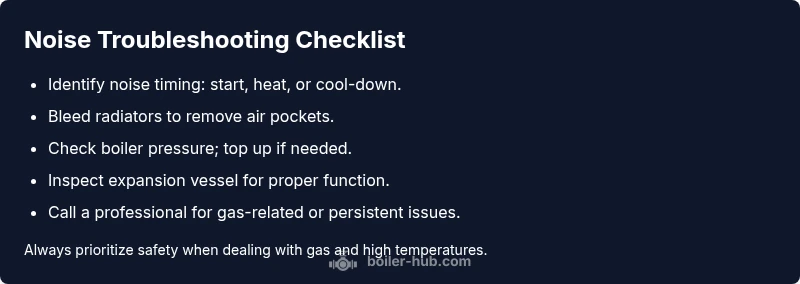
- Identify timing: does the noise happen on start, during heat, or while cooling? 2) Check for audible patterns: hissing = air, kettling = mineral scale, banging = water hammer or pump. 3) Verify pressure: compare gauge to the manufacturer’s recommendations. 4) Run basic safety checks: bleed radiators, inspect leaks, ensure venting is clear. 5) If unresolved, escalate to a professional with notes on timing, pressure readings, and any smells.
Step-by-step troubleshooting overview (non-technical)
This section complements the detailed step-by-step guide and emphasizes safe, methodical actions:
- Start with the simplest fix: bleed air from radiators and recheck pressure.
- If pressure is too high, vent air and then drain a small amount to restore balance; if too low, top up water from the filling loop.
- Check the expansion vessel and pump operation; listen for abnormal sounds when the boiler starts and stops.
- If the issue remains after basic maintenance, prepare for a professional visit by compiling pressure readings, noises, and the time of occurrence.
- Maintain a log and schedule annual servicing to prevent recurrence and prolong boiler life.
When to call a professional and how to prepare
Some noises require licensed help due to gas safety and complex diagnostics: a persistent banging, a burner flame problem, gas odors, or any sign of a leak.
Before the technician arrives, gather: model and serial number, current boiler pressure and recent changes, a timeline of noises, and a list of steps you’ve attempted. This data speeds up diagnosis and minimizes downtime. Routine annual service by a certified technician is the best preventive step to keep noises at bay.
Prevention: keep noises at bay with regular maintenance
Proactive maintenance reduces nuisance noises and extends boiler life:
- Schedule annual professional servicing.
- Bleed radiators at least once or twice per year, especially after long periods of inactivity.
- Check pressure and address immediate drops or spikes promptly.
- Replace worn valves, gaskets, and diaphragms as recommended by the manufacturer.
- Keep the area around the boiler clean and unobstructed to ensure safe ventilation and access for servicing.
Steps
Estimated time: 60-90 minutes
- 1
Safety first: power down and cool
Shut off power to the boiler and allow it to cool before touching any components. Ensure you have PPE like gloves and eye protection if you access the front panel. Confirm your area is dry and free of leaks.
Tip: Never work on gas connections without a licensed technician. - 2
Check the boiler pressure gauge
Look at the pressure gauge when the system is cool. Note the reading and compare it to the manufacturer's recommended range. If it’s low, locate the filling loop and top up water slowly until at or near the target range.
Tip: Record the initial reading before adding water. - 3
Bleed radiators
With a radiator key, open the bleed valve on each radiator starting from the top floor. Listen for a hiss of air; close the valve when water droplets stream out steadily. This often relieves hissing and kettling.
Tip: Do not over-bleed; you may drop pressure too far. - 4
Inspect expansion vessel
If the system pressure rises quickly after heating or drops after bleeding, the expansion vessel diaphragm may be failed. A technician can test and recharge or replace it as needed.
Tip: Expansion vessel work should be done by a pro. - 5
Check the pump and air vents
Listen for the pump running smoothly and not grinding. If there’s air in the lines, an automatic or manual air vent may be required to release it. Recheck for air after a system bleed.
Tip: A noisy pump often indicates wear or blockage. - 6
Test system operation
Restart the boiler, run through a full heat cycle, and observe for recurring noises. Note the timing and the noise character. If sounds persist, move to professional diagnostics.
Tip: Keep a log of noise timing for reference. - 7
Safety checks and leaks
Inspect for gas smells or water leaks around the boiler and connections. If you detect fuel odor, evacuate and call emergency services and a gas-certified technician immediately.
Tip: Gas safety first; never ignore a gas odor. - 8
Document and plan maintenance
Record readings, actions taken, and any parts replaced. Schedule annual service and keep spare parts on hand where safe. This reduces future noise and improves efficiency.
Tip: A maintenance log pays off over time.
Diagnosis: Boiler makes unusual noises during heating or cooling cycles
Possible Causes
- highAir trapped in the system
- highLow water pressure
- mediumExpansion vessel failure or loss of diaphragm
- mediumKettling from mineral buildup in the heat exchanger
- mediumFaulty pump or circulator
- lowIgnition or burner issue (gas-related)
Fixes
- easyBleed radiators to release trapped air
- easyCheck and adjust boiler pressure; top up if necessary
- mediumInspect expansion vessel and recharge/replace if needed
- hardFlush or chemically descale the heat exchanger (professional)
- mediumInspect pump operation and service/replace if faulty
- easySecure a professional evaluation for burner/ignition issues
Questions & Answers
Why is my boiler making banging noises during heating?
Banging often signals water hammer, kettling from mineral buildup, or pump issues. Bleeding air and checking pressure can help, but persistent banging may require professional inspection of the heat exchanger and pump.
Banging usually means water hammer or mineral buildup. Bleed air and check pressure first, but if it continues, call a pro.
Can I fix boiler noise myself?
Yes for simple steps like bleeding radiators and checking pressure. If the noise persists, if you smell gas, or if you’re unsure, contact a licensed technician immediately.
Bleeding radiators and checking pressure you can do, but call a licensed technician if it continues or you smell gas.
What is an expansion vessel and why does it matter?
An expansion vessel accommodates water expansion as the boiler heats. A failing vessel can cause pressure fluctuations and noises. A qualified technician should test and service or replace it as needed.
The expansion vessel handles water expansion; if it fails, noises and pressure changes happen. Have a pro evaluate it.
What safety steps should I take if I hear a loud banging?
Turn off power to the boiler and avoid contacting gas lines. If you smell gas or suspect a leak, evacuate and call emergency services and a gas-safe technician immediately.
Turn off the boiler and leave if you smell gas. Call emergency services and a gas-safe technician.
When should I replace the boiler due to noise?
Frequent, unfixable noises, poor efficiency, or repeated repairs over time indicate it may be more cost-effective to replace the boiler rather than continue repairs.
If noises keep returning and efficiency drops, replacement may be more economical.
Is kettling harmful to a boiler?
Kettling indicates mineral buildup that restricts flow and reduces efficiency. It can cause overheating if left unresolved; regular descaling or a professional flush is recommended.
Kettling is a sign of mineral buildup; it can harm the boiler if not addressed.
How long does a typical system flush take?
A professional flush of the heating system commonly takes 2–4 hours depending on system size and accessibility. Expect some disruption, and plan accordingly.
A system flush usually takes a few hours, depending on your setup.
What maintenance can I do to prevent noises?
Schedule annual professional servicing, bleed radiators regularly, monitor pressure, and replace worn gaskets or diaphragms per the manufacturer’s guidelines.
Annual service, regular bleeding, and routine part replacement prevent most noises.
Watch Video
Key Points
- Bleed air to stop most noises
- Check and adjust boiler pressure promptly
- Identify noise source by timing and pattern
- Expansion vessel issues require pro help
- Regular maintenance prevents future problems