Why Has Boiler Pressure Dropped? A Troubleshooting Guide
Learn why boiler pressure has dropped and how to fix it fast. This practical guide from Boiler Hub covers causes, step-by-step diagnostics, safety tips, and when to call a professional.


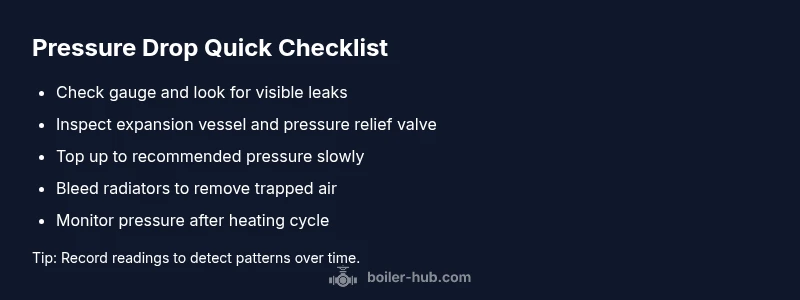
Most often, boiler pressure drops due to a leak or a faulty expansion tank. Quick steps: 1) check the pressure gauge; if below 1 bar, look for drips and tighten loose fittings. 2) inspect the expansion vessel and recharge or replace as needed. 3) top up to 1–1.5 bar and bleed radiators.
Understanding why the boiler pressure dropped
When you notice a lower-than-normal boiler pressure reading, the immediate instinct is urgency. The keyword why has boiler pressure dropped often points to a problem you can fix without specialist tools, but timing matters. According to Boiler Hub, a drop in boiler pressure is a common signal of a small leak or a faulty expansion tank rather than a catastrophic failure. In most homes, the pressure gauge should show about 1 bar when the system is cold and roughly 1.5 bar when hot. A gradual decline over weeks can indicate slow leaks in radiators or joints, while a sudden plunge could mean a larger leak or a failing expansion vessel. Understanding these patterns helps you decide on safe, practical steps. This article uses a practical, step-by-step troubleshooting approach you can perform safely, with safety reminders sprinkled throughout. If the pressure remains stubbornly low after basic checks, the next steps involve controlled topping up, shared diagnostics, and knowing when to call a professional.
Common causes at a glance
Identifying the likely culprits is the fastest way to resolve a pressure drop. The top four causes are: a minor or hidden leak in pipes, a faulty or waterlogged expansion vessel, a malfunctioning pressure relief valve, and air trapped in the heating circuit. Less common but still important: recently bled radiators done too aggressively, faulty fill loop connections, or a recent power interruption that affected the boiler’s pressure sensor. Boiler Hub Analysis, 2026, emphasizes that most pressure drops happen within the heating loop rather than in the boiler itself, which means inspecting radiators, joints, and the feed/return pipes is often more productive than replacing major components. Prioritize solutions that are safe, reversible, and verifiable with a simple pressure check.
How to verify the pressure yourself
To diagnose safely, you need a reliable pressure gauge and calm hands. Start by turning off the boiler and allowing it to cool, then check the pressure reading on the gauge when the system is cold. A typical safe range is 1 to 1.5 bar; when hot, it may rise to about 2 bar, but it should not exceed the manufacturer’s maximum. If the gauge shows below 1 bar, inspect visible pipes for damp patches, and feel radiators for cold spots that indicate blocks or leaks. If you find signs of a leak, document the area and plan a repair. If no leaks are evident, perform a controlled top-up using the filling loop, making sure to bleed air from radiators after topping up. Record readings at two times (cold and hot) to compare performance across cycles. This careful method helps distinguish true pressure loss from measurement error.
The role of expansion tank and pressure relief valve
The expansion vessel (tank) is designed to absorb pressure changes as water expands when heated. If it becomes waterlogged or loses its charge, the system can lose pressure quickly. A faulty expansion tank often shows up as the boiler cycling on and off, or as rapid pressure fluctuation. The pressure relief valve is a safety device that vents water if pressure spikes; if it leaks, it can produce a pressure drop over time. Testing these components requires careful steps and, in many cases, professional tools. If you suspect a bad expansion tank, a professional can recharge or replace it to restore balance. Remember that expansion-tank failure is a common cause of long-term pressure loss and should be addressed promptly to prevent damage to the boiler and piping.
Repressurizing, topping up, and bleeding radiators
Once you have ruled out obvious leaks, it is time to re-pressurize the system. Use the filling loop to bring the pressure to the manufacturer’s recommended range (often around 1–1.5 bar when cold). Do this slowly and stop if you hear hissing or see water leaks. After topping up, bleed radiators to remove any trapped air that can cause uneven heating and pressure fluctuations. Use a cloth to catch any water and avoid spurting; never force valves beyond their intended positions. Re-check the gauge after a few minutes of heating to confirm stable pressure. If the pressure rises too high, you may need to vent some water and re-check. This process should be performed with caution and only when you are confident in handling the boiler’s fittings.
When to call a professional
There are several red flags that signal you should contact a trained technician rather than continuing DIY fixes. If the pressure drops repeatedly after topping up, if you notice persistent leaks, if the expansion tank or the pressure-relief valve appears faulty, or if the boiler shows error codes that you cannot clear, professional help is warranted. Do not operate the boiler if you see scorching smells, damp patches near the boiler, or if the unit becomes unusually hot. The Boiler Hub Team emphasizes safety first: a minor leak now can become a major problem quickly if left unaddressed. A pro can perform a pressure test, inspect the entire heating circuit, and replace worn components with proper certificates.
Prevention and routine maintenance for fewer drops
Proactive maintenance reduces the risk of future pressure drops. Schedule annual boiler service, and have the expansion vessel checked during service visits. Regularly bleed radiators at the start of the heating season and after major works on the system. Keep the pressure gauge in a visible location and log readings so you can spot trends early. Use the correct fill technique for your specific boiler model and never exceed the recommended pressure. Keeping a simple maintenance routine aligns with Boiler Hub’s guidance on long-term reliability.
Quick checks before winter
As colder months approach, do a quick sanity check: confirm the pressure gauge reads within the safe cold range, inspect visible pipes for moisture, and verify that radiator valves are closed tightly when needed. If you notice sudden pressure drops after turning on heating, suspect leaks or a failing expansion tank and revisit the diagnostic flow. A small amount of effort now can prevent a frozen boiler, cold radiators, and expensive emergency calls later.
Steps
Estimated time: 60-90 minutes
- 1
Power down and verify safety
Turn off the boiler and allow the system to cool. Confirm the plug is pulled or the switch is off so you are not working on live electrical components.
Tip: Never bypass safety switches; safety first. - 2
Check for leaks and inspect joints
Scan visible pipes, radiators, and the boiler area for damp patches or drips. Tighten loose fittings if you spot any, but do not force connections.
Tip: Use a flashlight and a white cloth to reveal small leaks. - 3
Test the expansion vessel
If you suspect an expansion-tank fault, listen for continuous cycling or pressure fluctuation. A professional may need to recharge or replace the vessel.
Tip: Do not attempt to recharge a tank if you are unsure of the procedure. - 4
Repressurize the system
Use the filling loop to bring pressure to the target range (commonly 1–1.5 bar when cold). Add slowly and stop if you see leaks or hear hissing.
Tip: Keep hands away from hot surfaces and wear gloves. - 5
Bleed radiators
With the system slightly warm, bleed each radiator to release trapped air. Close the valve tightly and collect water with a cloth.
Tip: Bleed from the highest radiator first. - 6
Recheck readings
After a few minutes of heating, recheck the pressure. If it drifts, adjust gradually and repeat the bleed if necessary.
Tip: Record readings to compare against future cycles.
Diagnosis: Boiler pressure drops and stays low or fluctuates
Possible Causes
- lowPower issue or sensor fault leading to wrong readings
- highLeak in pipes, radiator, or heat exchanger
- highFaulty expansion vessel (waterlogged or failed)
- mediumMalfunctioning pressure relief valve
- lowAir trapped in the system
Fixes
- easyInspect for visible leaks and tighten fittings; repair as needed
- mediumTest or replace expansion vessel to restore proper charge
- hardReplace faulty pressure relief valve if leaking
- easyBleed air from radiators and recheck pressure
- easyRepressurize slowly to recommended range and monitor
Questions & Answers
Why has boiler pressure dropped suddenly?
Sudden drops are usually caused by a leak or a faulty expansion tank. Inspect for leaks, check the expansion vessel, and avoid further top-ups until the cause is found.
Sudden pressure drops are typically leaks or expansion-tank faults. Inspect for leaks and check the expansion vessel, then proceed carefully.
What is considered a normal boiler pressure range?
Most boilers show about 1 bar when cold and up to around 1.5 bar when warm. Always refer to the manufacturer’s specification for your model.
Normal boiler pressure is around 1 bar cold, up to about 1.5 bar when hot, but confirm with your boiler manual.
How do I know if the expansion tank is faulty?
If pressure remains low after topping up, or you hear frequent cycling, the expansion tank may be waterlogged or failed. A professional test can confirm and recharge or replace it.
If topping up doesn’t hold pressure and the boiler cycles, the expansion tank may be faulty. A professional can test and replace it.
Can air in the system cause pressure loss?
Yes. Trapped air can reduce effective water volume and drop pressure. Bleed radiators to remove air and restore correct pressure.
Air in the system can lower pressure. Bleed the radiators to release air and restore pressure.
Is it safe to repressurize the boiler myself?
Repressurizing can be safe if you follow the manufacturer instructions and shut off power during the process. If you are unsure, do not proceed and call a pro.
You can repressurize if you follow the manual, but if you are unsure, get a professional to help.
When should I call a professional?
If pressure keeps dropping after attempts to fix it, if you notice leaks, or if you see error codes you cannot clear, contact a qualified boiler technician promptly.
Call a professional if pressure keeps dropping after fixes or if you see leaks or unreadable error codes.
Watch Video
Key Points
- Check for visible leaks first
- Inspect the expansion vessel for faults
- Top up pressure slowly to the correct range
- Bleed radiators to remove air pockets
- Call a professional if pressure remains unstable