When Boiler Pressure Drops: Troubleshooting Guide
An urgent, practical guide to diagnose and fix boiler pressure drops. Step-by-step checks, safety tips, and when to call a pro from Boiler Hub.


Most often, when boiler pressure drops, the culprit is a hidden leak or a failing expansion tank. Start by reading the gauge, inspecting visible pipes and radiators for damp spots, and briefly listening for hissing sounds. If the pressure recovers after repressurizing but drops again, inspect the expansion tank and pressure relief valve for faults.
Why pressure drops happen
According to Boiler Hub, when boiler pressure drops, it's usually due to a leak, expansion tank failure, or a fault in the pressure-relief system. The Boiler Hub team found that many households confuse pressure drops with short-cycling, delaying necessary checks. Common culprits include leaks at joints, bleeder valves left open after servicing, and damp patches around the pump area signaling a hidden leak. A drop in pressure isn’t just inconvenient; it reduces heating efficiency, creates cold spots in radiators, and can signal a bigger fault if it recurs. Understanding how your boiler system maintains pressure helps homeowners act quickly and safely. Remember that normal cold filling pressure is typically around 1 to 1.5 bar, rising to 2 to 2.5 bar when hot. If your readings differ significantly, use the steps below to investigate safely.
Safety first: what not to do
Safety should guide every troubleshooting step. Never repressurize a boiler with active leaks or damaged components. Turn off the boiler and switch off the electrical supply before touching any pipes or valves. Do not open the pressure-relief valve unless you know exactly what you’re doing; hot steam can cause severe burns and misusing the valve can compromise safety protections. If you smell gas or hear hissing from the pipework, evacuate and call the gas emergency line and a professional immediately. Boiler Hub emphasizes safety as the priority: repeated pressure drops can indicate dangerous faults like a cracked heat exchanger or a faulty relief valve.
Quick checks you can do before calling a pro
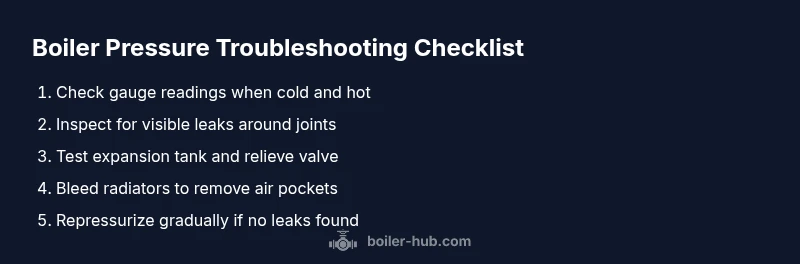
- Look for visible leaks around radiators, joints, and the expansion tank. Look for damp patches, corrosion, or staining on floors and walls. - Check the filling loop and valves to ensure they’re closed or correctly set for repressurizing. - Read the gauge and compare readings when cold and when hot; if it stays below 1 bar or spikes as the system heats, there’s a fault. - Inspect the expansion tank’s air charge if accessible; a waterlogged tank won’t cushion pressure changes. - Bleed radiators to remove trapped air, which can cause pressure fluctuations and poor heat transfer. If no leaks are visible but pressure still drops after repressurizing, capture a sample of the water to inspect color or contaminants.
Diagnostic flow: symptom-to-solution overview
When pressure drops, start with the simplest checks and move to more involved tests. Primary causes include system leaks, a failed expansion tank, or a faulty pressure-relief setup. If you find a leak, seal or replace the faulty part and repressurize. If the expansion tank fails, replacement is usually required. The goal is to stabilize pressure, verify there are no active leaks, and ensure the boiler maintains safe operating pressure under load. This flow helps homeowners avoid unnecessary repairs and escalate to a professional when needed.
Step-by-step: re-pressurizing safely
Re-pressurizing should be done with care to avoid scalding and equipment damage. Begin by ensuring the boiler is off and the power is isolated. Locate the filling loop, typically a pair of valves near the boiler. Open both inlet valves slowly to allow water into the system while watching the pressure gauge. When the reading reaches about 1.0–1.5 bar (cold), close the valves and top up any radiator or system loops if necessary. Next, re-check for leaks and repressurize gradually if required, then restart the boiler and observe for stability. If the pressure climbs too high or drops again soon after, stop and consult a professional; persistent drops often indicate a leak or expansion-tank fault.
Aftercare: prevention and maintenance
To prevent future drops, schedule annual boiler maintenance and pressure testing. Keep an eye on the expansion tank, air charge, and pressure-relief valve. Use corrosion inhibitors and ensure the system is properly sealed. Regularly bleeding radiators, especially after heating season changes, maintains even heat distribution and stable pressure. If you notice any damp areas, puddles, or unusual noises, investigate promptly and document readings for your technician. A proactive approach reduces emergency visits and extends boiler life.
When to call a professional and what to expect
If pressure drops persist after re-pressurizing, or if you notice persistent leaks, corrosion, or a damp expansion tank, it’s time to call a pro. A qualified boiler technician will perform a pressure test, inspect the expansion tank, check the relief valve, and assess the heat exchanger for cracks. They’ll provide a safe repair plan and, if needed, part replacements with a clear warranty. Boiler Hub’s position is clear: trust trained technicians for complex faults to avoid safety risks and ensure reliable operation.
Quick prevention plan you can adopt this season
Create a simple maintenance calendar: visually inspect for leaks quarterly, bleed radiators annually, and test the expansion tank pressure monthly when the system is cold. Maintain a log of gauge readings, dates of service, and any repairs. Keep your area around the boiler clear to allow for quick inspections. By following these steps, you can minimize the chance of sudden pressure drops and maximize system efficiency.
Steps
Estimated time: 45-90 minutes
- 1
Power down and secure the boiler area
Turn off the boiler, switch off the electrical supply, and allow the unit to cool. This reduces burn risk and stabilizes pressure readings for accurate troubleshooting.
Tip: Always wear protective gloves and eyewear when working near hot components. - 2
Check for visible leaks and shut-offs
Inspect around radiators, joints, and the expansion tank for damp spots or corrosion. If a leak is present, address it before repressurizing to avoid further pressure loss.
Tip: Document leak locations with photos for reference. - 3
Locate and inspect the filling loop
Find the filling loop and ensure both valves are in the correct position. A cross-connected or partially closed loop can cause incorrect pressure readings.
Tip: Close the valves fully if you are not repressurizing immediately. - 4
Repressurize gradually to the correct level
Open the filling loop slowly and watch the gauge until it reaches 1.0–1.5 bar when cold. Do not exceed 2.5 bar when hot.
Tip: Do not rush; small increments reduce the risk of over-pressurizing. - 5
Check system after repressurizing
Close the filling loop, re-close any loosened fittings, and restart the boiler. Observe for stability over 15–20 minutes.
Tip: Listen for unusual sounds and look for leaks during the test run. - 6
Bleed radiators if needed and re-test
Bleed all radiators to remove trapped air that can cause pressure fluctuations. Re-check the gauge and repressurize if the pressure drops again.
Tip: Keep a journal of readings to compare after future cycles.
Diagnosis: Boiler pressure gauge shows low or dropping pressure
Possible Causes
- highSystem leaks at joints, radiators, or expansion tank
- highFaulty expansion tank (air charge loss or tank failure)
- mediumFaulty pressure relief valve or faulty filling loop
- lowBleed valves left open after maintenance
- lowHidden leak behind walls or under floorboards
Fixes
- easyIdentify and seal leaks or replace defective fittings
- mediumTest and replace expansion tank; adjust air charge
- mediumRepair or replace pressure relief valve; verify filling loop settings
- easyClose bleed valves and bleed system to remove air pockets
- hardPressure-test the system to locate hidden leaks
Questions & Answers
What causes boiler pressure to drop?
Common causes include leaks in piping or radiators, a faulty expansion tank, and issues with the pressure relief valve or filling loop. Repeated drops usually indicate a fault that needs repair. Always check for leaks first before repressurizing.
Pressure usually drops due to leaks, a faulty expansion tank, or a bad relief valve. Start by checking for leaks, then inspect the expansion tank and valve.
Is it dangerous if boiler pressure drops?
Low or unstable boiler pressure can lead to inadequate heating and, in severe cases, equipment damage. It can also indicate safety system faults. If you notice ongoing drops, stop and call a professional promptly.
Persistent pressure drops can signal serious faults. Stop and contact a professional if it keeps happening.
How do I safely repressurize a boiler?
Turn off power, locate the filling loop, and open the valves slowly while watching the pressure gauge. Stop at 1.0–1.5 bar when cold, then restart the boiler and check for leaks. If pressure spikes or falls again, seek professional help.
Open the filling loop slowly, watch the gauge, and aim for about 1 to 1.5 bar when cold. If problems persist, call a pro.
Can expansion tank failure cause leaks?
Yes. A failed expansion tank cannot compensate pressure changes, leading to pressure loss and potential leaks elsewhere in the system. Replacement is typically required if test shows insufficient air charge or waterlogging.
A bad expansion tank can cause pressure loss and leaks; replacement is often necessary.
When should I replace my boiler?
Boilers usually show age-related inefficiency or repeated costly repairs. If pressure issues persist despite maintenance, consider replacement or professional evaluation for efficiency and safety.
If pressure problems persist after maintenance, it may be time to evaluate replacement for efficiency and safety.
What maintenance helps prevent pressure drops?
Regular annual service, checking expansion tank and relief valve, bleeding radiators, and monitoring gauge readings help prevent unexpected pressure drops. Keep a log of service dates and readings for quick reference.
Annual service and regular checks help prevent pressure drops; keep track of readings.
Watch Video
Key Points
- Check for leaks around joints and radiators.
- Inspect the expansion tank and relief valve.
- Repressurize safely only after ensuring no active leaks.
- Call a professional if pressure continues to drop after steps.