If Boiler Is Losing Pressure? A Practical Troubleshooting Guide
Learn how to diagnose and fix a boiler losing pressure with safe steps, common causes, and when to call a professional from Boiler Hub. Quick answers, diagnostic flow, and step-by-step fixes.


Most likely the boiler is losing pressure due to a leak in the system or a faulty expansion vessel. Start by tightening obvious joints, then repressurize the system to the manufacturer’s recommended range. If pressure drops again, inspect radiators and valves for leaks and call the Boiler Hub Team for a professional assessment.
What does it mean when the boiler is losing pressure
If you see the pressure gauge dip below the normal operating range, your boiler is losing pressure. In most systems the cold-start target is around 1 bar, rising to about 1.5-2 bar when the boiler runs. A drop means the system isn't holding water securely, which can impair heat output and cause the boiler to lock out on safety. According to Boiler Hub Analysis, the two most common culprits are small leaks in joints or piping, and a failing expansion vessel that can no longer accommodate expansion. Understanding whether the issue is a leak, a faulty vessel, or an air pocket sets the stage for safe, effective fixes.
Common causes of pressure loss
Pressure loss does not come from a single source. Leaks are the first suspect: damp patches around radiators, joints, or under the boiler cupboard indicate a leak that slowly drains pressure when the system is pressurized. A faulty expansion vessel can lose its air charge and stop accommodating water expansion, causing pressure to fall after each heating cycle. Air trapped in radiators or circulating pipes can also create fluctuations that look like a leak. Finally, an improperly used filling loop or a faulty pressure relief valve can cause pressure drop or vent water. Each cause has a distinct symptom pattern and requires a different remedy, so a careful assessment is essential.
Safety-first checks you can perform
Before you touch any boiler components, power off the unit and allow it to cool. Check for obvious signs of water leaks on radiators, joints, and underneath the boiler. Visually inspect the expansion vessel (or its access valve) for rust, bulges, or dampness. If you spot a leak, do not delay: isolate the source and plan a repair or replacement with a professional. While you are checking, ensure the filling loop is in a closed position and that you know the system's target pressure from the manufacturer. If pressure continues to drop after basic checks, proceed to the diagnostic flow below.
Diagnosing the issue: what to check first
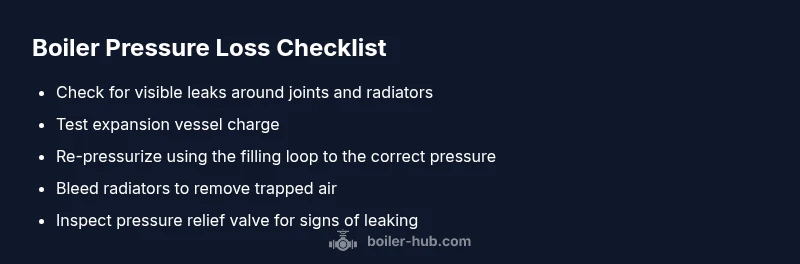
A systematic approach helps avoid unnecessary parts replacement. Start with the easiest checks: verify the pressure gauge reading when the boiler is cold; if the pressure is below the advised range, re-pressurize using the filling loop and note how quickly it falls after heating. Next, inspect radiators for leakage or wet patches around valve connections; tighten connections if you notice minor seepage. If no obvious leaks are found, test the expansion vessel's charge with a simple gauge or professional test. Finally, check the pressure relief valve for signs of dripping or recent venting.
Prevention and ongoing maintenance
Proactive maintenance helps prevent pressure loss. Schedule annual boiler servicing to verify valve seals, check the expansion vessel, and ensure the filling loop is operating correctly. Regularly bleed radiators to remove trapped air, especially after long periods of inactivity. Monitor the pressure gauge and track any unexpected changes. Keeping a log of system pressures after heating cycles makes it easier to spot trends early. A well-maintained system runs more efficiently and reduces the risk of sudden pressure drops.
Quick safety-minded fixes you can try safely
If you notice a minor drop after a cooling period, you can perform a cautious top-up: shut off the boiler, slowly open the filling loop until the pressure reaches the low end of the recommended range, then close the loop and run the boiler. Do not overfill. If the gauge climbs past the maximum safe range or continues to fall after re-pressurizing, stop and call a professional.
Steps
Estimated time: 60-90 minutes
- 1
Power off and cool down
Switch off the boiler and allow it to cool completely before touching any components. This reduces scald risk and protects electrical parts. When in doubt, wait at least 15-20 minutes after the heat cycle ends.
Tip: Always unplug the boiler if you plan to open panels to inspect internal parts. - 2
Check the filling loop and repressurize
Locate the filling loop and ensure it is closed. If your cold pressure is below 1 bar, slowly open the loop until the gauge reads within the recommended range (usually 1-1.5 bar). Close the loop firmly and recheck after a few minutes.
Tip: Open slowly to avoid overshooting the target pressure. - 3
Inspect expansion vessel
Access the expansion vessel or its air valve. If the vessel is waterlogged or shows signs of damage, it may require replacement. If you can test charge, ensure the vessel has an air charge appropriate for your system.
Tip: A professional test may be needed if you’re unsure about the vessel’s charge. - 4
Bleed radiators
Starting at the highest radiator, use a bleed key to release trapped air until water comes out steadily. Recheck system pressure after bleeding each radiator.
Tip: Have a cloth ready and a container to catch any drips. - 5
Look for leaks and tighten/replace
Examine all radiator valves, joints, and the boiler’s connections for damp patches or water stains. Tighten minor leaks and replace worn seals or faulty components as needed.
Tip: If you see active dripping, shut the system down and call a pro. - 6
Test system after adjustments
Turn the boiler back on, run heating for a short period, and monitor the pressure gauge. If pressure remains stable and within range, the fix is successful.
Tip: Keep a log of readings to detect slow trends early.
Diagnosis: Pressure drops after heating cycle or fluctuates on gauge
Possible Causes
- highLeaks in radiator joints, valves, or piping
- highFailed expansion vessel
- mediumAir trapped in radiators or circulating pipes
- lowImproper use of filling loop or faulty pressure relief valve
Fixes
- mediumInspect system for visible leaks; tighten or repair leaking joints; replace damaged components as needed
- easyTest expansion vessel charge and restore as needed; re-pressurize after stabilizing
- easyBleed radiators to remove air pockets and recheck pressure
- hardIf the pressure relief valve leaks or pressure remains unstable, call a professional
Questions & Answers
Why is my boiler losing pressure after a cold start?
A slow leak or a failing expansion vessel are common culprits after a cold start. Air in radiators can also create fluctuations. Identify the cause before replacing parts.
Common causes are leaks, expansion vessel failure, or air in radiators. Check each area and address leaks first.
How do I re-pressurize my boiler safely?
Turn off the boiler, locate the filling loop, and slowly open it until the pressure reaches the recommended level (typically 1-1.5 bar when cold). Close the loop and test again after a short period.
Shut off the boiler, use the filling loop to bring the pressure to the right level, then close and recheck.
What is an expansion vessel and why might it fail?
The expansion vessel accommodates water expansion. If its air charge is lost or the vessel is damaged, pressure can drop and the system cannot maintain stable pressure.
An expansion vessel holds extra pressure; when it fails, pressure drops and leaks may occur.
Can air in radiators cause pressure loss?
Yes. Air pockets can mimic a leak by causing pressure fluctuations and reduced efficiency. Bleeding radiators typically resolves this.
Air in radiators can cause pressure swings; bleed them to fix.
Should I replace the pressure relief valve?
Only if the valve is faulty or leaking. A professional should test and replace a faulty relief valve to avoid dangerous overpressure.
If the relief valve leaks, have a pro replace it.
When should I call a professional?
If pressure drops repeatedly after repressurizing or you discover persistent leaks, a licensed heating engineer should inspect and repair.
Call a pro if pressure keeps dropping after fixes.
Watch Video
Key Points
- Inspect for leaks before repressurizing.
- Repressurize to the manufacturer’s range with care.
- Bleed radiators to remove air pockets.
- Call a professional if pressure remains unstable.