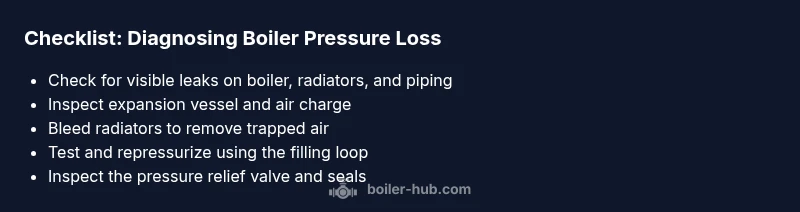
How Does Boiler Lose Pressure? An Urgent Troubleshooting Guide
Urgent, practical troubleshooting for boiler pressure loss. Learn common causes, safe checks, step-by-step fixes, and prevention to keep systems running smoothly.


A boiler loses pressure mainly because water escapes or the system cannot hold water due to a fault. The quickest fix is to locate and seal any leaks, top up the pressure to the manufacturer’s recommended level, and bleed air if needed. If pressure keeps dropping after topping up, you likely have a leak or a faulty expansion vessel that requires professional attention.
How pressure loss happens in boilers
Boiler pressure reflects how much water is in the closed system. When pressure drops, the boiler may cycle on/off, fail to heat evenly, or show a persistent low-pressure gauge reading. The question "how does boiler lose pressure" is common, and in most cases the原因 is straightforward: water is escaping the loop or the system isn’t sealing properly. According to Boiler Hub, most pressure-loss events fall into a handful of categories: small leaks, a failing expansion vessel, trapped air, or an aging pressure relief valve. The good news is that fixes are often simple and can prevent costly downtime if caught early. Understanding these dynamics helps you act quickly and safely, especially for homeowners and facility managers who rely on steady hot water and heating.
Core components influencing boiler pressure
A boiler’s pressure is determined by several key parts working together. The expansion vessel holds a cushion of air that absorbs thermal expansion; the filling loop lets you restore pressure after a drop; valves regulate flow and relieve excess pressure; and the gauge provides the readout you depend on. When any of these components fail or are misadjusted, pressure can fall or become unstable. Regular checks of these parts, along with timely servicing, reduce the chance of unexpected pressure loss and keep your system operating efficiently. For anyone facing pressure fluctuations, the goal is to identify whether the issue is a leak, a fault in the pressurization system, or air trapped in the radiators.
Common causes of pressure loss
- Visible or hidden leaks around radiators, pipes, or joints.
- Faulty expansion vessel or a charge that has escaped over time.
- Worn or failed pressure relief valve that vents water unintentionally.
- Air trapped in radiators after bleeding, causing inconsistent pressure readings.
- Leaks through the filling loop due to faulty seals or improper resealing after maintenance.
- Deteriorated seals or gaskets in the boiler or heat exchanger.
These causes often interact; even a small radiator leak can lead to a sustained pressure drop if water loss isn’t noticed promptly. Regular inspection and timely maintenance are your best defense against sudden loss.
Safety and preparation before troubleshooting
Never dive into boiler work without proper precautions. Start by turning off the boiler and isolating the electrical supply if accessible. Allow the unit to cool before touching any components. Wear protective gloves and eye protection if you’re near pressurized lines. If you smell gas or detect a gas leak, leave the area and contact the gas emergency line. Only attempt work within your comfort level and knowledge, and when in doubt, call a qualified technician. Safety first helps prevent personal injury and further damage to the boiler system.
How to check pressure and top up safely (and when not to)
Begin by locating the boiler pressure gauge. If the reading is low (below the manufacturer’s recommended level when cold), you can usually top up via the filling loop following your manual. After topping up, re-check the gauge after the system heats up to see if pressure remains stable. If pressure drops again soon after topping up, there is likely a leak or a fault in the expansion vessel or pressure relief valve. Do not ignore repeated drops—persistent loss indicates a fault that deserves professional evaluation. Bleeding radiators can help remove trapped air but won’t solve a leak or faulty vessel. If you’re unsure at any step, stop and call a technician.
When to call a professional
If pressure continues to fall after topping up, or you notice visible water pooling around pipes, radiators, or the boiler, it’s time to contact a professional. Recurrent pressure loss may indicate a broken expansion vessel, a compromised pressure relief valve, or hidden leaks, all of which require expert diagnosis and safe handling of pressure systems. A licensed technician can perform a pressure test, inspect the vessel, replace faulty seals, and verify safe operation.
Maintenance habits to prevent future pressure loss
- Schedule annual boiler servicing with a qualified technician.
- Check for leaks and damp patches around the unit and radiators regularly.
- Bleed radiators at the start of the heating season to remove air pockets.
- Monitor the pressure gauge and address any abnormal readings promptly.
- Ensure the expansion vessel is correctly charged and not corroded or damaged.
- Use a professional for any warranty-covered repairs to avoid voiding protections.
Quick diagnostic mindset: what to do next if you’re stuck
If you’ve exhausted basic checks, document the symptoms (pressure drop rate, leak signs, and whether the drop occurs during heating). A concise symptom log helps a technician pinpoint the likely cause quickly, reducing downtime and repair costs. Remember, some issues require pressure testing equipment and specialized knowledge to solve safely. With careful observation and timely action, most loss-of-pressure events are repairable without a full replacement.
Steps
Estimated time: 45-60 minutes
- 1
Power down and isolate the boiler
Shut off the boiler and disconnect electrical supply. Allow the unit to cool before touching any components. This prevents accidental burns or scalds and ensures you can work safely.
Tip: If you’re unsure about isolation, call a professional before proceeding. - 2
Check gauge and locate the fill point
Observe the current pressure on the gauge. Locate the filling loop valve and ensure it’s in the correct position for topping up. A misaligned fill loop can cause inaccurate readings and leaks.
Tip: Never force valves; they should move smoothly and align with manufacturer markings. - 3
Top up to the recommended pressure
Carefully top up water until the gauge reaches the manufacturer’s safe range. Avoid over-pressurizing, which can stress seals and cause leaks later.
Tip: Recheck the gauge after the system warms up, as pressure rises with heat. - 4
Bleed radiators to remove trapped air
Bleed each radiator starting from the top floor downward. Use a bleed key to release air until water escapes in a steady stream. Close vents tightly after bleeding.
Tip: Have a cloth ready for any drips and a container to catch water. - 5
Inspect for leaks around joints and the expansion vessel
Look for damp patches around pipe joints, the boiler casing, and the expansion vessel. Tighten fittings if safe to do so, and note any persistent dampness requiring component replacement.
Tip: Do not overtighten plastic fittings; you may cause cracks. - 6
Test system operation and monitor
Restore power and run the heating to observe whether pressure holds as the system reaches operating temperature. If pressure drops again, escalate to professional service.
Tip: Keep a log of readings and symptoms for the technician.
Diagnosis: Boiler pressure gauge drops after topping up and does not hold pressure or drops rapidly during heating
Possible Causes
- highSmall leaks in radiators, joints, or pipework
- highFaulty expansion vessel or loss of air charge
- mediumAir trapped in radiators
- mediumFaulty filling loop or valve seals
- lowFaulty pressure relief valve
Fixes
- easyInspect visible pipes and radiators for damp patches and signs of leakage; tighten connections or replace damaged sections as needed
- mediumCheck expansion vessel for corrosion, loss of air, or visible damage; recharge if needed or replace if faulty
- easyBleed radiators to remove air pockets and then repressurize the system
- easyInspect and test the filling loop/valves for leaks; reseal or replace components
- mediumTest pressure relief valve; replace if it fails to seal or drips when the system is under normal pressure
Questions & Answers
What is the most common cause of boiler pressure loss?
Leaks around radiators, joints, or pipes are the most frequent reason for pressure loss. A failing expansion vessel or a bad fill valve are close contenders. Regular checks help catch these early.
Leaks are the most common cause. Regular checks help catch issues early.
Is it safe to top up boiler pressure myself?
Top up can be safe if you follow the manufacturer’s instructions and shut off the system while adjusting. If you’re unsure, contact a qualified technician to avoid over-pressurizing.
You can top up safely if you follow the manual, but if unsure, call a pro.
How often should I service my boiler to prevent pressure loss?
Annual servicing by a qualified technician is recommended. Regular maintenance helps identify worn seals, valve issues, and expansion vessel performance before failures occur.
Annual servicing helps prevent pressure issues.
What should I do if pressure drops rapidly after topping up?
Shut down the boiler and call a professional. Rapid drops usually indicate a leak or faulty vessel, which requires inspection and safety checks.
Shut the boiler down and call a pro if pressure falls quickly.
Can radiator leaks cause pressure loss even if the boiler looks fine?
Yes. Small radiator leaks can slowly drain pressure over time. Inspect radiators for damp patches and repair or replace faulty sections.
Yes, radiator leaks can drain pressure over time.
Watch Video
Key Points
- Identify whether pressure loss is due to leaks or a faulty vessel
- Bleed radiators only after leaks are checked
- Top up pressure carefully and verify after heating
- Call a professional for persistent drops or suspected vessel faults