Why is Your Boiler Losing Pressure? A Practical Troubleshooting Guide
Discover why a boiler loses pressure, common causes, and a step-by-step approach to diagnose and fix pressure loss safely. Includes safe home tests, fixes, and prevention tips from Boiler Hub.


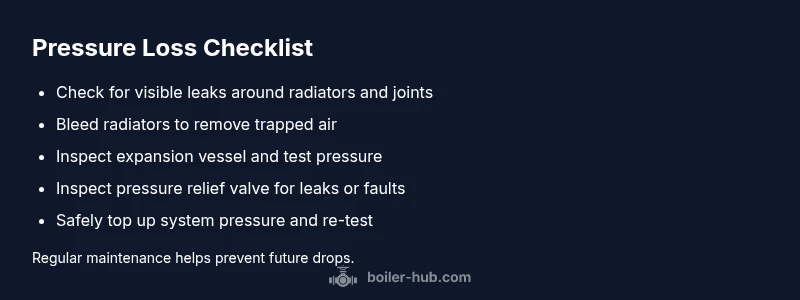
Most likely cause of sudden pressure loss is a leak in the system or a faulty expansion vessel. Quick fixes: check for visible leaks around radiators, pipes, and the boiler; bleed air from radiators to restore pressure; if needed, top up to the recommended level and monitor. According to Boiler Hub, persistent drops after these steps require a professional inspection.
Why boiler pressure drops
According to Boiler Hub, a drop in boiler pressure is often not mysterious. The most common culprits are a leak somewhere in the system (radiator valves, joints, or a damaged pipe), an inefficient or failed expansion vessel, or air trapped in the radiators that creates pockets of low pressure. When pressure falls, you may notice the gauge shows a lower reading, the boiler may cycle more often, or the heating may feel weak. Addressing the root cause quickly is essential to prevent overheating, gas wastage, and potential damage to heat exchangers. Start by confirming whether there are visible damp patches around your radiators or boiler, checking the pressure gauge regularly, and noting any changes after topping up. If you can't locate a leak or the pressure keeps dropping after topping up, it's a strong sign that professional assessment is needed. The goal is to restore stable pressure with a safe approach and to prevent further drops.
Common causes of pressure loss
- Leaks around radiators, joints, or pipework can silently drain pressure over time. A damp patch or a rust stain is a giveaway.
- A faulty expansion vessel loses its ability to compensate pressure changes, especially after the system warms up and cools down.
- The pressure relief valve may release pressure if the system is over-pressurized or defective.
- Trapped air in radiators or the main loop can lower the effective pressure reading and heating performance.
- A faulty pressure gauge or closed isolation valves can give the impression of pressure loss when the system is fine.
Identifying which of these is happening requires careful checks and a calm, methodical approach.
How to diagnose at home
- Read the current boiler pressure on the gauge when the system is cold. Note if it is consistently below the recommended range.
- Inspect obvious leak sources first: radiator valves, pipe joints, and boiler casing; look for damp patches or corrosion.
- Bleed all radiators to remove trapped air. Listen for a steady hiss and stop when water starts to emerge instead of air.
- Check the expansion vessel’s air charge if you have access. A very soft or hard vessel can indicate loss of capacity.
- Test the pressure relief valve only with caution and never force it open; look for signs of dripping or discharge.
- If you cannot locate a leak or the pressure continues to fall after topping up, it is time to call a professional technician for a pressure test and component inspection.
Testing components: expansion vessel, pressure relief valve, and isolation valves
The expansion vessel should have a small air charge; if it's significantly low or the vessel is corroded, it may not hold pressure. The pressure relief valve should not leak in normal operation; a leaking valve usually means replacement is required. Isolation valves must be fully open during testing; a partially closed valve can mimic pressure loss. Each component has specific testing steps that should be performed with safety in mind and, when in doubt, by a qualified technician.
Boiler Hub analysis shows that many pressure-loss events are tied to expansion vessel faults and valve integrity, making these checks high-priority in troubleshooting. Proper testing helps avoid unnecessary replacements and ensures the system returns to safe operation.
Step-by-step fixes for the most common causes
- If you find a visible leak, seal or replace the faulty component if you are comfortable doing so, and monitor the system for return of pressure. If leaks persist, professional intervention is required.
- Bleed radiators to remove air pockets; this often restores usable pressure. Repeat the process if you notice air reaccumulation after topping up.
- If the expansion vessel seems unable to hold pressure, replace or recharge it following the manufacturer's instructions or with professional help.
- Inspect the pressure relief valve and replace if faulty; never force the valve or remove safety devices without secure, professional guidance.
- After any repair, re-fill the system to the correct pressure and check for stability over several hours.
These steps address the majority of low-pressure events, but if pressure drops again, a full diagnostic by a boiler technician is advised.
Safety considerations and when to call a professional
Gas and heating systems carry risks if tampered with improperly. Always switch off power to the boiler before inspections, and do not attempt to seal leaks with improvised materials. If you smell gas, hear hissing, or notice significant water pooling, evacuate and call emergency services.
If you cannot locate the leak, if the expansion vessel or pressure relief valve seems defective, or if pressure continues to fall after following home checks, contact a qualified boiler technician. A professional can perform a pressure test, diagnose hidden faults, and perform safe repairs.
Prevention and maintenance to avoid future pressure loss
Regular maintenance reduces the chance of pressure loss. Schedule annual boiler servicing, check radiator bleed valves for tightness, and ensure the expansion vessel remains pressurized as intended. Keep an eye on the gauge and log readings during seasonal changes; early signs of pressure drift often indicate developing issues before a major fault occurs. The Boiler Hub team recommends proactive maintenance as the best defense against recurring pressure loss.
Steps
Estimated time: 60-90 minutes
- 1
Power down and safety check
Turn off the boiler and any nearby power switches. Allow the system to cool before you touch components. Gather a clean cloth and a shallow tray in case of small leaks.
Tip: Never work on a hot boiler; heat can cause scalding and pressurized water spray. - 2
Read the pressure gauge
Note the current reading when the boiler is cold. Compare it to the manufacturer’s recommended range in the user manual. This establishes a baseline for your checks.
Tip: Record the gauge reading for future reference. - 3
Inspect for leaks
Look for damp patches around radiators, joints, valves, and the boiler casing. A flashlight helps reveal small drips you might miss in dim corners.
Tip: Even small drips over time can cause significant pressure loss. - 4
Bleed the radiators
Using a radiator key, bleed each radiator to release trapped air until water flows steadily. Close the valve and recheck the system pressure.
Tip: Do not bleed hot radiators; wait until the pipes are cool to prevent burns. - 5
Check expansion vessel
If accessible, test the vessel pressure with a charging tool or consult the manual. A collapsed or poorly charged vessel cannot maintain pressure.
Tip: If unsure, schedule expansion vessel testing with a pro. - 6
Top up the pressure safely
Use the boiler filling loop or the recommended method to bring the pressure back to the safe range. Do not exceed the limit or force water into a closed system.
Tip: Follow the manual exactly to avoid over-pressurizing. - 7
Test and monitor
Turn the boiler back on and observe the pressure gauge over several hours. Look for stability versus gradual drop, and check for leaks after restoration.
Tip: Keep a log of readings and any changes you notice.
Diagnosis: Boiler pressure gauge drops below the typical range and remains low after topping up
Possible Causes
- highVisible or hidden water leak in radiators, joints, or pipes
- mediumFaulty expansion vessel that cannot maintain pressure
- lowFaulty pressure relief valve releasing pressure
Fixes
- easyInspect for leaks and repair or replace faulty joints, radiators, or piping
- easyBleed radiators to remove air pockets
- mediumCheck expansion vessel pressure and recharge or replace if faulty
- mediumInspect or replace the pressure relief valve if it is leaking or stuck
- hardComplete a controlled system drain and refill only if you are trained or with professional supervision
Questions & Answers
What causes boiler pressure to drop unexpectedly?
Common causes include leaks in the system, a faulty expansion vessel, air trapped in radiators, or a faulty pressure relief valve. A professional can confirm which issue is present through a pressure test and thorough inspection.
Common causes include leaks, a bad expansion vessel, trapped air, or a faulty relief valve. A professional test confirms the exact issue.
Can air in my radiators cause pressure loss?
Yes. Air pockets reduce the system’s ability to maintain pressure and can make the boiler think it’s low. Bleeding the radiators typically resolves this.
Air in radiators can cause pressure loss; bleeding usually fixes it.
Is it safe to top up boiler pressure myself?
Top-up is often safe if you follow the manual and ensure the system is cool. Do not exceed the recommended pressure, and stop if you detect leaks or unfamiliar odors.
Topping up can be safe if you follow the manual and keep it cool; avoid leaks and unusual smells.
What is an expansion vessel and why does it fail?
The expansion vessel accommodates water expansion as the boiler heats. It can fail due to loss of air charge or physical damage, leading to pressure instability.
An expansion vessel absorbs expansion; it can fail if the air charge is lost or it’s damaged.
When should I replace the boiler pressure gauge?
If the gauge is damaged, provides inconsistent readings, or is stuck, replacement is advised to avoid misreading pressures.
Replace a faulty gauge to ensure accurate readings and safe operation.
Watch Video
Key Points
- Inspect for leaks first and fix if found
- Bleed radiators to remove air
- Check expansion vessel integrity regularly
- Only top up pressure with the system cool and safe
- If pressure drops again after fixes, call a professional
- Regular maintenance prevents future pressure loss