What Causes Boiler Pressure to Drop: Troubleshooting Guide
Learn how to diagnose and fix why boiler pressure drops, with a clear diagnostic flow, step-by-step fixes, safety tips, and prevention strategies from Boiler Hub.


Most boiler pressure drops are caused by leaks, air in the system, or a faulty expansion tank. Quick fixes: (1) look for visible leaks around radiators and connections and tighten fittings, (2) verify the pressure gauge and refill to the typical 1–2 bar range, bleeding radiators to remove air if needed, (3) inspect the pressure relief valve.
Why boiler pressure matters and the signs of a drop
Understanding what causes boiler pressure to drop helps you act fast and avoid a cold shower or a breakdown. The pressure in your boiler is not just a number on a dial; it signals whether water circulates properly and the system remains sealed. When pressure falls, the boiler may fail to heat efficiently, and in extreme cases it will lock out to prevent damage. For homeowners, catching the issue early saves money and reduces the risk of a larger repair.
The typical cold-start pressure for most boilers sits around 1 bar to 1.5 bar; when the system heats up, the pressure can rise to about 1.5–2 bar. If the gauge dips below 1 bar or, worse, drops toward 0.5 bar, you may notice colder radiators, slower heat-up, or the boiler cycling on and off. That is a signal to investigate. In many cases, the fix is straightforward: tighten a loose connection, refill with water through the filling loop, and bleed trapped air from radiators. However, a leaking pipe, a failed expansion tank, or a faulty pressure relief valve can keep the pressure from stabilizing and require more in-depth checks. According to Boiler Hub, the most frequent culprits for a pressure drop are leaks, air entering the loop, expansion-tank issues, or a failing valve. Being proactive with quick checks can prevent a total loss of heat.
The Boiler Hub team recommends keeping a log of pressure readings and maintenance checks to catch trends early.
Common causes of pressure drop
There are several recurring reasons why your boiler pressure might fall. The first and most common is a leak somewhere in the system. A small pinhole or a loose joint on copper pipes, radiators, or the boiler itself can quietly drain water and reduce pressure over days or weeks. Look for damp patches, smell of coolant near joints, or mineral deposits that could indicate a slow leak. Air in the system is another frequent culprit. As air pockets accumulate, the effective water volume changes and the gauge reads lower than expected when heating cycles begin. The expansion tank is designed to compensate for water expansion, and a failed or waterlogged tank can fail to keep pressure stable, allowing pressure to drop when the boiler heats. A worn or faulty pressure relief valve or fill valve can release water unintentionally, dropping pressure even if you haven’t opened valves. Finally, human error—leaving the filling loop open after a service or bleeding radiators—can slowly drain the system. Boiler Hub analysis shows that leaks, air intrusion, and expansion-tank faults are typical triggers, especially in older or poorly maintained systems. If you find one issue, address it before others; many problems are interconnected.
Safe inspection steps and quick checks
Start with the basics: ensure your safety and confirm the problem. If you can access the boiler safely, switch it off and let it cool. Verify the pressure gauge, noting the cold baseline in your user manual; do not interpret hot readings as final. Check for visible leaks around all joints, valves, and the filling loop; damp patches or white mineral deposits can be a clue. Inspect the expansion tank (often located near the boiler or in the attic) for signs of waterlogging or a blown diaphragm—if it feels heavy with water or the air valve doesn’t hold air, it may need replacement. Make sure the filling loop is closed before you refill; if it’s open, water will escape and pressure will fall. Bleed radiators to remove any trapped air that could cause uneven heating and pressure fluctuations. After these checks, re-check the pressure gauge and run the boiler for a short cycle to see whether the pressure stabilizes. If you still observe a drop, the issue may be an intermittent leak or a faulty valve, in which case you should seek professional help.
Diagnosis and action plan
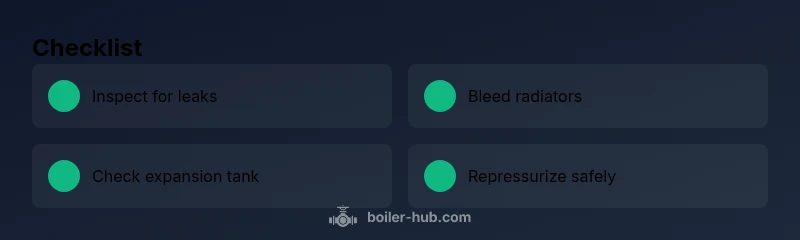
A systematic approach helps you isolate the cause and pick the right fix. Start with the simplest checks: leaks and radiator air; fix those first. If the pressure returns to normal after repressurizing but drops again within a few days, look for concealed leaks or a faulty expansion tank. A pressure that dips only when the boiler is heating points to air in the system or an expansion-tank issue. If the drop occurs even when the system is idle, the relief valve or fill valve may be at fault or there could be a misread on the gauge. In that case, replacing the faulty valve or gauge is often the remedy. Note that some problems require a professional service, especially if the expansion tank is old, the piping is corroded, or the system pressure repeatedly falls to zero. Boiling down the diagnosis: inspect for leaks, secure joints, repressurize safely, bleed radiators, test the expansion tank, and consult a licensed technician for definitive repairs.
Prevention and maintenance
The best defense against pressure drops is regular maintenance. Schedule an annual boiler service and have the expansion tank checked for proper air pressure. Keep the water chemistry balanced to reduce corrosion and scale buildup that can accelerate leaks. When you bleed radiators, do so in a controlled manner and ensure you do not over-bleed; re-check the system pressure after bleeding. If your home uses a combi boiler or sealed system, keep the recommended cold-fill pressure in the manual and avoid overfilling. Monitor pressure changes after weather events or after long periods of inactivity; small fluctuations are normal, but persistent declines should prompt a professional inspection. Record-keeping helps: track the pressure reading at rest and after heating cycles and note any incidents of pressure drop. Quick tip: never ignore a warning light or an unmistakable drop in performance; addressing pressure issues early saves energy and extends boiler life. The Boiler Hub team emphasizes safe handling and routine checks to prevent major failures.
Steps
Estimated time: 45-60 minutes
- 1
Check current pressure and safety first
Before touching any boiler components, verify the current pressure on the gauge when the system is cool. If the pressure is well below the recommended range, plan to repressurize. Note any visible signs of water around the boiler that might indicate a leak.
Tip: If you’re unsure of the baseline, consult the user manual or a professional before refilling. - 2
Shut off boiler and locate the filling loop
Power down the boiler and locate the filling loop typically found near the boiler or under the front panel. Ensure the area around the loop is clear and safe. Do not attempt filling with the boiler hot, as hot water can cause scalding or system damage.
Tip: Keep your face away from the loop and wear protective gloves if possible. - 3
Repressurize the system to the correct range
Open the filling loop slowly to allow water into the system. Watch the pressure gauge carefully and stop when it reaches the mid-range (usually 1-2 bar when cold). Close the loop securely to prevent overfilling and pressure overshoot.
Tip: Move slowly and avoid forcing water; a rapid fill can overshoot the target pressure. - 4
Bleed air from radiators
Starting with the highest radiator, use a bleed key to release air until water streams steadily. Check each radiator and then recheck the boiler pressure after bleeding, since removing air can slightly alter pressure.
Tip: Keep a cloth handy to catch drips and avoid scalding from hot surfaces. - 5
Inspect for leaks and check expansion tank
Look for damp spots and listen for hissing sounds indicating leaks. Inspect the expansion tank and ensure it’s not waterlogged; a wet, heavy tank or an unresponsive air valve often means replacement.
Tip: If you’re uncomfortable with tank checks, skip to step 6 and call a pro. - 6
Test operation and plan next steps
Turn the boiler back on and monitor pressure over the next heating cycle. If the pressure holds steady, you’re done; if it drops again, schedule a professional service to inspect the expansion tank, valves, and piping.
Tip: Keep a log of readings and dates to track any recurring issues.
Diagnosis: Low boiler pressure reading or pressure dropping during heating
Possible Causes
- highSystem leaks in pipes, joints, or radiator
- mediumExpansion tank failure or waterlogging
- mediumAir trapped in the heating system
- lowFaulty pressure relief valve or fill valve
Fixes
- easyInspect for leaks and seal/repair as needed
- easyRepressurize the system to the manufacturer's recommended range (1-2 bar)
- easyBleed radiators to remove air pockets
- mediumReplace expansion tank or faulty valve if necessary
Questions & Answers
What is considered normal boiler pressure?
Most boilers run between 1 and 2 bar when cold, rising slightly when hot. If your pressure stays outside this range, you likely have an issue that needs checking.
Normal boiler pressure is usually between one and two bars when cold.
Why does my boiler pressure keep dropping after I refill it?
Repeated drops usually indicate a leak, a faulty expansion tank, or a faulty valve. Inspect for leaks first, then check the expansion tank and valves.
Drops after refill are typically due to leaks or a faulty expansion tank.
Can air trapped in radiators cause pressure drop?
Yes. Air pockets reduce effective water volume and can cause fluctuating pressure. Bleed the radiators to restore stable pressure.
Air in radiators can cause pressure fluctuations; bleed the radiators to fix it.
Is it safe to repressurize a boiler myself?
Repressurizing can be safe if you follow the manual and keep away from hot surfaces. If you’re unsure, contact a professional.
Repressurizing is safe if you follow safety steps, but consult a pro if unsure.
What should I do if there is a visible leak?
Shut off the boiler if possible and contact a licensed technician. A leak can worsen, causing damage and injury.
If you see a leak, shut the boiler off if you can and call a pro.
How often should I service the expansion tank?
Have the expansion tank checked during annual servicing. Replacement is often required every 5-10 years depending on use.
Expansion tanks should be checked during annual service and replaced as needed.
Watch Video
Key Points
- Know your normal pressure range (1-2 bar when cold).
- Check for leaks first and address them promptly.
- Bleed radiators to remove trapped air and stabilize pressure.
- If pressure keeps dropping, call a qualified technician.