Can Boiler Pressure Drop Without a Leak? A Troubleshooting Guide
Discover why boiler pressure can drop without a visible leak, how to diagnose safely, and practical steps to restore pressure for homeowners and facility managers.


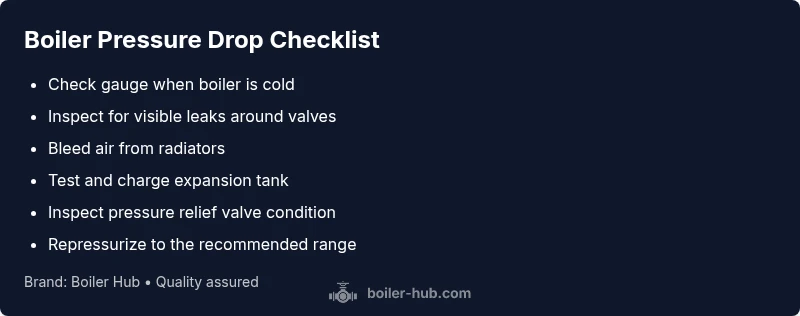
Most boiler pressure drops without a visible leak are caused by air in the system, a failing expansion tank, or a faulty pressure relief valve. Quick fixes: 1) repressurize the boiler to the manufacturer’s target, 2) bleed air from radiators and the boiler if needed, 3) inspect the pressure relief valve and expansion tank for obvious faults, and recheck after a run.
Why can boiler pressure drop without a leak?
According to Boiler Hub, can boiler pressure drop without a leak is a common issue homeowners face, especially after seasonal changes or during heavy heating use. The pressure gauge might fall even when you do not see water around pipes, which can be alarming. In many homes, the culprit isn't a visible pool of water but internal factors in the boiler system. Understanding these factors helps you act quickly and safely rather than guessing. The most frequent non-leak causes are air trapped in the system, a failing expansion tank, or a faulty pressure relief valve (PRV). Each of these affects the pressure reading differently and requires a distinct fix. Remember that small, slow pressure losses can accumulate over days or weeks, so periodic checks matter. This guide focuses on practical, safe steps you can take before calling a professional.
Common non-leak causes that lower pressure
There are several plausible non-leak causes for a pressure drop. Air trapped in the heating lines or cast radiators can compress and lower the effective pressure you read on the gauge. A water-logged or failed expansion tank can fail to compensate for thermal expansion, letting pressure fluctuate downward. A faulty or leaking pressure relief valve can relieve pressure unintentionally, appearing as a drop without any visible leak elsewhere. Finally, incorrect filling procedures or calibration can leave the system under-pressurized after a routine refill. In all cases, careful inspection of the components and a controlled re-pressurization approach are safer than guesswork. Boiler Hub’s guidance emphasizes a methodical check of each element to identify the root cause without introducing new risks.
Safety considerations: when to call a professional
Working on a boiler carries burn and gas/safety risks. If you smell gas, notice scorching, hear buzzing, or see obvious signs of corrosion or leaking connections, shut off power, and evacuate if necessary. If your attempts to restore pressure fail, or the pressure continues to drop after following basic checks, it’s time to contact a licensed technician. A pro can verify vent integrity, test the expansion tank bladder with the correct air charge, and confirm the PRV is functioning within safe limits. Regular maintenance reduces the chance of sudden pressure problems and helps preserve boiler life. The Boiler Hub team recommends relying on professional support when in doubt, especially for systems over five years old or those under warranty.
Quick checks you can perform before you start
Before making any adjustments, ensure the boiler is cool and off. Check that the fill valve and shutoffs are in their correct positions. Inspect visible piping for moisture or damp spots that could indicate small, slow leaks. Listen for unusual sounds that might signal air in the system or a failing pump. If you notice any of these signs, stop and reassess before proceeding with pressure adjustments. Keeping a simple log of gauge readings over time can help you see trends and determine whether the issue is ongoing or intermittent.
Repressurizing and bleeding air: a practical guide
Repressurizing the boiler to the manufacturer’s recommended range is a common first step when pressure drops. Connect the feed/pressure fill loop, slowly open the valve, and monitor the gauge until the correct pressure is reached with the system cold. After repressurizing, bleed air from radiators—starting with the highest radiators—using a bleed key until a steady flow of water comes out with no air spluttering. Recheck the pressure after the system stabilizes. If pressure climbs too high, close the fill valve and drain a little water to restore balance. This sequence reduces the chance of over-pressurizing and helps identify if there’s a persistent air or valve issue that needs professional attention.
Inspecting the expansion tank and PRV
An expansion tank with a lost or weak bladder cannot compensate for thermal expansion, leading to pressure fluctuations. Check the tank’s air charge using a bike pump or a tire gauge, following the boiler manufacturer’s recommended pressure (usually a few psi below your cold system pressure). If the charge is low or the tank feels waterlogged, it may need replacement. The PRV should hold pressure and not leak when tested. If it drips or opens frequently, replacement or professional testing is required. After any component replacement, repressurize and run the system to confirm stability.
Prevention: maintenance to avoid future pressure drops
Regular maintenance is your best defense against unplanned pressure drops. Schedule annual professional servicing to check the expansion tank, PRV, and overall boiler condition. Bleed air after long periods of inactivity or heating season starts, and keep an updated log of pressure readings. Ensure the water quality is good and the system is properly filled according to the manufacturer’s specification. Small, proactive steps—like inspecting joints and valve seals for corrosion—can prevent bigger problems and extend boiler life.
Steps
Estimated time: 60-120 minutes
- 1
Check pressure and safety
With the boiler cool, read the pressure gauge and confirm the target range from your manual. Note any rapid changes over a few days. This initial check helps distinguish a one-off fluctuation from a persistent drop.
Tip: Document readings in a log for trend analysis. - 2
Look for obvious issues
Inspect for visible leaks, damp spots on pipes, or corrosion around joints and the PRV. Even small leaks can drain pressure gradually and may be missed without a close look.
Tip: If you see moisture, avoid touching hot surfaces and call a pro if unsure. - 3
Repressurize using the fill loop
Turn off the boiler, isolate the feed valve, and slowly open the fill valve until the gauge reaches the recommended cold pressure. Do not exceed the target; overheating can damage components.
Tip: Close valves gently to avoid water hammer. - 4
Bleed air from radiators
Starting from the top floor radiators, use a bleed key to release air until water flows steadily. Check the system pressure again after bleeding to ensure it holds.
Tip: Begin with highest radiator to optimize air removal. - 5
Test expansion tank and PRV
Check the expansion tank for proper air charge and test the PRV for leaks or mis-seating. If the bladder feels waterlogged or the valve leaks, replacement may be needed.
Tip: Do not attempt high-risk valve work if you are unsure. - 6
Run and monitor
Turn the boiler back on and observe the pressure over the next 24 hours. If it remains stable, the issue is resolved; if it drops again, schedule professional inspection.
Tip: Keep a log and note any patterns in weather or heating demand.
Diagnosis: Boiler pressure gauge drops without an obvious external water leak
Possible Causes
- highAir in the system
- highFaulty expansion tank
- mediumFaulty or leaking PRV
- lowIncorrect filling/calibration
Fixes
- easyRepressurize to the manufacturer's target pressure with the fill loop
- easyBleed air from radiators and boiler to remove trapped air
- mediumInspect or replace the expansion tank to restore proper expansion capability
- mediumInspect/replace the pressure relief valve if it’s leaking or faulty
- easyIf pressure continues to fall after checks, contact a licensed technician
Questions & Answers
Can air in the system cause pressure to drop without a leak?
Yes. Air pockets reduce the system’s effective pressure and can cause readings to drop even when no water leaks are visible. Bleeding air from radiators and vents often resolves this.
Yes. Air pockets can lower the pressure reading, so bleeding air from radiators and vents is a common fix.
How do I repressurize my boiler safely?
Follow the manufacturer’s instructions: switch off power, locate the fill valve, and open slowly until the gauge reaches the cold target pressure. Close the valve and recheck after the boiler heats slightly.
Follow the manual to repressurize: open the fill valve slowly until you hit the target pressure, then recheck after a brief run.
What are signs my expansion tank needs replacement?
Frequent pressure drops, a tank that feels light or empty when tapped, or waterlogging indicates the bladder may be failing. A professional can confirm and replace if needed.
Look for frequent drops or a waterlogged tank; a professional can verify and replace the expansion tank.
When should I call a professional?
If pressure continues to fall after basic checks, if you smell gas, or if you notice persistent leaks around valves, safety devices, or the expansion tank, contact a licensed technician.
Call a professional if the pressure keeps dropping after checks or you notice safety concerns.
Can a faulty pressure relief valve cause pressure drop?
Yes. A defective PRV can leak or release pressure unexpectedly, causing a drop. It should be tested and replaced if faulty by a qualified technician.
A faulty PRV can cause pressure drop; have it tested and replaced if needed.
Is it safe to work near the expansion tank?
Working near the expansion tank can be hazardous. Only perform tasks you’re trained for; otherwise, call a professional to avoid injury or system damage.
It can be hazardous to work near the expansion tank; if in doubt, get a pro.
Watch Video
Key Points
- Identify air or expansion tank faults early
- Bleed air and repressurize carefully
- Check PRV and expansion tank regularly
- Call a professional if pressure drops persist