Pressure Drops on Boiler: Quick Troubleshooting Guide
Urgent boiler pressure troubleshooting guide from Boiler Hub to diagnose why pressure keeps dropping, repressurize safely, identify leaks, and prevent future drops.


Most likely, a leak (pipes, radiator, or expansion vessel) or a failing expansion vessel causes boiler pressure to drop. Start with a quick safety check, then repressurize the system and seal any visible leaks. If pressure falls again after repressurizing, stop and call a professional. Monitor for frost risk and gas safety concerns right away.
Why pressure keeps dropping on boilers (common causes)
Having the pressure keeps dropping on boiler can be alarming, especially when you rely on heating in cold weather. If the pressure drops, the likely culprits are a leak in the heating circuit, a faulty expansion vessel, or a defective pressure relief valve. Leaks may be visible or hidden behind walls; even a small pinhole can drain pressure over hours or days. An expansion vessel that has lost its air charge can fail to accommodate heating expansion, causing pressure to fall. A misreading gauge or a stuck fill valve can also give the appearance of a drop. According to Boiler Hub, leaks and expansion-vessel faults account for most pressure drop events, while gauge faults are less common but still plausible. Understanding these factors helps you decide whether you can safely troubleshoot or should call a professional.
Quick checks you can do before you call a pro
Before you panic, perform a few safe, simple checks that can reveal obvious failures. Start with the pressure gauge: note whether the reading is significantly lower than the boiler’s recommended cold-fill pressure. Look for visible leaks around the boiler, radiators, and exposed piping; damp patches, water stains, or a dripping valve are telltale signs. Inspect the filling loop and the auto-fill valve to ensure valves are closed unless you are actively repressurizing. Check the expansion vessel access port (if accessible) for signs of corrosion or a hard to press diaphragm. If you have access to an infrared thermometer, you can spot heat loss around joints. If you detect a leak, isolate the source if possible and arrange repair; if you’re unsure, switch off the boiler and call a professional. These quick checks can prevent further damage and help you describe the problem clearly when you contact support.
How to interpret the diagnostic flow (symptom → diagnosis → solutions)
When pressure falls, follow a structured flow to identify the root cause. Symptom: boiler pressure reading low or dropping after repressurizing. Diagnosis: check for external leaks first; if none, test the expansion vessel by charging it (if you know how) or by professional testing; if the gauge appears faulty, replace it. Solutions: repair leaks and joints, repressurize correctly, or replace the expansion vessel. If the pressure continues to drop after addressing leaks and vessel issues, re-check for hidden leaks and ensure the fill loop is used properly. If a drop recurs after a heating cycle, you may have a defective relief valve or pressure sensor; these parts should be inspected by a professional. Use the diagnostic flow to guide your next steps, with safety always the priority.
Safety-first approach to repressurizing (overview)
Repressurizing should be done with the boiler cold and unplugged from power when possible. Use the filling loop slowly, watching the pressure gauge to avoid over-pressurizing. If you notice hissing, steam, or any crackling sounds, stop immediately and seek professional assistance. Never bypass safety devices or tamper with gas fittings. The goal is to restore a stable, manufacturer-recommended pressure without creating new leaks or risks.
Step-by-step overview (to complement the detailed guide below)
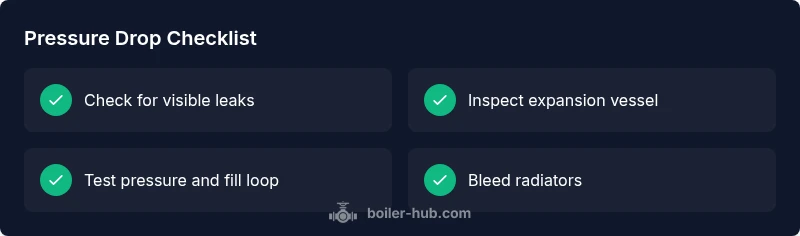
This section provides a high-level view of the actions required to safely address a dropping pressure. Start with safety checks, locate leaks, test the expansion vessel, and repressurize carefully. Then bleed radiators to purge air and monitor readings after heating. For persistent drops, professional testing becomes essential.
Prevention and maintenance to avoid future drops
Regular maintenance is the best defense against pressure drops. Schedule annual boiler service, inspect the expansion vessel for proper air charge, check pipe joints for corrosion, and ensure the filling loop valves operate smoothly. Keep a simple log of pressure readings across seasons and after maintenance so you can spot trends early. Proper insulation of exposed pipes also minimizes heat loss and helps maintain stable pressure.
When to seek professional help and what to expect
If you cannot locate visible leaks, suspect expansion-vessel issues, or repeatedly see pressure loss after repressurization, contact a Gas Safe engineer or qualified boiler technician. A professional will perform a pressure test, inspect the expansion vessel, check safety devices, and determine if parts require replacement. Expect a written quote and a brief explanation of findings and recommended repairs.
Common mistakes to avoid
Avoid over-pressurizing the system, which can damage seals and valves. Do not force the fill loop or bypass safety devices. Never ignore gas smells or telltale leaks. Keep power off if you suspect major leaks or safety concerns until professionals arrive. Finally, don’t rely on a faulty gauge—verify the actual system pressure with a trusted gauge or professional test.
Steps
Estimated time: 45-60 minutes
- 1
Turn off boiler and let it cool
Power down the boiler and allow it to cool for at least 15-30 minutes. This reduces the risk of scalding and lets internal components settle. Gather a flashlight and a cloth to wipe up any small leaks you might find.
Tip: Always ensure the area around the boiler is well-ventilated before touching pipes. - 2
Check for visible leaks and isolate water supply
Inspect all accessible joints, valves, and radiators for dampness, rust, or dripping water. If a leak is found, isolate the supply valve if you can do so safely, and note the location for repair.
Tip: Do not attempt to seal major leaks with tape; report to a professional. - 3
Inspect expansion vessel and air charge
Locate the expansion vessel and assess the air charge. A balloon-like vessel with little to no resistance may indicate a loss of charge. If you are unsure how to test, skip this step and call a professional.
Tip: Avoid using a high-pressure compressor to re-charge; improper pressure can cause damage. - 4
Test pressure gauge accuracy
Compare the gauge reading with a separate pressure gauge if available. If readings differ significantly, the gauge may be faulty and require replacement.
Tip: Use a reference gauge or have a technician verify the pressure. - 5
Repressurize using the filling loop
With the boiler cold, open the filling loop slowly and watch the pressure gauge. Close the loop as soon as the reading reaches the manufacturer’s recommended cold level.
Tip: Open slowly to avoid overshoot; never leave the filling loop open unchecked. - 6
Bleed radiators to remove air
Starting with the highest radiator, loosen the bleed valve slightly to release trapped air until water appears, then tighten. Repeat on all radiators as needed.
Tip: Keep a cloth handy to wipe spills and prevent staining. - 7
Run the heating cycle and observe
Turn the boiler back on and allow it to reach operating temperature. Check whether the pressure rises and remains stable without new leaks.
Tip: If pressure continues to drop, power down and call a professional. - 8
Record readings and plan maintenance
Document the pressure readings and dates of any service. Schedule annual servicing and inspect expansion components yearly to prevent future drops.
Tip: Keep notes accessible for future technicians.
Diagnosis: Boiler pressure keeps dropping or remains low after repressurizing
Possible Causes
- highExternal leaks in pipes/radiators/connections
- highFaulty expansion vessel (air charge lost)
- mediumFaulty or stuck pressure relief valve
- lowGauge inaccuracy or fill valve issue
Fixes
- easyRepair or seal leaks; tighten joints; replace damaged fittings
- mediumRecharge or replace expansion vessel and test system pressure
- mediumReplace defective pressure relief valve or gauge
- easyCorrectly verify and reset the pressure using the filling loop
Questions & Answers
What causes boiler pressure to drop suddenly?
Sudden drops are commonly caused by leaks in the heating circuit or a failing expansion vessel. A faulty pressure relief valve or a misreading gauge can also contribute. Inspect for leaks, test the vessel, and verify gauges before taking further steps.
Boiler pressure often drops due to leaks or a failing expansion vessel. Check for leaks and test the vessel; verify gauges before proceeding.
Is it safe to repressurize a boiler myself?
Repressurizing can be safe if you follow the manufacturer’s instructions and take precautions. Turn off the boiler, work on cold pipes, and avoid forcing valves. If you are unsure, contact a professional.
Repressurizing can be safe if you follow instructions and stay cautious. If unsure, call a professional.
What is expansion vessel and why is it important?
An expansion vessel absorbs heating expansion to prevent pressure spikes or drops in the system. If it's not charged correctly or has failed, pressure can become unstable, causing drops.
The expansion vessel buffers expansion; a faulty one can cause pressure instability.
How often should I service my boiler to prevent pressure issues?
Annual servicing helps catch expansion-vessel issues, leaks, and valve wear before they cause pressure drops. Regular checks also improve efficiency and safety.
Have yearly service to prevent pressure problems and keep the system efficient.
What if I smell gas while repressurizing?
Gas smells require immediate evacuation and calling your gas supplier or emergency services. Do not operate electrical switches or lighting and stay away from the area.
If you smell gas, evacuate immediately and call emergency services.
Watch Video
Key Points
- Check for visible leaks first and address promptly.
- Test the expansion vessel and replace if needed.
- Repressurize carefully and avoid over-pressurizing.
- Bleed radiators to remove trapped air after repressurizing.
- Schedule annual servicing to prevent recurring pressure drops.