How to Deal with Low Boiler Pressure: A Practical Guide
Learn how to diagnose and fix low boiler pressure safely. Step-by-step troubleshooting, safety tips, and when to call a professional. Boiler Hub guidance for homeowners and facility managers.


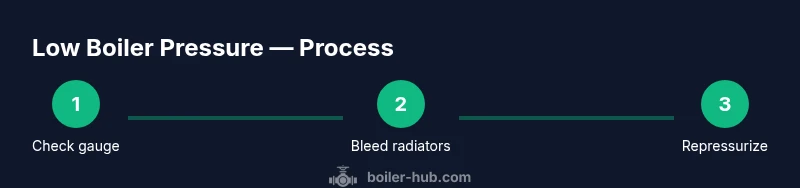
According to Boiler Hub, low boiler pressure usually signals a slow leak, an air lock, or a faulty expansion vessel. Start by checking the pressure gauge when the boiler is cold, then bleed radiators and repressurize the system using the filling loop. If pressure dips again, inspect for leaks and contact a qualified technician.
Understanding the symptom and causes of low boiler pressure
Low boiler pressure is one of the most common boiler issues homeowners encounter. When the pressure gauge falls below the normal range, the boiler may fail to ignite reliably or heat water inefficiently. According to Boiler Hub, several factors can cause this symptom, including slow leaks, minor corrosion in the system, air in the pipes, or a faulty expansion vessel. Understanding the typical culprits helps you choose the right troubleshooting path.
Household heating systems operate as a closed loop. A small, ongoing leak may go unnoticed until the pressure drop becomes noticeable. Air can enter the system when fittings loosen or during work on radiators. An expansion vessel - a small bladder tank that accommodates water expansion as the boiler heats up - can lose its charge or fail, causing pressure fluctuations. Leaks in radiators, pipework, or valves are common culprits in homes with older heating systems. If you experience frequent drops in pressure, the cause is often repairable, but persistent pressure loss can indicate a bigger issue like a cracked heat exchanger or a failing expansion vessel in some setups. In any case, tracking the pressure readings over time helps you distinguish between a one-off incident and a recurring problem.
Safety first: what to do before you touch the boiler
Before you touch the boiler, prioritize personal safety and the integrity of the gas system. If you smell gas or hear an unusual hissing sound, leave the area immediately and call your gas supplier or emergency services. Do not operate switches or open flames near the appliance. When you are sure it is safe to proceed, turn off the boiler and allow it to cool. Keep children and pets away from the area during inspection. Review the user manual for model-specific cautions, especially around combustion safety, pressure relief valves, and service access points. Remember: working with heating systems involves risks from hot surfaces, steam, and pressurized water, so proceed with care.
Quick checks you can do safely
Perform a sequence of safe, non-destructive checks to narrow down the cause. Verify the boiler’s pressure gauge reading when the unit is cold and note whether it sits in the manufacturer’s recommended range. Look for obvious signs of leakage around radiators, joints, and valves. Inspect the pressure relief valve for dampness or dripping, which can indicate overpressure events. If you notice rust, sludge, or debris in radiator valves, these can signal circulation problems. Use a flashlight and a clean cloth to check for damp patches on walls, floors, and the boiler cabinet. Document any patterns in pressure changes over time to help diagnose recurring issues.
Step-by-step troubleshooting flow
This section outlines a logical sequence to diagnose and address low boiler pressure without unnecessary disassembly. Start with the simplest checks and progressively move to more involved tasks. Keep notes of readings and actions to avoid repeating steps unnecessarily. If at any point you encounter uncertain conditions (gas smell, major leaks, or a failed test), stop and call a qualified technician. A structured approach reduces risk and helps ensure a lasting fix.
Repressurizing the system and refilling
If the system has been confirmed to lose pressure and there are no active leaks, you can safely repressurize using the boiler’s filling loop. Ensure power is off, follow the manufacturer’s procedure to connect the filling loop, and open the valve gradually to avoid sudden pressure surges. Stop when the gauge reaches the manufacturer’s recommended cold pressure range. After repressurizing, re-check all joints for signs of slow leaks and monitor the system for a short period to confirm steady operation. Do not overfill, as excess pressure can trigger safety relief valves and cause water damage.
Checking the expansion vessel and air in the system
A faulty expansion vessel is a common cause of persistent pressure drops. If the vessel’s charge is lost or the bladder is damaged, it won’t absorb pressure changes efficiently. A quick test is to feel the vessel’s outer shell for signs of excessive warmth or leakage and to listen for a hiss that may indicate air ingress. If you suspect a problem, you may need a professional to test the vessel’s internal pressure and, if needed, replace or recharge it. Some systems require manual recharging with a pump and pressure gauge, following the service manual’s guidance.
Radiator bleeding and air locks
Air trapped in radiators is a frequent cause of reduced heating efficiency and fluctuating pressure. Bleed radiators starting from the highest radiator in the building, using a radiator key or screwdriver per your valve type. Have a container ready to catch water and slowly release air until a steady stream of water appears. Re-check the boiler pressure after bleeding; if it has dropped, repressurize as described above and re-bleed any remaining air pockets. Regular bleeding during the heating season can help maintain stable pressure and efficient heat output.
Common scenarios and fixes
Some homes experience pressure fluctuations without obvious leaks, often due to aging components or intermittent valve seals. In older systems with cast-iron radiators, small leaks can develop at joints over time. Leaks may be minor but sufficient to gradually reduce pressure. In newer installations, defective pressure relief valves or faulty expansion vessels can also cause pressure instability. When leaks are found, seal or replace the defective component. If leaks are not found but pressure continues to drop after a fill, involve a professional to assess the heat exchanger, pipes, and manifold for hidden issues.
When to call a professional and safety considerations
If pressure continues to drop after repressurization, or if you detect gas odors, strong leaks, or unusual boiler noises, contact a heating engineer promptly. Recurrent pressure loss may indicate a failing expansion vessel, cracked pipe, or defective pressure valve that requires specialized tools and expertise. Boiler Hub recommends not attempting dangerous repairs beyond your skill level. A licensed technician can perform pressure tests, verify the system integrity, and advise on potential system upgrades to prevent future pressure problems.
Tools & Materials
- Manual for your boiler model(Keep for model-specific instructions)
- Pressure gauge / digital manometer(To verify readings accurately)
- Radiator bleed key or flat screwdriver (depending on valve type)(Used to release trapped air)
- Adjustable wrench set(For loosening/tightening fittings)
- Filling loop or hose (gas safe compatible if required)(To repressurize the system slowly)
- Bucket, towels, and rags(Contain drips and spills)
- Leak-detection fluid or soap solution(Helpful to identify slow leaks)
- Flashlight and mirror (to inspect joints)(For hard-to-see areas)
- Gloves and eye protection(Personal safety)
- Phone or notebook to log readings(Track pressure changes over time)
Steps
Estimated time: 60-120 minutes
- 1
Identify the problem and confirm
Read the pressure gauge when the boiler is cold and compare to the manufacturer’s recommended range. Note any recent signs of leaks, radiator issues, or noises. This step prevents unnecessary actions and guides the next steps.
Tip: Document the readings and any observed leaks to share with a technician if needed. - 2
Power down and cool the system
Turn off the boiler and allow it to cool before touching connections. This reduces the risk of scalding or pressure-related injuries. If you smell gas, evacuate immediately and call the gas emergency line.
Tip: Never operate valve handles while the system is hot; wait until it’s safe. - 3
Bleed radiators to remove trapped air
Starting from the highest radiator, use the bleed key or screwdriver to release air until water flows steadily. Catch drips in your container and close the valve promptly. Recheck the boiler pressure after bleeding.
Tip: If you hear banging during bleeding, pause and re-check connections for secure seals. - 4
Inspect for visible leaks
Look around joints, valves, and pipes for damp patches or active drips. Tighten connections if you spot a loose fitting, but avoid overtightening. If a leak persists, shut off the supply and call a professional.
Tip: Keep a log of any damp patches and their locations to aid diagnostics. - 5
Prepare to repressurize
Set up the filling loop per your boiler manual. Make sure the system is isolated from the mains if required. Clear the area of children and pets before proceeding.
Tip: Read the exact steps in your manual before opening the loop; wrong sequence can over-pressurize. - 6
Repressurize slowly until nominal range
Open the filling loop valve gradually and monitor the gauge. Stop when the cold pressure reaches the manufacturer’s recommended value. Close the valve gently and inspect for leaks.
Tip: Proceed slowly; rapid filling can damage seals. - 7
Check expansion vessel and air content
If the pressure spikes or falls again after repressurizing, test the expansion vessel. A failed bladder or loss of charge may require replacement or servicing by a professional.
Tip: If unsure how to test the vessel, defer to a professional to prevent improper charging. - 8
Refill and re-check system pressure
Top up any water lost during bleeding or leaks, then recheck the entire system’s pressure. Ensure all joints are dry and the boiler starts normally.
Tip: Avoid overfilling; excess pressure can trigger safety valves and cause damage. - 9
Test boiler operation
Restart the boiler and verify that it fires reliably and heats water as expected. Listen for unusual noises and observe for damp spots over the next few hours.
Tip: Keep monitoring logs for any recurring changes in pressure or performance. - 10
Assess recurring symptoms
If pressure continues to drop despite recharging, there may be a hidden leak or a failing component. Schedule a professional assessment to prevent further damage.
Tip: Persistent issues often indicate a component beyond DIY reach. - 11
Document and plan next steps
Record readings, actions taken, and dates. This helps with warranty claims, service scheduling, or future troubleshooting.
Tip: Use a simple chart to track pressure over time. - 12
Know when to call a professional
If you detected gas smells, major leaks, or if the pressure problem recurs after a refill, contact a licensed heating engineer promptly. They can perform pressure tests and advise on system integrity.
Tip: Boiler issues can worsen quickly; when in doubt, call a pro.
Questions & Answers
What is considered low boiler pressure?
Low boiler pressure is when the pressure gauge sits significantly below the boiler manufacturer's recommended cold starting point. This often causes the boiler to run inefficiently or fail to ignite reliably. Always refer to your model’s manual for the exact target range.
Low boiler pressure means the gauge is below the recommended cold starting range. Check your manual for the exact target range and begin safe troubleshooting.
How do I repressurize a boiler safely?
Repressurizing typically involves using the filling loop to add water to the system slowly while monitoring the pressure gauge. Stop when the gauge reaches the recommended range and inspect for leaks before restarting the boiler.
Use the filling loop slowly and watch the gauge. Stop at the recommended range and check for leaks before turning the boiler back on.
Can a faulty expansion vessel cause low pressure?
Yes. A faulty expansion vessel can fail to absorb pressure changes, leading to repeated pressure drops. If repressurizing temporarily fixes the issue but pressure falls again, a professional should test or replace the vessel.
A bad expansion vessel can cause ongoing pressure drops and may need professional testing or replacement.
Is bleeding radiators always necessary?
Bleeding is not always needed, but it’s a common step if you have cold spots or noisy radiators. If air is present in the pipes, bleeding often resolves pressure fluctuations related to trapped air.
Bleeding helps remove air pockets if present; it’s a common first step in many low-pressure scenarios.
When should I call a professional?
If pressure continues to drop after repressurization, or if you notice leaks, gas odors, or unusual boiler behavior, contact a licensed heating engineer. Persistent issues may indicate a more serious fault.
Call a pro if pressure keeps dropping after re-pressurizing or you see leaks or gas odors.
Watch Video
Key Points
- Check the gauge when cold and compare to the manual.
- Bleed radiators to remove air and recheck pressure.
- Repressurize slowly using the filling loop and avoid overfilling.
- Inspect for leaks and faulty expansion vessels if pressure remains low.
- Call a professional if pressure drops again after deliberate repressurization.