Can You Use a Boiler With Low Pressure? A Troubleshooting Guide
Learn how to handle boiler low-pressure issues safely. Boiler Hub covers causes, diagnostics, fixes, and prevention tips to keep your heating running smoothly.


Low boiler pressure is usually caused by a leak, a faulty expansion vessel, or a failing pressure relief valve. Start by checking the pressure gauge; if it reads below the boiler’s normal range, use the filling loop to restore pressure, then bleed radiators and look for leaks. If pressure climbs quickly or won’t hold, contact a professional for safety.
Understanding low boiler pressure
Can you use boiler with low pressure? In many homes, yes—so long as you diagnose the cause and follow safe steps. Low boiler pressure means the system has less water than normal, which can affect heating performance and could lead to trapped air or overheating if the boiler operates against a closed loop. According to Boiler Hub, understanding what pressure should feel like when the system is cold helps identify anomalies early. Someone checking the gauge should know that a sudden drop is a sign to stop and troubleshoot rather than just assume the boiler is broken. In practice, you’ll want to confirm the symptom with a quick glance at the gauge, listen for hissing sounds at joints, and examine visible pipes for damp spots. Addressing pressure problems promptly keeps your home safe and comfortable while avoiding costly repairs later.
Common causes of low pressure
Low boiler pressure can be caused by several common issues that homeowners and facility managers can recognize with a careful eye. A slow, steady leak from joints, radiators, or the pressure relief valve is a frequent culprit. A faulty expansion vessel reduces the system’s ability to accommodate heated water, causing pressure to drop as the boiler cycles. Bleed valves left open or loose radiator bleed screws can also release water and lower pressure inadvertently. In some cases, corrosion or a deteriorated pipe can create invisible leaks that only show up as damp patches or air in the system. While diagnosing, remember that minor leaks may not be immediately obvious; look for dampness, water stains, or oddly warm spots in the boiler room. Boiler Hub Analysis, 2026 indicates that the majority of low-pressure events stem from leaks, expansion vessel faults, or valve issues.
Immediate safety checks you should perform
Before you touch anything, switch off the boiler and let it cool. Do a quick visual scan of the area around the boiler for obvious leaks or damp spots. Check all visible joints, radiator connections, and the pressure relief valve for signs of dripping. Ensure that the filling loop (the small metal tube used to top up pressure) is intact and not blocked. If you notice a gas smell, hissing, or strong heat, evacuate and call your gas supplier or emergency services. Do not attempt to force the system to run at unsafe pressure. Always prioritize personal safety over a quick fix.
How to top up pressure safely
If your boiler manual allows topping up, use the filling loop carefully to restore pressure to the normal range. Start by ensuring the boiler is cool, then slowly open the filling valves while watching the pressure gauge. Close the valves as soon as the gauge reaches the target level. Do not overfill; excess pressure can be dangerous and may trigger safety shutoffs. After topping up, re-check for leaks and listen for any unusual sounds that could indicate a problem. If the pressure climbs excessively or cannot be held, stop and seek professional help.
Bleeding radiators and system balancing
Air in the system can falsely indicate low pressure and reduce heating efficiency. Bleed radiators from the nearest to the furthest, starting with the radiator located closest to the boiler. Use a bleed key and a cloth to catch drips. After bleeding, re-check the pressure and adjust if necessary. If many radiators require bleeding, you may have an overall air lock or an imbalanced system. In this case, a professional may recommend balancing the system to distribute water evenly and stabilize pressure.
When to call a professional
If the pressure drops again after topping up, or if you notice frequent leaks, strange noises, or repeated pressure spikes, contact a qualified boiler technician. Replacing an expansion vessel or repairing a faulty pressure relief valve often requires specialized tools and knowledge. Do not attempt repairs beyond your comfort level. For safety, have a professional inspect the system at least once a year and whenever pressure irregularities persist.
Prevention: maintenance tips to avoid future low pressure
Preventive maintenance is the best defense against recurring low pressure. Schedule regular boiler servicing, inspect expansion vessels for proper air charge, and check the system for leaks at least annually. Keep a simple log of gauge readings, minor repairs, and any radiator bleeding events to detect trends early. Ensure all seals and valves are tight and consider installing a temporary pressure gauge in the boiler room for quick reference. A proactive approach reduces the risk of unexpected breakdowns and helps you manage energy efficiency more effectively.
Troubleshooting flow recap
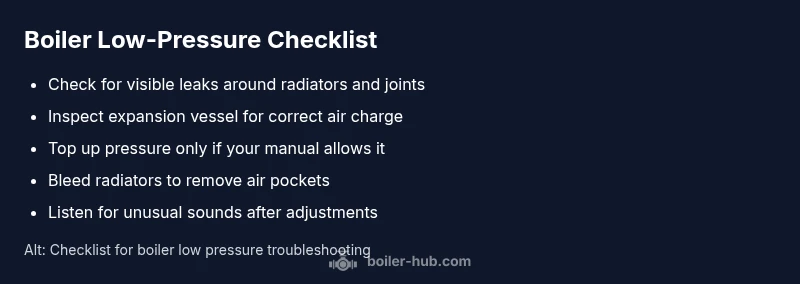
This section is a concise reference: first verify that pressure is within the recommended range when cold; check for leaks and faulty components; top up if permitted; bleed radiators to remove air; reset and test the system; and call a professional for persistent issues. Keeping to a routine maintenance schedule and using a log for gauge readings will help you catch problems early and avoid extended downtime.
Steps
Estimated time: 45-60 minutes
- 1
Power down and locate the filling loop
Turn off the boiler and allow it to cool. Locate the filling loop (usually a short pipe with valves) near the boiler. Check that it is not kinked or blocked and identify the two valve handles. This is your first controlled step to safely adjust pressure if the manual allows.
Tip: Consult your boiler manual for exact locations and safety precautions before touching valves. - 2
Check for visible leaks
Inspect joints, radiators, and pipes for damp patches or dripping water. A slow leak can cause pressure to drop gradually. If you find a leak, tighten fittings if you can safely do so, otherwise seal and prepare for professional repair.
Tip: Use a flashlight and feel joints with a dry cloth to detect moisture you might have missed. - 3
Top up pressure safely
If the boiler manual permits, open the filling loop valves slowly and watch the pressure gauge. Stop as soon as you reach the recommended range. Close the valves firmly and recheck the gauge after a few minutes.
Tip: Never force the loop fully or leave valves open; improper topping can lead to over-pressurization. - 4
Bleed radiators to remove air
Starting with the radiator closest to the boiler, insert a bleed key into the valve and listen for a hiss as air escapes. When water begins to come out steadily, close the valve. Repeat for all radiators.
Tip: Place a cloth underneath to catch water; overdue bleeding can require rechecking pressure afterward. - 5
Test and reset the boiler
Turn the boiler back on and run a quick heat test. Monitor the pressure gauge; it should stabilize within the normal range. If pressure drifts, you may have a leak or valve issue that needs professional attention.
Tip: Take notes of any abnormal readings to share with a technician. - 6
Know when to call a professional
If pressure still drops after topping up or rises rapidly with heating, stop attempting DIY fixes and contact a licensed technician. Recurrent pressure problems can indicate a hidden leak or faulty components.
Tip: Document symptoms, dates, and readings to help the technician diagnose quickly.
Diagnosis: Boiler pressure gauge drops below normal range and stays low after topping up
Possible Causes
- highSystem leak (pipes, radiators, joints)
- mediumFaulty expansion vessel
- lowDefective pressure relief valve or faulty filling loop
Fixes
- easyInspect for visible leaks; tighten joints or replace faulty components
- hardReplace expansion vessel or reseal system; this usually requires a professional
- mediumRepair/replace pressure relief valve; ensure the filling loop operates correctly
Questions & Answers
What should boiler pressure read when cold?
Most boilers have a cold pressure range that should be within a specific band defined by the manufacturer. If the gauge reads significantly below this range, begin troubleshooting with leaks and expansion vessel checks, but always follow your manual.
Most boilers have a specific cold pressure range. If the gauge is well below that range, start with leaks and expansion vessel checks, following the manual.
Can I fix a leak myself?
Small, accessible leaks at joints may be resealed, but many leaks require professional repair. Do not attempt major fixes or disassembly if you’re unsure of the system’s integrity.
Small leaks at joints may be resealed, but many leaks need a professional. Do not attempt major fixes if you're unsure.
Is topping up pressure risky?
Top-up is only safe if your manual allows it and you follow the procedure exactly. Over-pressurizing can trigger safety valves and damage components. Stop if you’re unsure.
Topping up is risky if not done per the manual. Over-pressurizing can trigger safety valves, so proceed only if you’re confident.
Why does pressure drop after topping up?
A drop after topping up usually indicates an ongoing leak or an issue with the expansion vessel or seals. If it repeats, stop using the boiler and call a professional.
Pressure drop after topping up often means a leak or expansion vessel issue. If it repeats, call a professional.
How long does it take to fix low pressure?
Simple top-up and bleed tasks can take 30-60 minutes. More complex repairs, like replacing a vessel or valve, may require a longer service and scheduling.
A simple top-up and bleed takes about 30-60 minutes. Replacing parts may require a longer service.
What maintenance helps prevent low pressure?
Regular boiler servicing, timely valve checks, and monitoring for leaks are key. Keeping a maintenance schedule helps catch issues before they impact pressure.
Regular servicing and valve checks prevent pressure problems. Maintain a schedule to catch issues early.
Watch Video
Key Points
- Check gauge first; normal cold range guides troubleshooting.
- Leaks and expansion vessel faults are the leading causes.
- Top up safely only when allowed by your boiler manual.
- Persistent pressure issues require professional help.