What If Boiler Pressure Is Too Low: Troubleshooting Guide
Urgent, practical steps to diagnose and fix low boiler pressure, including repressurization, leaks, and when to call a professional for homeowners and facility managers.


Most likely cause: the system has lost pressure due to a leak, recent bleeding, or an inaccurate fill. Quick fix: switch off heating, check the pressure gauge, and gently repressurize using the filling loop to bring it to 1 bar when cold (up to 1.5 bar when hot). If pressure continues to drop, or you see damp spots, stop and call a professional.
Why low boiler pressure matters
A boiler that runs with insufficient pressure cannot circulate hot water efficiently. In practice, you may notice slower heating, cold spots in radiators, or the boiler cycling on and off more often. According to Boiler Hub, pressure instability is a common sign of trouble that, if ignored, can lead to air locks and reduced system lifespan. Restoring the correct pressure helps the heat go where it should and reduces the risk of boiler lockouts. The underlying physics is simple: water needs a closed loop with enough pressure to push steam and hot water through radiators and radiators vents. When pressure is too low, the system cannot maintain consistent flow, causing inefficiency and potential damage over time.
Common causes of low boiler pressure
There are several frequent reasons your boiler pressure drops. Leaks around radiators, joints, or the boiler casing can slowly bleed water from the system. After you bleed a radiator, it's common to see a pressure drop until you repressurize. A faulty filling loop valve or worn pressure relief valve can also allow slow loss of pressure. Finally, if the boiler has recently been serviced or refilled, the gauge may not have been re-set, leaving the system at a lower baseline. By understanding these causes, you can target the fix without unnecessary steps.
What you can safely check first
Before you touch the system, ensure safety: switch off the boiler and allow it to cool. Inspect visible pipework and radiators for signs of dampness or leakage. Check for recently bled radiators and confirm you know how much pressure your model requires when cold. If your gauge reads significantly below the normal range, you will need to repressurize, but only after ruling out obvious leaks. Small drips might be tolerated, but persistent dampness deserves professional attention.
Diagnostic approach: quick mental model
Think of pressure like water in a closed pipe network. If pressure is low, you either lost water through a leak, removed water by bleeding, or never filled the system to its correct baseline. The most common symptom is a gauge well below the target on cold start. Compare readings across the most used rooms to locate possible leaks. If you can't locate a leak and pressure continues to fall, the issue may be with the filling loop or pressure valve.
Step-by-step overview (repressurize safely)
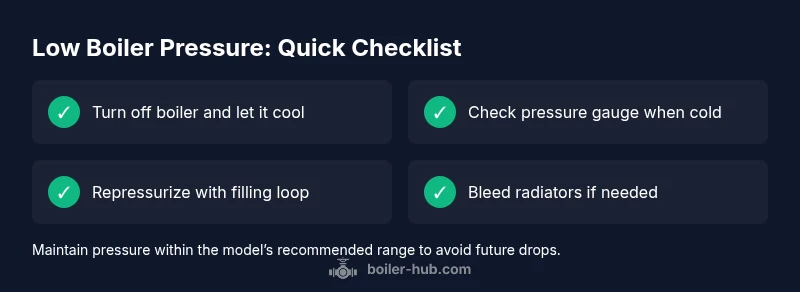
This section provides a practical overview of the repressurization process, including checking for leaks and ensuring your system is within the manufacturer’s recommended range. It’s designed to complement the formal step-by-step guide and help you prepare before you begin any hands-on work. Always consult your boiler’s manual for model-specific guidance and never force components that feel stiff or damaged.
Prevention and safety reminders
Regular servicing and annual inspections help prevent pressure drops. Keep an eye on radiator bleed frequency and inspect joints for small damp patches. Use only the correct filling loop and never overfill beyond the cold-rated target. If you ever smell gas, hear hissing near the boiler, or notice scorch marks, leave the area immediately and call emergency services before continuing any work.
When to call Boiler Hub or a pro
If you cannot locate a leak, if pressure drops rapidly after repressurization, or if the gauge never stabilizes within the recommended range, it’s time to seek professional help. A certified technician can pressure-test the system, inspect for hidden leaks, and inspect the safety valve and pressure relief equipment.
Steps
Estimated time: 45-60 minutes
- 1
Safety and initial checks
Turn off the boiler and allow it to cool completely. Look for obvious signs of leaks around radiators, pipes, and the boiler. Note the current pressure and the cold baseline recommended by your manual.
Tip: Always ensure the area around the boiler is dry before touching components. - 2
Verify the pressure gauge and leaks
Read the gauge when the system is cold. If you see damp patches or active drips, do not repressurize—address leaks first or call a pro.
Tip: A nearby radiator bleed may cause pressure loss—check if a recent bleed happened. - 3
Prepare to repressurize
Ensure you have access to the filling loop and understand the correct target pressure for your boiler model when cold (usually around 1 bar).
Tip: Have a cloth handy to catch any small spills. - 4
Repressurize the system
Open the filling loop slowly to allow water into the system until the gauge reaches the target. Close the loop once the correct pressure is reached.
Tip: Do not exceed the recommended pressure; over-pressurizing can damage components. - 5
Check radiators and bleed if needed
If any radiator was recently bled, recheck the pressure after it settles. Bleeding can cause small pressure drops that may need adjustment.
Tip: Bleed in a well-ventilated area away from the boiler. - 6
Test run and monitor
Turn the boiler back on and let it heat. Monitor the pressure gauge as the system warms up to ensure it stays within the expected range.
Tip: If pressure falls again quickly, there may be a hidden leak or faulty valve.
Diagnosis: Boiler pressure gauge reads below the recommended level after a cold start
Possible Causes
- highSystem leaks from radiators, pipes, or boiler vessel
- mediumRecent radiator bleed or loss of pressure due to filling errors
- lowFaulty filling loop valve or pressure relief valve malfunction
Fixes
- easyInspect for visible leaks and damp patches; repair leaks or call a plumber if needed
- easyRepressurize the system using the filling loop to re-seat pressure to the recommended range
- mediumInspect and, if necessary, replace faulty valves with professional help
Questions & Answers
Why is my boiler pressure low even after repressurizing?
If pressure drops again after repressurization, there may be an undetected leak, a faulty valve, or an issue with the condensate return. Check for damp patches and have the system pressure-tested by a professional if the issue persists.
Pressure dropping after repressurization usually points to a leak or faulty valve; a professional inspection is advised if it keeps happening.
What is the normal boiler pressure range when cold?
Most boilers expect about 1 bar when cold. Some models allow up to 1.5 bar before heating. Always refer to your boiler manual for the exact target range.
Typically around 1 bar when cold, up to 1.5 bar when hot depending on the model.
Can I bleed radiators to fix low pressure?
Bleeding radiators can help remove air pockets that cause uneven heating, but it may also cause a small pressure drop. Recheck pressure afterward and repressurize as needed.
Bleeding can help with air but may drop pressure—recheck the gauge after.
Is repressurizing dangerous?
Repressurizing is generally safe if you follow the boiler’s instructions and do not overfill. Always shut off the boiler and work in a dry area.
It’s safe when done as instructed and you don’t overfill; if unsure, consult a pro.
When should I call a professional?
Call a professional if you cannot locate any leaks, the pressure drops quickly, or you see signs of valve faults. A pro can perform pressure testing and valve replacements.
Call a pro if leaks aren’t obvious or the problem persists after repressurization.
How often should I check boiler pressure?
Check the pressure gauge during routine boiler checks or at least once a season. If you notice frequent drops, schedule a service to prevent damage.
Check it during regular maintenance or if you notice heating issues.
Watch Video
Key Points
- Repressurize safely to the correct level when cold
- Check for hidden leaks if pressure drops repeatedly
- Use the filling loop correctly and avoid overfilling
- Call a professional if leaks or valve faults are suspected