What Causes Boiler Low Pressure: Troubleshooting Guide
Learn the top causes of boiler low pressure, how to diagnose safely, and step-by-step fixes to restore reliable heating. Practical tips, safety reminders, and prevention strategies from Boiler Hub.


Start with the pressure gauge: confirm your boiler’s current pressure, then bleed air from radiators if present. If pressure doesn’t hold after heating, the likely culprits are a leak, a faulty expansion vessel, or a bad pressure relief valve. Address leaks first, then recheck the system to restore safe operation.
Pressure fundamentals: what you're looking for
Boiler pressure is the force that pushes hot water through your heating system. In most homes, the boiler gauge should sit in a safe operating band when the system is cold and should rise when the boiler heats. If you see pressure that's too low, the system cannot circulate hot water efficiently, and radiators may stay cool. If pressure is too high, components can strain and seals may fail. For many boilers, the ideal cold-start pressure is around 1 bar, but always verify in your user manual. In practice, you may notice your radiators warm up slowly, the boiler cycling on and off, or an error code if the pressure drops below a safe threshold. When pressure falls, the easiest way to react is to identify whether the loss is gradual or abrupt. A slow, steady drop often points to minor leaks, while a sudden plunge can indicate a larger leak or a failed vessel. Understanding these patterns helps you decide between a quick bleed and a bigger repair.
Common causes of low boiler pressure
Low boiler pressure can stem from several recurring issues. Small leaks at joints, radiator valves, or pinholes in pipes are common culprits that silently drain pressure over time. Another frequent cause is a failed expansion vessel, which loses its air cushion and can no longer absorb water expansion, leading to pressure drops. Air pockets or improper bleeding can trap air in the system, causing fluctuating pressure readings and inefficient circulation. A faulty pressure relief valve or an incorrectly closed filling loop can also cause sudden pressure loss. In rare cases, mineral buildup or corrosion in heat exchangers creates micro-leaks that are hard to spot but still affect pressure. Identifying the pattern—gradual vs. sudden drop—helps prioritize checks (leaks first, then vessel or valve issues).
- Leaks at radiators, joints, or pipes
- Faulty expansion vessel or loss of air charge
- Air trapped in the system or incomplete bleeding
- Faulty pressure relief valve or open filling loop
- Corrosion or micro-leaks in boiler components
The role of the expansion vessel
The expansion vessel is a small tank that accommodates water expansion as the boiler heats. If it loses its air charge or fails, the system cannot absorb the extra volume, causing pressure to rise or drop unexpectedly. A common sign of a failed expansion vessel is a pressure that fluctuates or remains high even after bleeding and refilling attempts. Recharging the vessel or replacing it is often necessary when tests show the vessel cannot hold air. Because expansion-tank faults can mimic other issues, a systematic check is essential: inspect for corrosion, test the air charge, and review the vessel’s connection to the boiler. If the vessel shows signs of internal rust, dampness around the tank, or the system never stabilizes after filling, it’s a strong indicator the vessel needs service or replacement.
- Air charge test and recharge
- Signs of internal corrosion or dampness
- Replacement is typically required when charge cannot be maintained
How to safely check the system
Safety first: never work on a hot boiler. Allow the unit to cool, and wear protective gloves. Start by examining the visible components for leaks around the boiler, piping, and radiators. Note the current pressure on the gauge when the system is cold. If there’s a clear leak, address it with proper repair or sealant, and then recheck the pressure after the system cools. If no external leaks are found, listen for hissing noises that indicate air escaping through vent points. Check the filling loop under the boiler; if it’s partially open or left uncapped, close it securely. Finally, inspect radiator bleed valves for signs of lingering air pockets and prepare to bleed if needed.
- Turn off heating, let cool
- Look for damp patches and fresh stains
- Check filling loop closure and radiators valves
- Listen for air escaping during venting
Quick fixes you can try now
If you’ve identified a straightforward issue, try these steps in order: bleed radiators to release trapped air, then recheck pressure on the cold boiler. If pressure is low after bleeding, gradually refill using the filling loop until the gauge shows a safe range as indicated by the boiler manual. If you still see pressure dropping after a refill, inspect for hidden leaks or a faulty expansion vessel. Do not overfill—the system should sit within the manufacturer’s recommended range. If the valve or loop was left open, close it and monitor for changes. If you’re unsure about any step, pause and call for professional service.
- Bleed radiators
- Refill to recommended pressure
- Check for hidden leaks
- Inspect expansion vessel; replace if needed
- Do not overfill; follow manual guidance
When to call a professional
Some symptoms demand expert assessment. If pressure continues to drop after bleeding and refilling, or you detect damp patches that indicate hidden leaks, contact a licensed technician. Persistent pressure instability may signal a failing expansion vessel, faulty pressure relief valve, or internal boiler corrosion, which require specialized tools and safety protocols. If your boiler is under warranty, consult the manufacturer’s service partner to avoid voiding coverage. A professional evaluation ensures safe operation and compliance with local codes.
- Persistent pressure drops after fixes
- Visible or suspected hidden leaks
- Suspected expansion-tank or valve faults
- Warranty considerations
Prevention: long-term pressure maintenance
Prevention is safer and cheaper than frequent repairs. Schedule annual boiler servicing to catch gradual wear, leaks, and valve faults before they escalate. Regularly check radiators for cold spots or cold patches and bleed as needed to keep air from building up. Maintain the expansion vessel by testing its air charge and replacing it if it can’t retain air. Keep a log of pressure readings over time to detect trends early. Finally, ensure your system has no open filling loops and that all seals and gaskets are in good condition. Routine checks help maintain steady pressure across heating seasons.
Diagnostic flow at a glance
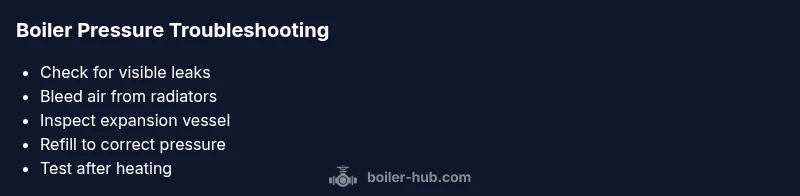
From symptom to solution, use a simple flow: observe pressure when cold → look for leaks → bleed air → refill carefully → test heater cycle → check expansion vessel → call pro if unresolved. This method minimizes unnecessary disassembly and prioritizes safety while restoring stable pressure.
Steps
Estimated time: 45-75 minutes
- 1
Power off and cool the boiler
Turn off the boiler and wait until it cools completely. This reduces the risk of scalding and gives you stable readings for the initial pressure check.
Tip: Use a covered rag when touching any hot surfaces during inspection. - 2
Check the pressure gauge while cold
Read the current pressure when the system is at its coolest. Note whether it sits below, within, or above the manufacturer’s recommended range.
Tip: If you’re unsure of the range, refer to the boiler manual. - 3
Inspect for visible leaks
Walk around the boiler, radiators, and accessible pipes looking for damp patches, rust, or fresh staining. Leaks guide where to start repairs.
Tip: Even tiny drips can indicate a larger problem over time. - 4
Bleed radiators to remove air
Open bleed valves with a radiator key until water runs steadily. Close the valve as soon as you see a steady stream to prevent air re-entry.
Tip: Keep a cloth handy to catch drips and wipe the valve area after bleeding. - 5
Refill the system to the correct pressure
Use the boiler’s filling loop to re-pressurize gradually until the gauge indicates a safe level. Do not exceed the recommended range.
Tip: Move slowly to avoid sudden pressure surges. - 6
Check the expansion vessel air charge
If you suspect the vessel is faulty, test or recharge the air charge according to the boiler’s service instructions. Replace if unable to hold air.
Tip: An empty or wet expansion tank usually requires professional replacement. - 7
Test operation and re-bleed if needed
Restart the boiler and observe for stable pressure during heat-up. If pressure drops again, repeat bleeding and rebalance. If problems persist, escalate to a pro.
Tip: Document readings to help the technician diagnose the issue. - 8
Document findings and plan service
Keep notes on leaks, valve conditions, and pressure readings. Schedule a professional service if the issue recurs or you’re unsure about any step.
Tip: A maintenance log helps prevent future pressure drops.
Diagnosis: Boiler pressure drops or fluctuates during or after heating
Possible Causes
- highVisible leaks in radiators, joints, or pipes
- high Failed expansion vessel or loss of air charge
- mediumAir trapped in the system
- mediumFaulty pressure relief valve or open filling loop
- lowCorrosion or micro-leaks in boiler components
Fixes
- easyInspect for leaks and repair or replace faulty joints, radiators, or pipes
- mediumRecharge or replace expansion vessel as needed
- easyBleed air from radiators and repressurize the system to the proper level
- mediumClose any open filling loop and test pressure relief valve; replace if defective
- hardCall a professional for pressure vessel inspection and boiler evaluation
Questions & Answers
What is considered low boiler pressure?
Low boiler pressure typically means the pressure reading on the gauge is below the boiler’s normal operating range when cold, and it can drop further during heating. If pressure is too low, the system struggles to circulate hot water. Always compare readings to your boiler manual.
Low boiler pressure means the gauge reads below the normal range when cold, often causing poor heating. Check against the manual and address leaks or air first.
Why does pressure drop after heating?
As the boiler heats, water expands and the system pressure can rise. If there’s a leak or air in the system, the pressure can drop unexpectedly. A faulty expansion vessel or relief valve can also cause pressure instability during heat cycles.
Pressure can drop during heating if there’s a leak or air in the system, or a faulty expansion vessel.
Can air in the system cause low pressure?
Yes. Air pockets reduce effective water volume, making the system read lower pressure. Bleeding radiators helps remove trapped air and stabilize the pressure. In some cases, air can collect at the boiler connections and require more thorough venting.
Yes, air pockets can cause low pressure. Bleed the radiators to remove air and recheck.
Is it safe to bleed radiators myself?
Bleeding radiators is generally safe if you follow standard precautions: turn the boiler off and allow it to cool, use proper ventilation, and have a cloth ready for spills. If you’re unsure or uncomfortable, hire a professional.
Bleeding radiators is usually safe if you follow safety steps; if unsure, call a pro.
How do I reset boiler pressure?
Boilers don’t have a ‘reset’ for pressure. You refill the system to the correct level, then re-bleed and test until stable. Procedures vary by model, so consult your manual or a technician for model-specific steps.
There isn’t a simple reset; you refill to the correct level and test until stable.
When should I call a professional?
If pressure remains unstable after bleeding and refilling, or you suspect expansion-tank faults, leaks, or valve issues, it’s best to contact a licensed boiler technician. They can diagnose safely and ensure code compliance.
Call a pro if pressure still drops after fixes or you suspect major faults.
Watch Video
Key Points
- Check for leaks first and fix promptly
- Bleed air from radiators to stabilize pressure
- Refill slowly to the recommended level and recheck
- Expansion-vessel faults are a common cause and may require replacement
- Schedule annual service to prevent recurring pressure problems