Steam Boiler Low Pressure Troubleshooting Guide
Urgent, practical guidance for diagnosing and fixing steam boiler low pressure. Learn common causes, safe checks, diagnostic flow, and when to call a pro—Boiler Hub 2026.


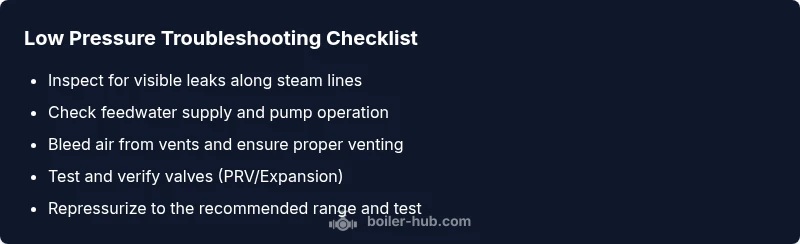
Step 1: Check for obvious leaks in steam lines and condensate returns. Step 2: Confirm feedwater is reaching the boiler and the pump is operating. Step 3: Refill to the manufacturer’s recommended pressure range and bleed any air from the system. If pressure remains low, escalate to professional service.
Understanding Steam Boiler Low Pressure
Low pressure on a steam boiler means the system is not building or sustaining adequate steam pressure for heating demand. In a properly functioning boiler, pressure should rise when the burner starts and hold within the safe operating range until the demand ends. When the gauge reads below the expected range, you may experience slower heat response, reduced steam output, and longer cycles. According to Boiler Hub, addressing low pressure promptly reduces the risk of air binding, primer issues, and inefficient fuel use. The Boiler Hub team finds that many low-pressure scenarios stem from simple, fixable issues rather than catastrophic failures. Why this matters: steam systems rely on a precise hydraulic balance; even small pressure drops can cascade into performance losses and higher fuel costs. Prioritizing a methodical approach helps you isolate causes faster and minimize downtime.
The Consequences of Ignoring Low Pressure
Ignored low pressure can lead to incomplete boiler firing, cycling inefficiency, and excessive fuel consumption. Prolonged issues may cause risers to overheat and condensate return problems, increasing the risk of boiler shutdowns and potential damage to safety devices. You’ll often notice slower heat-up times, reduced steam capacity, and longer system cycles. The goal is to restore steady pressure quickly while maintaining safe operation. Boiler Hub analysis notes that early, methodical troubleshooting reduces downtime and repair costs, protecting both equipment and occupants.
Common Causes of Low Pressure
Low boiler pressure is usually caused by one of a few common issues. Leaks in steam piping or condensate returns are among the most frequent culprits, as even small drips export pressure away from the system and reduce available steam. A mis-set or failing pressure reducing/expansion valve can prevent proper fill, directly limiting the system’s ability to reach target pressure. Insufficient feedwater or a failing pump stalls steam generation. Instrument faults—bad gauges, faulty sight glasses, or damaged wiring—can misreport pressure, leading to unnecessary repairs. Air leaks or blocked air vents can inject air pockets that suppress pressure buildup. Mineral scale or sediment buildup inside the boiler reduces heat transfer, requiring more energy to achieve the same pressure. Heed the warning signs early; leaks are often the easiest to locate and fix, and addressing them early prevents further issues. In this guide, we’ll walk through a structured approach to identify and fix the root causes.
Safety Considerations and When to Stop
Steam systems operate under pressure and involve hot surfaces, water, and potentially gas lines. If you detect a gas odor, hissing sounds from lines, or a sudden pressure surge, stop work and evacuate if needed. Never attempt to pressurize a boiler beyond its safe range to test for issues. Always lock out power or gas supply before inspection and wear appropriate PPE. If you’re unsure about the risk level, it’s safer to call a licensed technician. The Boiler Hub Team emphasizes that safety is non-negotiable; when in doubt, switch to professional service.
Quick Checks You Can Perform Safely
Before touching anything, switch off the boiler and let it cool. Check the pressure gauge and confirm whether the reading aligns with the manufacturer’s listed operating range. Look for obvious signs of leaks at joints, valves, and flanges. Inspect the feedwater line and pump for blockages or failure; ensure the feedwater valve is open and water is reaching the boiler. Bleed air from radiation circuits or vents if you see air pockets. Verify that the condensate return line isn’t blocked and that the condensate pump (if present) is functioning. If you find a visible leak, seal or replace the component as soon as possible, then recheck pressure after restarting the system.
Diagnostic Flow: Symptom to Solution Overview
The diagnostic flow helps translate symptoms into likely causes and concrete fixes. Start with the simplest explanations (visible leaks, low water level) and progressively test more complex components (valves, pumps, and safety devices). This approach minimizes risk and downtime and aligns with industry best practices. During troubleshooting, document each step and test result. If symptoms persist after basic repairs, record the readings and escalate to a licensed boiler technician.
Steps
Estimated time: 60-90 minutes
- 1
Power down and cool safely
Shut off the boiler and wait for it to cool to avoid scalding. Disconnect electrical supply and close the fuel valve if applicable. Confirm the area is safe before inspecting.
Tip: Always de-energize before touching any electrical components. - 2
Check the pressure gauge and water level
Compare current readings to the manufacturer’s specification. If the level is too low, there may not be enough water to generate steam at the expected pressure.
Tip: Document readings for trend tracking. - 3
Inspect for leaks and visible damage
Look along steam lines, joints, valves, and condensate returns for dampness or corrosion. Repair or replace damaged parts as needed.
Tip: Leaking joints are the most common fixable cause of low pressure. - 4
Test feedwater supply and pump
Ensure the feedwater valve is fully open and the pump is delivering water to the boiler. If the pump is weak or failing, pressure will drop quickly.
Tip: Check electrical connections and listen for pump operation. - 5
Bleed air and inspect vents
Bleed any trapped air from the system using appropriate vents. Air pockets can prevent pressure from building as expected.
Tip: Do not over-bleed; stop once a steady flow of water comes through. - 6
Check safety valves and expansion components
Test any expansion tanks and pressure relief valves to ensure they are set correctly and not stuck open. Replace faulty parts as needed.
Tip: If you’re unsure about valve settings, contact a professional. - 7
Re-pressurize and test
Restart the boiler and monitor pressure rise. If you observe abnormal behavior, shut down and re-check all steps or call a technician.
Tip: Maintain safe distances and stand away from piping when test-running.
Diagnosis: Steam boiler shows consistently low pressure on the gauge
Possible Causes
- highVisible or hidden leaks in steam piping or condensate returns
- mediumInsufficient feedwater supply or pump failure
- lowMalfunctioning pressure reducing valve or expansion valve
- lowBlocked air vents or trapped air
- lowScale buildup reducing heat transfer inside the boiler
Fixes
- easyInspect for leaks, tighten joints, replace gaskets where needed; repair or replace leaking components
- mediumVerify feedwater supply and pump operation; clean or replace pump if it’s not delivering water properly
- hardTest and replace the pressure reducing valve or expansion valve if it’s mis-sitting or failed
- easyBleed air from lines and vents; clear any blockages in the air venting system
- mediumPerform a service to remove scale or sediment in the boiler; follow manufacturer guidelines
Questions & Answers
What does low pressure indicate on a steam boiler?
Low pressure typically means the boiler isn’t generating enough steam for the load. It can be caused by leaks, feedwater issues, or valve problems. Start with simple checks for leaks and water level, then inspect feedwater and valves.
Low pressure means the boiler isn’t producing enough steam. Check for leaks, water level, and valve issues before escalating.
How can I tell if there’s a leak in the steam system?
Look for damp spots, corrosion, or water staining along steam pipes and condensate returns. Gaskets and flange connections are common leak points. A pressure drop while the system is idle or during operation is also a red flag.
Look for damp spots along pipes and gaskets. A drop in pressure can signal a leak.
Could a faulty valve cause low pressure?
Yes. A malfunctioning or mis-set pressure reducing valve or expansion valve can prevent proper filling and pressure build-up. Valve maintenance or replacement by a professional is often required.
A faulty valve can prevent pressure buildup; it may need replacement.
When should I call a professional?
If you detect gas smells, suspect a safety issue, or after basic checks the pressure remains low, contact a licensed boiler technician. Persistent low pressure could indicate a serious fault.
Call a licensed technician if pressure stays low after basic checks.
Is repressurizing dangerous if I’m unsure about the steps?
Repressurizing should only be done following manufacturer instructions. If you’re unsure, stop and consult a professional to avoid injury or equipment damage.
Follow manufacturer instructions or call a pro if unsure.
What maintenance helps prevent low pressure?
Regular boiler servicing, leak checks, valve inspections, and proper feedwater maintenance help prevent low-pressure issues from arising.
Regular service and inspections prevent low pressure.
Watch Video
Key Points
- Identify and fix leaks first for rapid relief.
- Confirm feedwater supply and pump function before pressure tests.
- Bleed air and verify valve settings to restore proper pressure.
- Call a professional for persistent low pressure or safety concerns.
- Maintain a proactive maintenance schedule to prevent recurrence.