Why Does My Boiler Have Low Pressure? A Practical Troubleshooting Guide
A practical, urgent troubleshooting guide to diagnose and fix boiler low pressure. Learn common causes, safe steps, and when to call a pro for lasting peace of mind.


Low boiler pressure is most often caused by a small leak or air in the system. The quickest fix is to check the pressure gauge (around 1 bar when cold), use the filling loop to re-pressurize to the recommended range, and bleed radiators if needed. If pressure drops again, seek professional help.
What causes boiler low pressure and how it happens
Low pressure in a boiler system can stem from several common issues. A hidden leak in joints, pipes, or radiators is a frequent culprit, especially after recent repairs or maintenance. Air trapped in the system or in radiators can also cause the gauge to read falsely low. Another possibility is a faulty expansion vessel, which is meant to absorb pressure changes as the system heats and cools. Finally, a failing pressure relief valve or a minor fault in the filling loop can allow pressure to escape slowly over time. Understanding these potential causes helps homeowners prioritize checks and avoid unnecessary replacements. In most homes, a small drop in pressure is fixable with basic tools and safe procedures, but persistent drops signal a more serious issue that requires attention. According to Boiler Hub, regular monitoring of pressure and routine maintenance are key to preventing sudden pressure loss during peak heating periods.
Safety first: what you should check before you touch the boiler
Before touching any boiler components, ensure the system is off and cool. Do not work on a hot boiler or a live electrical connection. If there is any sign of a gas leak or burning smell, evacuate and contact your energy supplier or emergency services immediately. Have a flashlight handy to inspect under the boiler for damp patches or corrosion around pipes and radiators. If you are unsure about any step, stop and call a pro. In this guide, we focus on safe, straightforward checks that homeowners can perform without specialized tools. Remember, safety comes first: mismanaging pressure or attempting risky valve adjustments can cause injury or water damage. The Boiler Hub team emphasizes caution and adherence to local codes when handling the system.
How to read your boiler's pressure gauge
The pressure gauge indicates system pressure, usually measured in bars. Most boilers are designed to operate around 1 bar when cold and up to 1.5–2 bar when hot. A reading consistently below 1 bar suggests a loss of pressure, while readings above 2 bar can indicate overpressure and potential danger to components. When you refill, do so slowly and watch the gauge closely to avoid overshoot. If you notice a rapid fluctuation in the gauge, there may be a leak or air ingress. Keep a notepad of gauge readings over time to share with a technician if you need to call for service.
Diagnostic flow at a glance
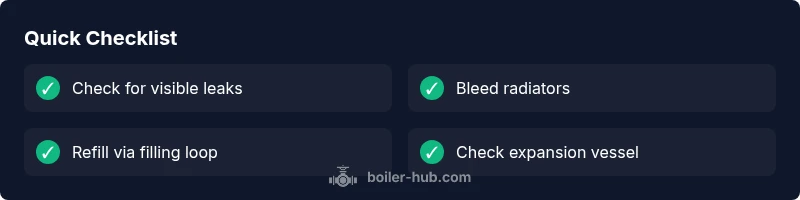
A logical diagnostic path helps you identify the root cause without unnecessary steps. Start with visible leaks around radiators, joints, and the boiler itself. If no leaks are found but pressure remains low, test for air in the system by bleeding radiators. If bleeding does not restore pressure, check the filling loop for leaks or misalignment. A stubborn drop after topping up often points to an expansion vessel fault or a faulty pressure relief valve. Finally, if none of the above explains the issue, a professional inspection is warranted to check internal heat exchangers and seals.
Checking for leaks and inspection of fittings
Leaks can be subtle: damp patches on the floor, rust stains on fittings, or dampness behind radiators indicate where to start. Inspect all visible pipework, radiator valves, and the boiler’s connection points. Tighten fittings carefully, avoiding overtightening that could crack seals. If you detect a leak and it is not easily repairable with tape or sealant, or if the leak persists after tightening, it’s time to call a professional. Small leaks can evolve into major damage if left unchecked. Boiler Hub stresses documenting the leak’s location and the time you first noticed it to aid the technician.
Repressurizing the system with the filling loop
To raise boiler pressure, locate the filling loop (usually two metal pipes with valves). With the boiler turned off, slowly open the valves to allow water into the system while watching the gauge. Stop filling as soon as the gauge reaches the recommended range (commonly around 1 bar when cold; never fill beyond 2 bar when hot). If the pressure overshoots, close the valves and bleed a small amount of water from a radiator. Avoid forcing water in quickly; gradual filling prevents water hammer and potential damage. After refilling, run the boiler to heat water and recheck pressure.
Bleeding radiators to remove air
Air trapped in radiators can reduce heating efficiency and skew pressure readings. Start with radiators furthest from the boiler. Use a radiator key to open the bleed valve slowly; you should hear a faint hiss as air escapes. When water starts to escape steadily, close the valve. Wipe any moisture and re-check the system pressure. Bleeding radiators can temporarily reduce pressure, so you may need to top up again after completing this step, then recheck the overall system balance.
Expansion vessel: what it does and how to test it
The expansion vessel absorbs pressure changes as water expands with heat. A faulty vessel cannot maintain pressure, causing persistent drops. A quick sign is a boiler that repeatedly loses pressure even after topping up. Testing typically requires a pressure test and may involve draining the system—an operation best left to a pro. If your expansion vessel is at fault, replacement or recharging is usually needed. Regular checks by a professional help prevent sudden failures at critical times.
Pressure relief valve and common fault symptoms
A faulty or misfiring pressure relief valve can release water and pressure, leading to low readings. Look for signs of leaks around the valve or a damp area on the boiler. If you suspect a valve issue, do not bypass safety features; contact a licensed technician. Replacing a valve should only be done by someone with the proper tools and expertise to ensure your system remains safe and compliant with regulations.
When to call a professional and potential costs
If your boiler cannot regain pressure after repeated topping up, or if you detect leaks, corrosion, or unusual noises, a professional inspection is warranted. A qualified technician can diagnose complex issues such as internal blockages, heat exchanger faults, or damaged seals. Costs vary by region and fault, so request a written diagnostic quote before work begins. Boiler Hub recommends seeking help sooner rather than later to prevent water damage and efficiency loss.
Prevention: maintenance to avoid future low pressure
Regular maintenance reduces the chance of repeat low-pressure events. Schedule annual boiler service, check for leaks at least quarterly, bleed radiators as part of seasonal maintenance, and verify the expansion vessel's charge if accessible. Keep a simple log of pressure readings and events so you can detect drift early. Consistent care not only preserves efficiency but also extends the boiler’s life and reduces unexpected outages.
Steps
Estimated time: 60-90 minutes
- 1
Safety check and locate filling loop
Turn off the boiler, ensure it has cooled, and locate the filling loop. Inspect for any signs of leakage around the loop or pipes. Make sure you have a towel or container ready for water overflow.
Tip: Do not use force; gentle tightening prevents valve damage. - 2
Check current pressure
Read the pressure gauge when the boiler is cold. If it’s below the recommended range (often around 1 bar), you’ll need to refill slowly.
Tip: Note the exact reading before you begin to refill. - 3
Refill slowly via the filling loop
Open the valves on the filling loop gradually while watching the gauge. Stop filling once the gauge reaches the safe range. Close the valves and remove any hoses, then check for leaks.
Tip: Filling too quickly can cause water hammer. - 4
Bleed radiators if needed
If the radiators feel cold at the top or you hear air moving, bleed them starting from the highest floor. Close when water comes out steadily.
Tip: Have a cloth ready to catch drips. - 5
Recheck pressure and run the boiler
Turn the boiler on and allow it to warm. Recheck the pressure when hot; it may rise slightly but should not exceed the safe upper limit.
Tip: If pressure fluctuates, there may be a leak or venting issue. - 6
Inspect expansion vessel and safety valves
If pressure drops again after topping up, or if you hear unusual noises, an expert should inspect the expansion vessel and relief valve.
Tip: Unsafe DIY testing of valves can be dangerous.
Diagnosis: Boiler pressure gauge shows low pressure (often below 1 bar) and the system struggles to heat water
Possible Causes
- highHidden leak in joints, pipes, or radiators
- mediumAir in the system after recent bleeding or repairs
- lowExpansion vessel fault causing inability to hold pressure
- lowFaulty pressure relief valve
Fixes
- easyInspect for visible leaks and tighten fittings; top up pressure to the recommended range using the filling loop
- easyBleed radiators to remove air and stabilize pressure
- mediumIf expansion vessel is faulty, recharge or replace (professional required)
- hardReplace a faulty pressure relief valve (professional required)
Questions & Answers
What is the normal boiler pressure range?
Most boilers operate around 1 bar when cold, rising to about 1.5–2 bar when hot. If your readings consistently fall below 1 bar or rise above 2 bar, there is likely an issue such as a leak or valve fault.
Normal boiler pressure is typically about 1 bar when cold and up to 2 bars when hot.
Can I top up boiler pressure myself?
Yes, you can top up pressure using the filling loop, but proceed slowly and monitor the gauge closely. If you repeatedly need to top up, there may be a leak or faulty component.
You can top up the pressure, but do it slowly and watch the gauge. Repeated top-ups mean you should call a pro.
What should I do if the pressure won’t stay up?
If pressure drops after topping up, there could be a leak, air ingress, or a faulty expansion vessel. A professional inspection is advised to avoid further damage.
If pressure won’t stay up after topping up, get a professional check for leaks or expansion vessel faults.
Why do radiators need bleeding?
Bleeding radiators removes trapped air, which can prevent the system from reaching normal pressure and reduce heating efficiency. It’s a quick, safe DIY task.
Bleeding radiators lets out trapped air, helping the system pressurize properly.
When should I replace the expansion vessel?
Expansion vessel issues often require replacement or recharging. If a professional confirms it’s faulty, replacement is usually necessary to restore stable pressure.
Expansion vessel faults usually need professional replacement or recharge.
Is a noisy boiler related to low pressure?
Noise can indicate air in the system, water hammer, or a faulty valve. Addressing air and leaks often resolves the sound, but persistent noise warrants a technician visit.
Noise can be a sign of air or valve issues; check for leaks and bleed radiators, then call a pro if it persists.
Watch Video
Key Points
- Check for leaks first; small leaks are the most common cause
- Bleed radiators to remove trapped air and restore pressure
- Use the filling loop slowly to repressurize, then recheck
- Persistent drops require a professional inspection
- Regular maintenance prevents future low-pressure events