Why Do Boilers Lose Pressure: A Practical Troubleshooting Guide
Discover why boilers lose pressure, how to diagnose common causes, and safe, practical fixes. This Boiler Hub guide covers leaks, expansion tanks, fill valves, and prevention for homeowners and managers.


Boiler pressure drops most often due to leaks, a faulty expansion vessel, or an overworked fill valve. Start by checking the boiler gauge when the system is cold and re-pressurizing to the manufacturer’s recommended level. If the pressure drops again, inspect joints, radiators, and the expansion tank for faults.
Understanding Pressure Loss in Boilers
When a domestic boiler loses pressure, it means the gauge shows a value below the boiler’s normal operating range. For most homes, the cold pressure should sit within a manufacturer-specified band, and it typically rises as the system heats. A consistent drop suggests an ongoing issue rather than a one-off spike. According to Boiler Hub, regular pressure checks are a simple yet powerful early warning that helps homeowners catch issues before they become disruptive or dangerous. The consequences of ignoring pressure loss can include inefficient heating, noisy systems, and higher energy bills. In this section we unpack how pressure works in common boiler configurations, what symptoms look like, and how small faults propagate into bigger problems if left unaddressed. The aim is to empower you to act quickly and confidently in 2026.
Common Causes of Pressure Loss
Pressure loss is rarely the result of a single fault. The most frequent culprits include leaks in radiators, joints, or pipes that drain the system when it’s off or heating. A faulty expansion vessel can fail to absorb pressure swings, causing drops as soon as the boiler fires. A worn or leaking filling loop or an auto-fill valve can underfill or overfill the system, contributing to instability. Air trapped in the loop can give a false low reading and impede circulation. Finally, a failing pressure relief valve or corroded pump seals can cause a gradual, ongoing decline. Boiler Hub analysis shows that leaks and expansion-related faults form the majority of pressure-loss incidents, and they are typically fixable with careful inspection and timely maintenance.
How to Check Pressure and Read Your Gauge
Begin with the boiler cold and powered off. Locate the pressure gauge on the front panel; the indicator should sit within the range specified by your manual. If it’s below the recommended level, you’ll need to repressurize the system. If it rises too high, check for leaks first and then recheck after cooling. Record the reading, then observe how it changes after you restart heating. Inspect for external leaks around radiators, valves, and the expansion vessel. A quick expansion-vessel check can reveal if air is trapped or if the vessel has lost charge. If you’re unsure, revert to professional help. Always follow the manufacturer’s guidance for the correct pressure range and avoid forcing fixes that could cause water to spray or harm.
Diagnostic Path: From Symptom to Solution
Symptom: pressure drops during heating. Diagnosis: common culprits include leaks or expansion-vessel faults. Solution: repair visible leaks, tighten fittings, or replace the expansion vessel as needed. If pressure continues to fall after repressurization, investigate the filling loop for leaks or a hidden fault. The diagnostic path emphasizes confirming the issue with simple checks before moving to more involved repairs. Boiler Hub recommends logging readings over several cycles to distinguish transient fluctuations from persistent loss.
Quick Do-It-Yourself Checks Before Repressurizing
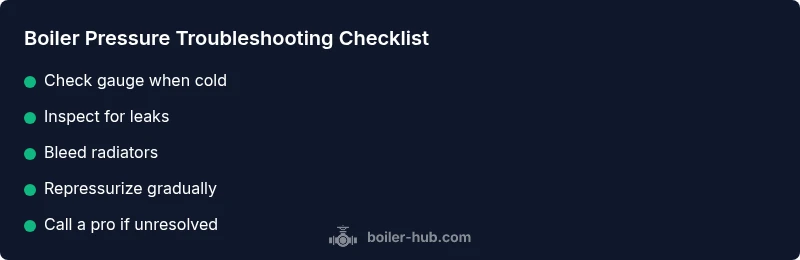
Before you touch the pressure valve, do a quick sweep of the system. Look for obvious leaks around radiators, joints, and the expansion vessel. Inspect the filling loop for signs of continuous dripping. Bleed radiators to release trapped air, especially if you hear gurgling or feel cold spots after heating starts. If no leaks are found and the pressure remains unstable, proceed to repressurize slowly according to the manual. If the gauge behaves unpredictably, stop and call a technician. These checks help prevent unnecessary closure errors and ensure your safety.
Safety Considerations and When to Call a Pro
Pressure systems are hazardous when not handled correctly. Never attempt to dismantle sealed valves or the expansion vessel without proper training. If you smell gas, hear hissing, or notice steam or water spraying, evacuate and contact emergency services. In many cases, persistent pressure loss signals a deeper issue that requires professional assessment, especially if the boiler is older or under warranty. Boiler Hub emphasizes that complex problems like a failed expansion vessel or compromised heat exchanger are not DIY fixes and should be handled by a qualified technician to prevent risk and ensure long-term reliability.
Prevention: Maintaining Stable Boiler Pressure
Prevention hinges on regular maintenance and mindful operation. Schedule annual boiler servicing and keep a log of pressure readings. Use the correct fill level as specified by the boiler’s manual, and promptly address any drips, damp patches, or unusual noises. Radiator bleeding should be performed as part of seasonal checks to remove air pockets that can skew readings. Look for signs of aging components—valves, seals, and the expansion vessel—and replace worn parts before they fail. Proper sediment flushing and ensuring the pump is functioning smoothly also help stabilize pressure over time.
What to Do If Your Pressure Keeps Dropping
If pressure continues to fall after following DIY steps, there may be an underlying issue such as a hidden leak or a failed expansion vessel. In this case, stop attempting quick fixes and arrange a professional inspection promptly. A trained engineer can perform pressure testing, leak tracing, and component replacements with the boiler shut down and isolated, reducing risk. Proactive scheduling can prevent emergency failures during cold weather and save you larger repair costs down the line.
Steps
Estimated time: 45-60 minutes
- 1
Power down and let system cool
Turn off the boiler and allow it to cool before handling pressure components. This reduces burn risk and avoids sudden pressure surges.
Tip: Never repressurize while the system is hot. - 2
Locate and prepare the filling loop
Find the filling loop and ensure both ends are securely connected to the cold water supply and boiler. Check for kinks or blockages before proceeding.
Tip: Keep a bucket handy for any accidental drips. - 3
Repressurize slowly to the recommended level
Open the external valve gradually to fill the system, watching the gauge closely. Stop when the pressure just reaches the manufacturer’s recommended range.
Tip: Do not rush; small, steady adjustments prevent overfilling. - 4
Bleed radiators to remove air
Starting with the highest radiator, use a bleed key to release air until water flows steadily. Re-check pressure after bleeding to confirm stability.
Tip: Wipe away moisture to spot any new leaks immediately. - 5
Inspect for leaks and test operation
Look for fresh drips around joints, valves, and the expansion vessel. Restart the boiler and monitor pressure over the next heating cycle.
Tip: If pressure drops again, stop and call a pro; continued loss signals a deeper fault.
Diagnosis: Boiler gauge drops below the normal operating range during or after heating
Possible Causes
- highVisible or hidden leaks in radiators, pipes, or joints
- highFaulty expansion vessel not absorbing pressure changes
- mediumLeaking or misadjusted filling loop/auto-fill valve
- lowAir in the system causing inaccurate readings
Fixes
- easyTighten or repair leaks; replace damaged joints or radiators as needed
- mediumRecharge expansion vessel or replace if it has lost charge
- easyInspect filling loop for leaks and ensure correct connection; replace if faulty
- easyBleed air from radiators and re-check pressure; if persists, test for hidden leaks
Questions & Answers
What causes boiler pressure to drop quickly?
Common causes include leaks in radiators or pipes, a faulty expansion vessel, and a leaking filling loop. Quick checks and repairs often resolve the issue, but persistent drops suggest a deeper fault that needs a professional inspection.
Common causes are leaks, a faulty expansion vessel, or a leaking fill valve. Check for leaks first, then consult a professional if the pressure keeps dropping.
Is it dangerous to repressurize a boiler?
Repressurizing is generally safe when the boiler is cold and you follow the manufacturer’s instructions. Do not force valves or operate with visible leaks or damaged parts. If you’re unsure, seek professional help.
Repressurizing can be safe if the boiler is cold and you follow the manual. If in doubt, call a pro.
Can I fix an expansion vessel myself?
Replacement or repair of an expansion vessel typically requires a boiler service technician because it involves the pressure vessel and system sealing. DIY attempts can be dangerous and lead to further damage.
Expansion vessels usually need a pro. Don’t attempt to replace it yourself unless you’re trained.
How often should I bleed radiators?
Bleeding radiators is not a daily task; do it when you notice cold spots or gurgling sounds after heating. After bleeding, recheck the system pressure to ensure stability.
Bleed radiators when you hear air or feel cold spots, then recheck pressure.
What should I do if pressure keeps dropping after repressurizing?
If pressure continues to fall after repressurizing, there may be a hidden leak or a failed component. Stop DIY fixes and arrange a professional inspection to prevent further damage.
If pressure keeps dropping after repressurizing, call a pro for a full check.
Watch Video
Key Points
- Check pressure when the system is cold before adjustments.
- Identify and fix leaks or expansion-vessel faults first.
- Repressurize gradually and bleed radiators to prevent air locks.
- Call a pro if pressure keeps dropping after DIY steps.