How to Fix Boiler With Low Pressure: A Practical Guide
Learn how to diagnose and fix boiler low pressure safely. This step-by-step guide covers causes, repressurizing with a filling loop, bleeding radiators, and when to call a professional.


Low boiler pressure prevents proper circulation of hot water and efficient heating. This guide shows you how to safely verify the gauge, repressurize using the filling loop, bleed radiators if needed, and check for leaks. If pressure remains unstable or you smell gas, stop and call a professional.
What Low Boiler Pressure Means for Your Heating
Low boiler pressure means the pump cannot push hot water through the system effectively. You’ll typically see the pressure gauge sitting below the normal operating range; heating may be uneven, and the boiler may cycle on and off more frequently. Restoring the pressure safely can restore heating efficiency, but always compare readings to your boiler’s manual to avoid over-pressurizing. This guide from Boiler Hub emphasizes safety and accuracy, so you can approach the issue with confidence.
Why Pressure Drops Happen
Pressure drops aren’t always the same cause, which is why a quick check of common culprits helps. Tiny leaks or damp spots around joints indicate a slow drain of system pressure. A faulty expansion vessel can fail to accommodate expanding water as the system heats. An aging or faulty filling loop can let water escape slowly. Air in the system, often from recently drained lines, also disrupts pressure. Regular maintenance helps prevent these issues, saving time and money in the long run.
How to Safely Diagnose a Pressure Issue
Begin with a thorough visual check for visible leaks, corrosion, or damp patches around the boiler, joints, and pipes. Read the pressure gauge when the boiler is cold to establish a baseline. If your system has a manual filling loop, locate the valves and confirm there are no obstructions. If pressure drops after heating begins, this typically indicates a leak or trapped air. Always power down the boiler before handling any components to avoid electric shock.
Step-by-Step Home Fixes You Can Try (Overview)
This overview provides the practical actions; the detailed, step-by-step instructions are in the dedicated STEP-BY-STEP section below. Before you start, ensure you have the right tools, protective gear, and a calm workspace. If at any point you smell gas, or you’re uncertain, stop and contact a professional.
Safety and Professional Boundaries
Gas and water systems carry hazards. Never bypass safety features or attempt repairs beyond your training. If you detect a gas leak, shut off the gas supply, evacuate the area, and call emergency services. Do not work on pressurized areas without proper precautions. Boiler repairs can require specialized knowledge, and incorrect handling can cause further damage or injury.
Maintenance to Prevent Future Pressure Drops
Schedule annual boiler servicing and pressure checks with a qualified technician. Keep an eye on signs of expansion vessel wear, slow leaks, or recurring pressure changes. Regularly bleed radiators to maintain system balance and reduce air pockets. By staying proactive, you reduce the risk of unexpected outages and improve heat efficiency over time.
Tools & Materials
- Radiator bleed key(Used to release trapped air from radiators; ensure it matches your radiator type (common sizes: 4mm-8mm).)
- Filling loop access tool or hose(If your boiler has a built-in filling loop, you may need to operate valves or hoses as per the manual.)
- Dry cloths or towels(To catch drips and keep working area clean.)
- Small bowl or tray(Catches water during repressurization and bleeding steps.)
- Gloves(Protect hands when handling tools and damp components.)
- Flashlight(Illuminates hard-to-see joints during inspection.)
- Notepad and pen(Record readings and steps for future reference.)
Steps
Estimated time: 15-25 minutes
- 1
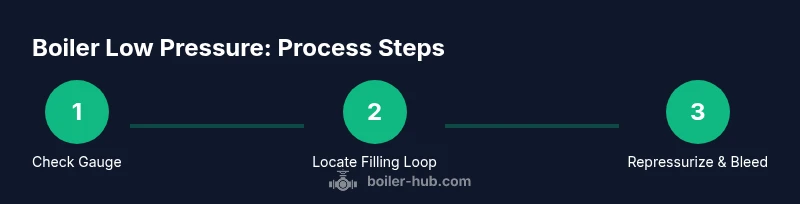
Check the pressure gauge
Read the gauge on the boiler display. If the reading is below the typical cold threshold, the system is under-pressurized. Note the exact number for reference before you begin repressurizing.
Tip: Take a photo of the gauge for your records. - 2
Locate the filling loop and valves
Find the boiler’s filling loop; it is usually two taps connected to a short loop of pipe near the boiler. Make sure the area is dry and accessible before you start.
Tip: If you’re unsure where it is, consult the manual or Boiler Hub's guide for your model. - 3
Open the filling taps slowly
With the boiler power off, slowly open the taps to admit water into the system. Watch the pressure gauge as it rises and stop when it reaches the target (usually around 1–1.5 bar). Close the taps gently.
Tip: Do not rush; overfilling can stress seals and valves. - 4
Bleed radiators if air is present
If pressure drops again after repressurizing, air may be trapped in the system. Start with the radiator closest to the boiler or the highest floor. Use the bleed key and a cloth to catch drips.
Tip: Bleed when radiators are cool to prevent scalding. - 5
Check for leaks and external drips
Inspect joints, pipes, and the filling loop for signs of water leakage. A slow drip can cause pressure loss over time. If you see a leak, close the water supply and call a professional.
Tip: Keep a log of leak locations and readings. - 6
Test the system and safety features
Restart the boiler and run a heating cycle. Check that it maintains pressure and that there are no error codes. If pressure remains unstable, the expansion vessel may be at fault and requires professional service.
Tip: If danger signs appear (gas smell, hissing, or condensation), leave the area and call emergency services.
Questions & Answers
What should the boiler pressure gauge read when cold?
Most boilers show around the 1 bar mark when cold, but this can vary by model. Refer to your manual for the exact baseline and safe operating range. If the pressure is consistently outside that range, schedule a check.
Most boilers read about one bar when cold; check your manual for the exact baseline and contact a tech if it’s consistently off.
Can I repressurize a boiler myself?
Yes, for many boilers with a filling loop you can repressurize. Always follow the manufacturer’s instructions and ensure power and gas supplies are handled safely. If you’re unsure, consult Boiler Hub’s guide or contact a technician.
Yes, you can repressurize if your boiler has a filling loop, but follow the manual and stay safe.
What if repressurizing doesn’t hold the pressure?
A pressure that drops after repressurizing often indicates a leak or a faulty expansion vessel. If this persists, call a licensed technician to diagnose and repair.
If pressure won’t hold after repressurizing, there may be a leak or expansion vessel issue—call a pro.
Should I bleed radiators after repressurizing?
Bleeding can remove air that was drawn in during repressurization and may help stabilize pressure. Start with the radiator nearest to the boiler and work outward.
Yes, bleed radiators if you notice banging or if the pressure drops again after repressurizing.
When should I call a professional?
If you smell gas, notice obvious leaks, or cannot locate the filling loop safely, stop and call a pro. Persistent pressure instability also warrants professional service.
Call a professional if you smell gas or can’t safely address leaks or loop access.
Can low pressure damage the boiler long-term?
Prolonged low pressure can cause the boiler to operate inefficiently and may lead to repeated cycling. Fix promptly with repressurization or professional help for persistent issues.
Low pressure over time can reduce efficiency; get it checked if it keeps happening.
Key Points
- Check boiler pressure cold around the initial baseline
- Use the filling loop carefully to repressurize, avoiding overfill
- Bleed radiators to remove trapped air if pressure drops again
- Inspect for leaks and monitor expansion vessel health
- Call a pro for persistent pressure problems or gas concerns