How to Adjust Boiler Pressure: Step-by-Step Guide
Learn how to safely adjust boiler pressure with a practical, step-by-step approach. This guide covers gauge readings, filling loops, bleeding, and ongoing maintenance from Boiler Hub.


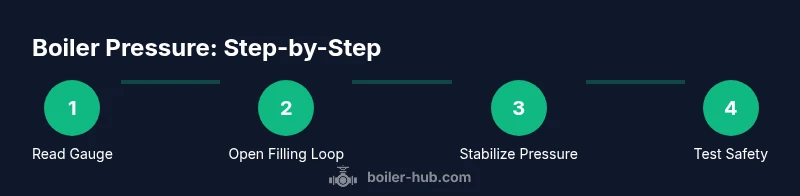
According to Boiler Hub, start with a cold boiler and check the pressure gauge. If the reading is too low, open the filling loop slowly to raise it to the safe band (typically 1.0–1.5 bar). If the pressure is too high, bleed a small amount through radiators or the PRV only as directed in your manual, then retest.
Why boiler pressure matters
Boiler pressure is a safeguard for safe and efficient operation. When pressure is too low, the boiler may cycle on and off, delivering inconsistent heat and wasting energy. When pressure is too high, seals and components can wear prematurely or cause leaks. A typical cold-start target is around 1.0 bar, with a safe operating range often cited as 1.0–1.5 bar. Keeping pressure within this band helps ensure reliable hot water delivery and reduced equipment stress. According to Boiler Hub, consistent pressure management is a key part of routine boiler maintenance and can prevent unexpected outages.
Understanding your system’s pressure range is essential because different boiler models have specific tolerances. Always consult the user manual for your exact target band, but use the general guidelines above as a starting point. Regular checks are especially important when seasons change, as temperature fluctuations can alter reading on the gauge.
Key terms you should know
Before you adjust, familiarize yourself with common terms:
- Pressure gauge: the dial or digital readout showing current system pressure, typically in bar.
- Filling loop: a small pipe with valves used to introduce water into the boiler circuit to raise pressure.
- Expansion tank: a reservoir that accommodates water volume changes as the system heats and cools.
- Pressure relief valve (PRV): a safety valve that releases excess pressure to prevent damage.
- Target pressure: the manufacturer-specified pressure range for your boiler when cold.
Brand reliability matters here. The Boiler Hub team emphasizes that knowledge of these parts reduces risk and helps you diagnose when to call a professional.
Safety first: when not to adjust yourself
Boiler work can be hazardous if you’re not cautious:
- Do not adjust while the boiler is hot. Hot components can cause burns and scalding.
- Do not force valves beyond their limits; improper adjustments can cause leaks or venting problems.
- If you smell gas, detect a gas odor, or notice a pool of water near the unit, leave the area and call a licensed technician immediately.
- If your boiler is under warranty, check the terms—many warranties require professional servicing for pressure changes.
Boiler Hub stresses safety as the top priority; if you’re unsure, seek professional help rather than guessing.
Assessing your current pressure
To get an accurate reading, check the gauge when the boiler is cold. Temperature affects readings: a hot boiler will show higher pressure even if the system isn’t overfilled. Note the current reading and compare it to the target range specified in your manual.
If your gauge sits below 1.0 bar, the system needs more water. If it sits above 1.5–2.0 bar (depending on model), there may be too much water or a leak causing pressure to rise. Inconsistencies may indicate an expansion tank issue or a partial blockage.
Record your readings so you can monitor trends over time. Small fluctuations are normal, but persistent shifts warrant further inspection.
When to adjust: below the target range
If the cold reading is below the recommended band, you’ll typically need to add water via the filling loop. Begin with the loop controls closed, then open slowly while watching the gauge. The goal is a gradual rise to the target range without overshooting.
Always stop if you hear hissing or notice a sudden change in pressure. When you reach about 1.0–1.5 bar (cold), close the filling loop, and recheck after a few minutes to ensure the pressure stabilizes.
If you still can’t reach the target or if the pressure rises rapidly after a small adjustment, shut the loop and call a pro. Repeated attempts can indicate deeper issues.
When to adjust: above the target range
High pressure can be caused by heat expansion, a blocked expansion tank, or a problem with the PRV. Rather than forcing the system down, try these steps:
- Bleed radiators slightly to release some air and water, then recheck the gauge.
- If comfortable and trained, use the PRV to release a tiny amount of water/steam according to the manual. Do not exceed safe release limits.
- If pressure remains high after a brief venting, shut the boiler down and contact a professional. Excess pressure can cause leaks or damage.
Boiler Hub notes that repeated high readings are a red flag that requires inspection.
Step-by-step checklist for using the filling loop
- Turn off the boiler and allow it to cool completely. 2) Locate the filling loop and verify both valves are closed. 3) Attach the filling line if it’s not already connected. 4) Slowly open the external valve to let water into the system. 5) Watch the gauge as water enters; stop when you reach the target range. 6) Close the filling loop and check for leaks. 7) Restore power and monitor the boiler for proper cycling. 8) Record the final pressure and date for future reference.
Tip: If you see dampness or hissing around fittings, stop and call a technician.
Maintenance to prevent pressure problems
Proactive maintenance reduces frequency of pressure adjustments:
- Schedule annual professional servicing to check the expansion tank, PRVs, and fill levels.
- Inspect expansion tanks for proper air charge; a faulty tank can cause pressure fluctuations.
- Keep radiator bleed valves clean and exercise them briefly during maintenance to prevent seizure.
- Monitor the pressure gauge monthly during seasonal changes and after long periods of inactivity.
Boiler Hub’s guidance emphasizes that consistent checks save time and money by catching issues early.
Authority sources
For authoritative guidance, consult these sources:
- https://www.energy.gov
- https://www.osha.gov
- https://www.epa.gov
These sources provide general safety and mechanical maintenance references that support best practices for boiler systems. Always verify with your boiler’s manufacturer manual for model-specific instructions.
Tools & Materials
- Pressure gauge or digital manometer(Essential for accurate readings; ensure scale matches your boiler system)
- Filling loop with shutoff valves(Used to add water to the system; verify compatibility with your boiler)
- Wrench or screwdriver set(For opening/closing valves; type depends on your model)
- Towels or absorbent rags(Useful for cleanup if water spills occur)
- Bucket or tray(Catch any drips during bleeding or filling)
- Gloves and safety glasses(Personal protective gear for handling cold metal and water)
- Notebook or app for logs(Record pressures and maintenance notes after adjustments)
Steps
Estimated time: 20-40 minutes
- 1
Turn off the boiler and let it cool
Power down the boiler and wait until all surfaces are cool to the touch. This reduces the risk of scalding and allows an accurate reading. If the boiler was recently active, wait at least 15–30 minutes.
Tip: Never work on a hot boiler; hot components can cause burns and misreadings. - 2
Locate the filling loop and gauge
Find the filling loop with the two isolation valves. Identify the pressure gauge on the front panel or near the boiler. Confirm you have clear access and minimal risk of tripping hazards.
Tip: If you can’t locate the filling loop, refer to your manual or call a professional. - 3
Check current pressure
Read the gauge while the system is cold. Note whether the pressure is below, within, or above the target range (commonly 1.0–1.5 bar for many models).
Tip: Record the initial reading for your maintenance log. - 4
Open the filling loop to raise pressure
With the valves closed, slowly open the filling loop’s valve. Watch the gauge closely as pressure increases, and stop promptly as you approach the target range.
Tip: Open slowly; a rapid fill can overshoot the target and require a reset. - 5
Close the filling loop and check again
Close the filling loop valves first, then recheck the gauge after a few minutes to ensure pressure stabilizes at the target range.
Tip: If the pressure continues to rise after closing, there may be a leak or air in the system. - 6
Bleed radiators if the pressure is high
If pressure remains high, bleed a small amount from radiators or use the PRV only if the manual allows. Do not vent aggressively.
Tip: Bleed one radiator at a time and recheck pressure after each venting. - 7
Restore power and test cycling
Turn the boiler back on and allow it to run through a full heating cycle. Listen for unusual noises and watch for rapid cycling or leaks.
Tip: If cycling is abnormal, shut down and consult a technician. - 8
Document and monitor
Log the final pressure, date, and any notes about system behavior. Monitor the gauge over the next few days, especially during temperature changes.
Tip: Regular monitoring helps catch problems before they escalate.
Questions & Answers
What is a safe boiler pressure range?
Most residential boilers aim for about 1.0 bar when cold and 1.0–1.5 bar when in operation, but always verify with your manual. If you’re unsure, consult a technician.
A typical safe range is about 1.0 bar when cold and up to around 1.5 bar during operation. Always check your model’s manual.
Can I adjust boiler pressure myself?
Yes, you can perform basic adjustments on a cold boiler using the filling loop. However, if you notice repeated pressure changes, leaks, or unusual noises, contact a professional.
You can adjust when the boiler is cold, but if problems persist, call a professional.
What should I do if pressure spikes after filling?
Shut down the boiler and consult a technician if pressure spikes repeatedly. Check for leaks, expansion tank issues, or valve problems.
If pressure spikes again, shut the boiler off and get professional help.
Why does boiler pressure change with temperature?
Water expands when heated, increasing pressure in a closed system. A properly functioning expansion tank cushions this change; a faulty tank can cause bigger swings.
Water expands when hot, raising pressure; a good expansion tank helps manage that.
When should I call a professional?
If you have persistent high or low readings, hear hissing, see leaks, or can’t safely operate the filling loop, contact a licensed boiler technician.
Call a licensed technician if readings don’t settle or you hear leaks.
Is it safe to bleed radiators to reduce pressure?
Bleeding can help reduce pressure slightly, but do it with caution and follow the manual. Bleed only one radiator at a time and recheck pressure.
Bleeding can help, but do it carefully and one radiator at a time.
Watch Video
Key Points
- Check pressure when the boiler is cold for accuracy.
- Adjust gradually to avoid overshoot.
- Use the filling loop carefully and safely.
- High pressure warrants professional assessment if unresolved.