How to Put Boiler Pressure Down: A Practical Guide
Learn a safe, step-by-step method to lower boiler pressure. This tutorial covers bleeding radiators, re-filling the system, and post-checks to keep your boiler running efficiently.


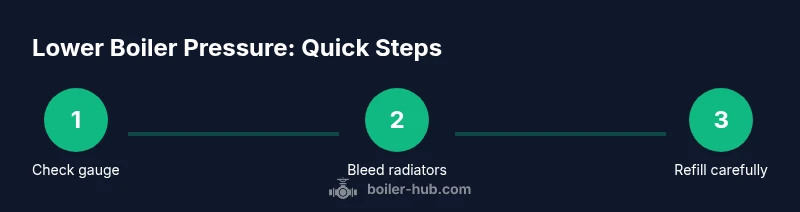
Goal: safely lower boiler pressure to the manufacturer’s recommended range. Start by turning off the boiler and checking the pressure gauge. If pressure is too high, bleed radiators to release air and water, then re-fill slowly until the gauge sits within the recommended range. According to Boiler Hub, never open the pressure relief valve unless necessary and never work on a hot boiler.
Understanding Boiler Pressure and Why It Rises
Boiler pressure is a measure of how tightly the system is filled with water and pressurized for safe operation. Most modern boilers have a recommended pressure range you should stay within, which changes as the system heats up. When the boiler is cold, pressure is typically around 1 bar; as the water heats and expands, the pressure rises. If it climbs too high, it can trigger the pressure relief valve or cause inefficient heating. A higher pressure can also stress seals and joints, potentially leading to leaks. Regular checks help prevent pressure problems before they affect comfort or safety. In this guide, we’ll focus on practical, safe steps to bring pressure back within the recommended range without risking damage to your boiler or heating system.
Signs Your Boiler Pressure Is Higher Than It Should Be
You might notice a rising needle on the pressure gauge, a boiler that frequently shuts off on safety, noises like banging or gurgling, or water leaks around fittings and radiators. Some boilers show a red warning light when pressure exceeds safe limits. If you observe any of these signals, it’s wise to take action to lower pressure, but avoid aggressive actions that could cause scalding or injury. Understanding the normal cold and hot ranges for your specific model is essential; consult the manual or contact a heating professional if you’re unsure. According to Boiler Hub analysis, households that stay within recommended pressure ranges enjoy steadier heat and fewer emergency valve activations, which contributes to longer system life.
Safety First: Prepare Before You Touch Anything
Never work on a live or hot boiler. Switch off the power at the boiler and, if present, the switch on the wall or the boiler’s main supply. Allow the unit to cool before handling valves or fittings to avoid burns. Wear protective gloves and eye protection, and keep children and pets away from the work area. Isolate any mains power to prevent accidental startup during maintenance. A calm, methodical approach reduces the risk of scalds or water burns from hot water under pressure.
Tools and Safety Checks You’ll Need
Before you begin, gather essential tools and protective gear: a radiator bleed key or a flat-head screwdriver, a bucket or tray, towels or rags, gloves and eye protection, and (if required by your system) a filling loop key. Check that you have a clear path to radiators and easy access to the boiler. Inspect the area for signs of leaks, corroded fittings, or damaged pipes. If you spot significant corrosion or damp spots, stop and call a professional. Safety is the foundation of every successful pressure adjustment.
Methods to Reduce Boiler Pressure: Bleeding Radiators
Bleeding radiators is the most common, safe method to lower boiler pressure. Start with radiators on the highest floor or those furthest from the boiler to reduce air pockets. Use the bleed key to slowly open the valve until air escapes with a hissing sound, then close when water begins to escape in a steady stream. Have the bucket ready to catch water and avoid scorching yourself. If you notice water blowing out or continuing to spurt, close the valve and wait a moment before trying again. This process releases some water and air, lowering the overall pressure. Remember to monitor the gauge as you bleed.
What to Do If Bleeding Doesn’t Lower Pressure
If bleeding radiators doesn’t bring pressure down, avoid forcing the valve or opening it for too long. You may need to release excess pressure via the boiler’s pressure relief valve, but only as a last resort and only if your manual explicitly instructs this procedure. Hot steam and water can cause severe burns, so exercise extreme caution. In many homes, pressure relief should be avoided as a default solution because it can vent a dangerous amount of water suddenly and pose scald risks.Consult your boiler manual or a professional before using this route.
Re-filling the System to the Correct Level
After bleeding, you’ll likely need to re-fill the system to restore the correct pressure. Use the filling loop (or the appropriate filling mechanism on your boiler) to admit water slowly. Watch the pressure gauge closely and stop as soon as the gauge reaches the recommended cold-range mark. Do not rush this step, as over-filling can raise pressure again and trigger safety systems. If you’re unsure, reference your boiler model’s manual for the exact steps and pressure targets.
Checking for Leaks and Completing the Rebalance
With the system re-filled, inspect all radiators, valves, and pipe joints for any signs of dripping or seepage. Tighten fittings where appropriate, but avoid overtightening plastics or metal components. Once you confirm there are no leaks, run the heating for a short cycle and re-check the pressure once cooled. If pressure climbs again after a normal cycle, the expansion vessel may be failing or needs recharging, and a professional service is recommended. Regular monitoring after maintenance helps prevent recurring issues.
Post-Repair Monitoring and Routine Care
Keep an eye on the pressure gauge over the next 24 hours as the system heats and cools. If levels stay within the target range consistently, you’ve achieved a stable setup. If you notice fluctuations or recurring high pressure, document the readings and consider a professional inspection to assess expansion vessel integrity or valve conditions. Regular monthly checks can prevent future problems and maintain boiler efficiency.
Tools & Materials
- Radiator bleed key or flat-head screwdriver(Needed to operate radiator bleed valves; have a spare in case one wears.)
- Bucket or tray(To catch water from bleed valves; place under the valve before opening.)
- Towels or rags(Protect floors and catch drips during bleeding.)
- Gloves and eye protection(Protect hands and eyes from hot water and steam.)
- Filling loop key or valve handle(Use if your system uses a manual filling loop; check your model manual.)
- Adjustable wrench(Useful for loose fittings but avoid forcing components.)
Steps
Estimated time: 60-90 minutes
- 1
Turn off boiler and let it cool
Power down the boiler and switch off the electrical supply to remove any risk of electric shock. Allow the unit to cool for at least 15-30 minutes so you can handle valves safely. This reduces the chance of scalding and helps you assess the system accurately.
Tip: Never attempt to bleed valves while the boiler is hot. - 2
Check the pressure gauge and target range
Read the gauge when the boiler is cold to determine the cold-range target from your manual (commonly around 1 bar). If the gauge is well above the cold-range, plan to bleed. Note the readings to compare after bleeding and refilling.
Tip: Record the cold range target for future reference. - 3
Bleed radiators to release excess pressure
Starting with the radiator furthest from the boiler, insert the bleed key and turn slowly anti-clockwise just enough to let air escape. Listen for a hiss, then water begins to come out—close the valve once a steady stream appears. Repeat on each radiator as needed.
Tip: Keep the bucket ready and close valves promptly to prevent water spray. - 4
If needed, cautiously use the relief valve
Only use the boiler’s relief valve if bleeding doesn’t reduce pressure and your manual explicitly allows this. Open briefly to release a small amount of water; close immediately once you hear water or steam release. This step carries burn and scald risks and should be a last resort.
Tip: Do not attempt relief valve if you’re unsure; call a pro instead. - 5
Refill the system to the required pressure
Open the filling loop slowly to admit water. Check the gauge as water enters and stop at the manufacturer’s cold-range target. If you overfill, you’ll need to vent some water and try again, never forcing water into the system.
Tip: Fill gradually; sudden pressure spikes are common when rushed. - 6
Check for leaks and balance the system
Inspect all connections, valves, and radiator nipples for damp spots. Tighten fittings if needed and ensure no drips remain. After a short heat cycle, re-check the pressure as the system cools.
Tip: Look for gradual changes rather than quick drops—balance may be needed elsewhere. - 7
Test operation and monitor long-term
Restart the boiler, run heating or hot water for a short cycle, and observe the pressure gauge as the system warms. The pressure should settle within the safe range during operation. Keep an eye on readings for the next 24 hours.
Tip: Keep a small log of daily readings to detect trends early.
Questions & Answers
How do I know if my boiler pressure is too high?
You’ll typically see a pressure gauge well above the cold-range and may hear safety shut-offs. Leaking fittings or irregular boiler behavior can also indicate high pressure. Always verify with your model’s manual before taking action.
Look for a gauge above the normal cold-range and signs like valve noises or shut-offs.
Can I lower pressure without bleeding radiators?
Bleeding is the most common method to lower pressure. Some systems require refilling or adjusting the expansion vessel. If bleeding doesn’t help, consult the manual or a professional before attempting other methods.
Bleeding is usually the first method; if that fails, check your manual or call a pro.
What is the safe pressure range for most boilers?
Most boilers operate safely around 1 bar when cold, rising to about 2 bar when hot. Always confirm the target with your specific boiler’s manual, as ranges vary by model.
Typically about 1 bar cold and around 2 bar hot, but check your manual.
Why does pressure rise when the boiler heats up?
Water expands as it heats, increasing pressure inside the sealed system. The boiler design expects some rise, but excessive expansion may indicate a fault in the expansion vessel or another component.
Water expands with heat, raising pressure; too much rise may signal a fault.
What should I do if pressure keeps rising after adjustments?
If pressure continues to rise after bleeding and refilling, there may be a faulty expansion vessel or persistent leaks. Stop and contact a heating professional to avoid damage or safety hazards.
Persistent rise means a possible fault—call a pro.
When is it essential to call a professional?
If you’re unsure about any step, if there are leaks, or if the pressure repeatedly returns to unsafe levels after adjustments, a qualified heating engineer should assess the system.
If unsure or leaks persist, contact a professional.
Watch Video
Key Points
- Know your boiler’s cold-range target and stay within it
- Bleed radiators safely to lower pressure
- Refill slowly and monitor the gauge carefully
- Inspect for leaks after adjustment and monitor over time