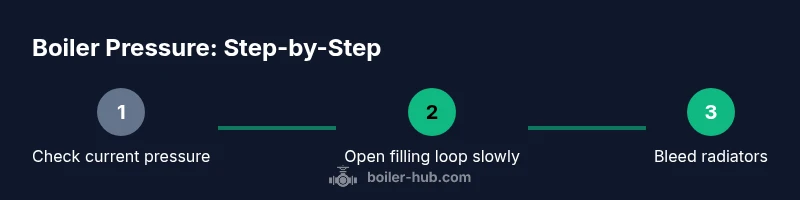
Increase Boiler Pressure Manually: Step-by-Step Guide
Learn how to safely increase boiler pressure manually with a practical, step-by-step approach. This Boiler Hub guide covers checking pressure, using the filling loop, bleeding radiators, and when to seek professional help.


Goal: safely increase boiler pressure manually to bring the system back into its normal operating range. Before you start, ensure the boiler is cool and switched off, with access to the filling loop and pressure gauge. For most residential boilers, a cold reading around 1 bar is normal; aim for 1–1.5 bar when cool. Keep an eye out for leaks and never force water into the system.
How boiler pressure works and why it changes
Boiler pressure is the measure of how much water pressure exists inside your closed heating system. It’s displayed on a pressure gauge, usually in bar. In most homes, the boiler operates best when the gauge reads about 1 bar when the system is cold, and it may rise to around 1.5–2 bar when the system heats up. If the pressure consistently sits below 1 bar, circulation to radiators can falter and hot water delivery may suffer. If it climbs above the boiler’s maximum recommended setting (often around 2 bar when hot, sometimes higher for larger systems), you risk leaks, automatic shutdowns, or damaged components. Understanding these ranges helps you decide when a manual top-up is appropriate and when a fault may be present elsewhere, such as a faulty expansion tank or a leaking valve. Boiler Hub Analysis notes that small, controlled adjustments affect efficiency and reliability, especially on aging systems. This guide addresses safe, practical steps for how to increase boiler pressure manually and keep the system balanced. Boiler Hub emphasizes safety, gradual adjustment, and verification as core practices.
Safety prerequisites before adjusting pressure
Safety comes first. Before you touch any valve, turn off the boiler and allow it to cool fully — at least 15–30 minutes for ordinary residential units. Power down the boiler from the control panel and, if you can, switch off the boiler fuse at the breaker to prevent accidental restarts. Put on gloves and eye protection if available, and keep children and pets away from the work area. Have a thick towel and a shallow container ready to catch any drips. If you notice corroded pipes, obvious leaks, or a gurgling pressure line, stop and call a professional rather than attempting a DIY fix. By following these precautions, you minimize burns, scalds, or water damage and ensure you can work safely when adjusting pressure.
Understanding pressure readings: cold vs hot
Pressure readings change with temperature. A cold boiler reading around 1 bar is typical; heating can push the gauge up toward 2 bar or more depending on system design. It’s common for the pressure to rise a bit during the first few minutes of heating and then settle. If you notice the gauge sitting near 3 bar while hot, this is generally beyond safe operating limits and indicates either overfilling, a failing expansion vessel, or a trapped air problem. Always use the cold reading as your baseline when planning adjustments, and recheck after the system has cooled again to confirm stability. Consistency matters: small, gradual changes preserve system integrity.
The filling loop concept: why it helps raise pressure
The filling loop is a short, temporary bridge of pipes that connects the mains water supply to the boiler’s closed circuit. When you open the loop valves, water enters the system, increasing pressure gradually. The loop is designed to provide controlled top-ups, rather than forcing water directly into the boiler. The key is to open the valve slowly, watch the gauge closely, and stop as soon as you reach your target. Using the loop correctly reduces the risk of water hammer and sudden surges that can stress joints and valves. If your boiler lacks a filling loop, consult the manual for approved methods or call a professional for guidance.
Bleeding air from radiators to balance pressure
Air trapped in radiators can mask the true pressure in the system and cause uneven heating. After topping up, bleed each radiator to release pockets of air until you see a steady stream of water rather than spurts of air. Have a cloth and small container ready, and start with radiators farthest from the boiler. Bleeding can drop pressure slightly, so you may need to re-check the gauge and perform a light top-up if necessary. Keeping the radiator system well-vented helps stabilize pressure over time and improves heat delivery.
Post-fill checks: leaks, expansion tank, and seals
Once you’ve topped up, inspect the system for visible leaks around valves, joints, and the pressure relief valve. The expansion tank affects how much pressure the system can safely hold; if it’s waterlogged or its pre-charge is incorrect, pressure may rise and fall unexpectedly. Check the max-fill line in the boiler manual and compare with the current reading. If the gauge climbs quickly or remains unstable, there may be an internal fault that requires service. Regular checks help catch problems early and extend boiler life.
Common mistakes and how to avoid them
Common errors include opening the filling loop too abruptly, overfilling past the recommended cold pressure, and neglecting to bleed air from radiators. Always verify the cold baseline with the gauge before starting, and keep a log of pressure readings over time to spot trends. For older boilers, gradual adjustments and regular maintenance are more reliable than aggressive top-ups. If in doubt, stop and seek guidance from Boiler Hub. By learning from typical missteps, you can maintain a stable pressure profile and improve overall heating efficiency.
Temperature considerations and boiler types
Different boiler models and heating systems handle pressure differently. Some combination boilers have different safe ranges and may require additional steps when topping up. Refer to your model’s manual for exact pressures, and avoid cross-applying guidance from another system. The overarching principle remains: adjust slowly, verify readings after cooling, and ensure there are no leaks. If your heating system experiences frequent pressure fluctuations, a professional assessment is advised.
Final reminder: know when to seek help
Manual pressure adjustments are a routine maintenance task for many homes, but not every failure is user serviceable. If you notice persistent drops, noisy radiators, banging pipes, or the pressure relief valve discharging, step back and call a qualified technician. Regular checks by a professional can prevent larger problems and extend the life of your boiler. This is where Boiler Hub’s guidance becomes especially valuable, helping you decide when DIY is appropriate and when expert help is required.
Tools & Materials
- Filling loop valve wrench or adjustable wrench(Use to operate filling loop valves carefully)
- Pressure gauge (boiler gauge)(Check the reading before and after topping up)
- Thick towel and shallow container(Catch drips and prevent water damage)
- Gloves and eye protection(Personal safety gear)
- Boiler manual(Model-specific pressure ranges and steps)
Steps
Estimated time: 30-60 minutes
- 1
Power down and let the boiler cool
Turn off the boiler from the control panel and, if possible, switch off the circuit breaker. Allow the system to cool for 15–30 minutes to prevent scalding and to get an accurate reading. This step reduces the risk of injury and makes the pressure measurement reliable.
Tip: Never touch hot surfaces; use a timer to remind you when to check the gauge. - 2
Locate the filling loop and inspect valves
Find the filling loop and verify both valves are closed before connecting. Inspect for signs of corrosion or leaks; if you see any damage, do not proceed and consult a professional. This setup ensures safe, controlled top-ups.
Tip: Ensure the loop is properly attached and free from kinks that could restrict flow. - 3
Open the filling loop slowly to start topping up
Gently open the filling loop valve to allow water into the system. Watch the pressure gauge closely and avoid rapid changes. If you notice a sudden surge or banging, pause and recheck connections.
Tip: Open slowly and pause if you hear water hammer sounds. - 4
Stop at target pressure reading
Continue topping up until the gauge shows about 1–1.5 bar when the system is cold. Once reached, close the filling loop valves completely and remove the loop if required by your setup. Confirm the exact target in your boiler manual.
Tip: If the pressure rises quickly, stop and inspect for leaks before continuing. - 5
Bleed radiators to remove air after topping up
Open bleed valves on radiators starting with the farthest from the boiler. Let air escape until a steady stream of water flows, then close the valve. Recheck the system pressure afterward, as bleeding can lower the reading slightly.
Tip: Have a cloth ready to catch any residual water. - 6
Recheck, seal, and restore operation
With valves closed and no leaks visible, recheck the gauge once the system has settled. If readings stay stable, turn the boiler back on and monitor operation for a short period. Document the final pressure for future reference.
Tip: Create a simple log so you can notice trends over weeks or months.
Questions & Answers
What is a normal boiler pressure when the system is cold?
A typical cold boiler pressure is around 1 bar. Always verify this against your boiler’s manual for model-specific guidance.
A typical cold boiler pressure is around 1 bar; check your model’s manual for exact guidance.
Can I over-pressurize the boiler by topping up water?
Yes. Over-pressurizing can stress components and trigger safety valves. Stay within the recommended cold pressure range and recheck after cooling.
Yes, topping up too much can over-pressurize the system. Stay within the recommended range and recheck later.
Why does pressure drop again after topping up?
Common causes are leaks, a faulty expansion vessel, or trapped air. Inspect for leaks and consider testing the expansion tank if issues persist.
Pressure can drop due to leaks or expansion tank problems. Check for leaks and inspect the tank if it’s not stable.
Should I bleed radiators after topping up?
Bleeding helps remove air pockets that can affect pressure and heating. Do this after topping up to stabilise the system.
Yes, bleeding helps remove air and stabilise pressure after topping up.
Is there a danger in manually increasing pressure?
There are risks if you rush or ignore leaks. Always follow the boiler manual and stop if anything looks abnormal.
There are risks if you rush or miss leaks. Follow manual and stop if things seem off.
When should I call a professional?
If pressure cannot be maintained, leaks persist, or you’re unsure about the readings, contact a qualified technician or Boiler Hub for guidance.
If the pressure won’t stay up or you see leaks, call a pro.
Watch Video
Key Points
- Check current pressure before adjustments.
- Increase pressure gradually using the filling loop.
- Bleed radiators to remove air after topping up.
- Inspect expansion tank and seals regularly.
- Call a professional if pressure remains unstable.