how to increase boiler pressure vaillant: a practical guide
Learn how to safely increase boiler pressure on Vaillant systems with Boiler Hub. Step-by-step checks, radiators bleeding, filling loop techniques, and maintenance tips to keep your heating efficient.


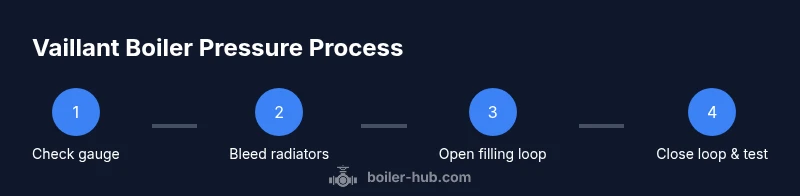
If your Vaillant boiler shows low pressure, you can raise it safely by following a few steps. According to Boiler Hub, aim for a steady pressure between 1 bar (cold) and up to 1.5 bar when hot. Start by checking for leaks, bleed radiators to release air, and use the filling loop to top up until the gauge reaches the target range. Then restart the boiler and test with a hot radiator.
how to increase boiler pressure vaillant safely
Maintaining the correct boiler pressure is essential for efficient heating and reliable operation. According to Boiler Hub Analysis, 2026, most Vaillant boilers prefer a cold pressure near 1 bar and can safely rise to about 1.5 bar when the system is hot. If your gauge sits well below 1 bar, you’ll typically need to top up the system, but proceed with caution and follow proper steps to avoid over-pressurizing or creating leaks. Before you touch any valves, switch off the boiler and let the system cool; water at operating temperature can cause scalding. Keep towels handy to catch any drips and prepare a clean working space around the boiler and radiators. By proceeding calmly and methodically, you reduce the risk of faults and ensure a stable pressure for comfortable heating.
Tools & Materials
- Filling loop (built-in on most Vaillant boilers)(Ensure it is properly connected to the cold water feed and sealed before starting.)
- Towel or absorbent cloth(Place under valves to catch drips and protect floors.)
- Radiator bleed key or screwdriver(Used to release air from radiator bleed valves.)
- Bucket or small container(Catch any water that escapes during bleeding.)
- Gloves(Keep hands protected while handling valves and metal fittings.)
Steps
Estimated time: Total time: 25-40 minutes
- 1
Check current pressure
Locate the boiler pressure gauge on the front panel and note the current reading. If it’s below 1 bar when cold, you’ll likely need to top up. If the reading rises sharply when you heat the system, you may be at risk of over-pressurizing; proceed slowly.
Tip: Take a photo of the gauge before starting to track changes. - 2
Prepare your workspace and tools
Clear space around the boiler, lay towels, and gather the filling loop, bleed key, and cloth. Make sure you know the exact valves you will open to avoid accidental leaks.
Tip: Ensure the area around radiators is dry to prevent slipping. - 3
Bleed radiators to release trapped air
Starting with the radiator farthest from the boiler, use the bleed key to open the valve slightly. Let air escape until water trickles, then close the valve firmly. Repeat for each radiator as needed.
Tip: Keep a cloth handy; air can come out as a hiss. - 4
Open the filling loop to top up
Carefully open both ends of the filling loop to let water enter the system. Open the valve gradually and watch the pressure gauge as it increases. Stop filling once you reach the target range (about 1 bar cold, up to 1.5 bar hot).
Tip: Do not rush; rapid filling can overshoot the target. - 5
Close the filling loop and recheck pressure
Close both ends of the filling loop once the desired pressure is reached. Leave the boiler off for a few minutes, then recheck the gauge to confirm stability.
Tip: A steady reading indicates a stable fill. - 6
Test the heating briefly
Turn on the heating for a short period to allow the system to warm. Check that the pressure rises as the system heats (1.0–1.5 bar is typical for hot operation).
Tip: If pressure climbs excessively, stop and drain a small amount of water. - 7
Inspect for leaks and expansion tank issues
Look around joints, valves, and the expansion vessel area for any signs of water. A faulty expansion tank or persistent leaks can cause pressure to drop again.
Tip: Even small leaks can be a sign of a failing component. - 8
Document the final readings
Record the final cold and hot pressure readings and the date. If the pressure re-drops after a short period, plan a professional service.
Tip: Keep a simple log for future reference.
Questions & Answers
What is the normal cold pressure for Vaillant boilers?
Most Vaillant boilers perform best with about 1 bar when cold; hot pressure may rise to around 1.5 bar. Always check your model’s manual for exact specifications.
Most Vaillant boilers run near 1 bar when cold, rising to about 1.5 bar when hot. Check the manual for your model.
Can I top up boiler pressure myself, or should I call a plumber?
Topping up the pressure on most Vaillant boilers is a DIY task if you follow the manufacturer’s instructions and stay within safe limits. If you’re unsure or if pressure drops repeatedly, call a professional.
You can usually top up yourself if you follow the manual and stay within safe limits; call a pro if the problem persists.
Why does pressure drop again after topping up?
Repeated drops usually indicate a leak somewhere in the system, a faulty expansion vessel, or a failing pressure relief valve. Inspect all joints and components and consider professional inspection if leaks are found.
If pressure keeps dropping after topping up, there may be a leak or a faulty expansion vessel; have it checked.
Is it dangerous to operate with low pressure?
Low pressure can cause the boiler to shut down and reduce heat output, leaving you without heating or hot water. Address pressure issues promptly to avoid damage.
Low pressure can trigger boiler shutdowns and leave you without heating—don’t delay repairs.
When should I call a professional for boiler pressure problems?
If pressure repeatedly drops, if you notice leaks near fittings or the expansion tank, or if topping up doesn’t raise pressure effectively, contact a qualified boiler engineer.
Call a pro if pressure keeps dropping or you see leaks; it may require expansion tank replacement or other repairs.
Watch Video
Key Points
- Check gauge and target ranges (1 bar cold, up to 1.5 bar hot)
- Bleed radiators to remove air before topping up
- Top up slowly with the filling loop and monitor the gauge
- Inspect for leaks and expansion tank faults if pressure drops
- Maintain a simple log of pressure readings for ongoing care