How to Increase Boiler Pressure to the Ideal Level
A practical, step-by-step guide to safely raise boiler pressure, keep it within the ideal range, and prevent leaks. Includes tips, maintenance guidance, and safety reminders from Boiler Hub.


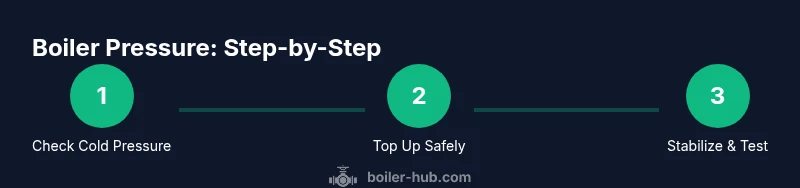
To reach the ideal boiler pressure, top up slowly via the filling loop while watching the gauge. Stop at the recommended cold target, then run a short heat cycle to confirm stability. If pressure climbs too high, shut down and consult the manual. For persistent issues or leaks, contact Boiler Hub for guidance.
Understanding boiler pressure and why it matters
In this guide on how to increase boiler pressure ideal, you will learn how to safely assess, top up, and maintain pressure in common home heating systems. Boiler pressure is a measure of how hard water is pushed through the system; a gauge on the front panel shows this value. When pressure is too low, radiators take longer to warm, boilers run more cycles, and the system can become air-bound. When pressure is too high, components strain and seals may leak. The Boiler Hub Team emphasizes that consistent pressure is essential for energy efficiency, safe operation, and comfortable warmth. Every boiler model has its own target range, and the pressure you aim for will depend on whether the system is cold or hot, the size of the home, and the layout of radiators. In practice, most households will benefit from knowing a general framework: safer operation, fewer hot-cold cycles, and a straightforward approach to topping up when needed. This section sets the stage by explaining how to read the gauge, identify whether action is needed, and plan a safe course of action that protects both your equipment and your wallet.
What is the ideal pressure range for most boilers?
Getting a handle on the ideal range starts with understanding two states: cold and hot. When the boiler is cold, a typical target range is about 1.0 to 1.5 bar. As the system heats up, the pressure will rise; in many households a hot-range target is around 1.5 to 2.0 bar, with some models tolerating up to 2.5 bar. Always check the boiler manual for the exact numbers, because specific brands and models can differ. Boiler Hub Analysis, 2026 suggests that staying within the lower end of the safe band when cold reduces the risk of over-pressurization after heating starts. If your gauge sits well outside these ranges—either below 1.0 bar when cold or above 2.5 bar when hot—plan a topping-up or a professional inspection. Remember, pressure readings can swing with weather, usage, and radiator balance, so periodic checks help avoid surprises in mid-winter.
Tools & Materials
- Filling loop kit(Essential if your system lacks a built-in filling loop; ensure compatibility with your boiler.)
- Boiler owner's manual(Model-specific guidelines for cold/hot pressure ranges.)
- Cloth or towel for spills(Have on hand to catch water and wipe surfaces.)
- Bucket or tray(To collect water during topping up.)
- Insulating gloves(Optional for handling hot components; prioritize safety.)
Steps
Estimated time: 15-25 minutes
- 1
Turn off and cool the boiler
Power down the boiler and allow it to cool for 5-10 minutes before touching any components. This minimizes burn risk and reduces pressure shock when topping up.
Tip: Always start with safety—cool surfaces before you begin. - 2
Locate the filling loop and ensure readiness
Find the filling loop on the boiler or in the pipework. Inspect valves and connections, ensuring they are in the correct orientation for topping up water into the system.
Tip: If you can’t locate it, consult the manual or call a professional. - 3
Open the loop valves slowly to top up
Open the filling valves slowly and watch the pressure gauge; as water enters, the needle will move upward. Stop as soon as the gauge reaches the bottom of the recommended cold range.
Tip: Pour water slowly in 5-10 second increments to avoid sudden pressure spikes. - 4
Close the loop and re-check
Close both ends of the filling loop and remove the loop if applicable. Turn the boiler back on and allow it to complete a heat cycle, then re-check the pressure after it cools.
Tip: Let the system settle for a few minutes before taking a final reading. - 5
Bleed radiators if necessary
If you hear gurgling or feel cold spots, bleed radiators starting from the highest floor to release trapped air. Recheck pressure after bleeding.
Tip: Keep a cloth handy to catch any water and avoid scalding. - 6
Final check and record keeping
Confirm the pressure sits within the recommended cold and hot ranges. Log readings for future reference and note any recurring fluctuations that may need professional attention.
Tip: Regular logging helps spot trends before issues escalate.
Questions & Answers
What is considered an ideal boiler pressure?
Typically 1-1.5 bar when cold, rising to 1.5-2 bar when hot. Check your model’s manual for exact values.
Ideal boiler pressure is usually 1 to 1.5 bar when cold and up to about 2 bar when hot. Check your manual for your specific model.
Can I adjust boiler pressure myself?
Yes, using the filling loop to top up water while monitoring the gauge. Stop if you see high pressure or leaks and consult the manual.
Yes. You can top up carefully while watching the gauge, and stop if it gets too high.
Why does pressure drop after turning on heating?
Heating causes expansion and water movement that can lower measured pressure if there’s a small leak or air in the system. Regular checks help.
Heating can cause pressure to drop if there’s a leak or air in the system. Check and top up if needed.
What if pressure rises quickly after topping up?
This could indicate an overfill or a faulty valve. Shut off the boiler and consult the manual or a professional if it won’t stabilize.
If pressure climbs fast, stop and consult guidance; you may have a faulty valve or leak.
When should I call a professional?
If pressure issues persist or there are leaks, call a qualified heating engineer. Regular service helps prevent problems.
Call a professional if pressure issues persist or there are leaks; a yearly service helps prevent problems.
Watch Video
Key Points
- Check cold pressure against the boiler's target range.
- Top up water using the filling loop slowly.
- Do not exceed the boiler’s maximum pressure.
- Bleed air from radiators if noises appear.
- Plan regular maintenance to maintain steady pressure.