How to Check Boiler Pressure: A Practical Home Guide
Learn to safely check and adjust boiler pressure with a step-by-step approach. Covers cold vs hot ranges, filling loop usage, radiator bleeding, troubleshooting, and when to call a pro. Boiling down expert tips from Boiler Hub for homeowners.


Learn how to check and adjust boiler pressure safely, using the built‑in filling loop, pressure gauge, and radiator bleed tool. You’ll verify cold and hot pressure ranges, spot when the pressure is too low or high, and perform a controlled re-pressurization if needed. Follow manufacturer safety guidelines and consult a professional if you notice persistent pressure changes.
What is boiler pressure and why it matters
Boiler pressure is the force at which heated water is circulated through your heating system. It keeps radiators warm and the boiler firing efficiently. If pressure is too low, the boiler may not learn to start or may cycle on and off, leading to cold spots and wasted energy. If pressure is too high, gaskets and seals can strain, and dangerous failures could occur in severe cases. According to Boiler Hub, maintaining correct pressure helps maximize heat output while minimizing the risk of leaks or system noise. Regularly checking pressure is a simple, proactive habit that can prevent costly boiler repairs. In most homes, you’ll notice the pressure on a gauge on the front of the boiler; learning to read this gauge and respond calmly can save you from emergency calls in cold weather. The rest of this guide walks you through safe checks, typical ranges, and practical adjustments.
Normal pressure ranges for cold vs hot boilers
Boiler pressure readings vary with temperature. For most residential boilers, a cold (not yet heated) reading around 1.0 to 1.5 bar is common. When the system heats up, pressure will typically rise; many boilers settle into a hot range of about 1.5 to 2.5 bar, depending on the model and the size of the heating circuit. Do not exceed the boiler manufacturer’s maximum rated pressure, usually marked on the gauge or in the manual. If readings drift above 3 bar, you should stop and investigate for leaks or a faulty expansion vessel. Regular maintenance helps keep readings stable and avoids sudden spikes that could stress seals or pumps. Boiler Hub’s guidance emphasizes keeping readings within the stated range to maximize efficiency and minimize wear.
Safety considerations before adjusting boiler pressure
Safety comes first when dealing with boiler pressure. Always switch off the boiler and allow it to cool before touching valves or gauges. Wear protective gloves and eye protection if you’re handling hot components. Read your boiler’s manual to locate the filling loop and understand the exact procedure for your model. Don’t work alone if you’re unsure, and never force valves or fittings beyond their intended travel. If you smell gas or hear unusual hissing or banging, shut everything down and call a professional immediately. These steps reduce the risk of scalding, leaks, or gas-related hazards while preserving system integrity.
How to check pressure with the filling loop (conceptual overview)
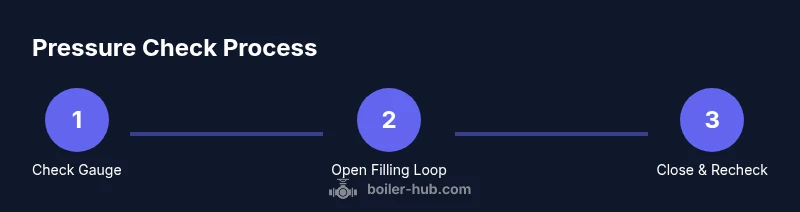
The filling loop is a controlled pathway that allows clean water to enter the heating system, raising pressure gradually. Start with the boiler cold and the system depressurized. Inspect the gauge, make sure both ends of the filling loop are secure, and prepare to open the valves slowly. As you fill, watch the gauge closely and stop as soon as you reach the target cold pressure. After reaching the desired level, close the valves, remove any connectors, and re-check the gauge after 5–10 minutes to confirm stability. Always close the loop if pressure spikes or if you notice any leaks.
Bleeding radiators and balancing the system after pressure change
Air trapped in radiators can skew pressure readings and reduce heating efficiency. After adjusting pressure, bleed the radiators starting with the highest unit. A small amount of water may be released during bleeding; have towels or a shallow tray ready. Recheck pressure after bleeding, as releasing air can slightly alter readings. If several radiators require bleeding, you may need to re-check and re-pressurize once more to restore system balance. This step helps ensure even heat distribution and protects against uneven expansion.
Common issues and troubleshooting when adjusting boiler pressure
If pressure readings remain inconsistent, inspect for leaks around joints, fittings, and the expansion vessel. A dropping pressure over time often signals a slow leak or a failing expansion vessel; a consistently high reading may indicate an overfilled system or blockage. Note any banging sounds, cold spots, or frequent cycling, which can point to air locks or circulation problems. The Boiler Hub Analysis, 2026 notes that persistent pressure changes often indicate a leak or faulty expansion vessel and should not be ignored. In some cases, a professional service is required to diagnose hidden issues.
When to call a professional: red flags and safe handoffs
Call a licensed technician if you notice persistent pressure instability, a rapid drop despite refilling, visible leaks, corroded joints, or a failed expansion vessel. If you have not performed any previous gas or electrical work or if your boiler is under a service contract, seeking professional help is prudent. Quick professional checks can prevent dangerous situations and prevent costly damage from improper re-pressurization. Remember: safe operation and adherence to manufacturer guidelines are essential for long-term reliability.
Tools & Materials
- Pressure gauge (built-in or external)(Ensure the gauge is legible and calibrated; replace if damaged.)
- Filling loop and shut-off valves(Use with caution; open gradually to avoid pressure surges.)
- Radiator bleed key(Optional if air locks are suspected; required for bleeding radiators.)
- Towels or shallow tray(Catch water drips during bleeding or valve work.)
- Gloves and protective eyewear(Protect hands and eyes when handling hot or pressurized components.)
Steps
Estimated time: 30-40 minutes
- 1
Check the gauge when the boiler is cold
Turn off the boiler and allow it to cool for at least 30 minutes. Read the pressure on the gauge without the system hot. If it’s significantly below the recommended range, plan to re-pressurize carefully.
Tip: Never touch hot components; use gloves and let the boiler cool before you start. - 2
Locate the filling loop and valves
Find the filling loop on the back or underside of the boiler. Close both valves before you begin, then prepare to connect the loop if your model requires manual filling.
Tip: Only use the filling loop for pressure adjustment; do not leave it connected longer than needed. - 3
Open the filling loop slowly to raise pressure
With one hand on each valve, slowly open the valve to allow water into the system. Watch the gauge and stop as soon as you reach the target range for cold conditions.
Tip: Open gradually to avoid sudden pressure spikes and potential leaks. - 4
Close the filling loop and re-check
Close both valves firmly once the target pressure is reached. Re-check the gauge after the system stabilizes for a few minutes.
Tip: If pressure continues to climb, shut off the loop and investigate potential leaks. - 5
Bleed radiators to balance pressure
After adjusting pressure, bleed any radiators showing cold spots or noise. This releases trapped air that can alter readings and heating efficiency.
Tip: Bleed from the highest radiator first for best results. - 6
Test the system after heating cycle
Turn the boiler back on and let it heat up. Re-check the pressure once the system reaches temperature to ensure it’s within the safe range.
Tip: Re-test after 20–30 minutes of heating to confirm stability.
Questions & Answers
What is a safe boiler pressure range?
Most boilers operate safely within a cold range of about 1-1.5 bar. When hot, pressures may rise toward 2 bar or slightly higher depending on the model. Always refer to your boiler manual for exact figures.
Typical cold pressure is around 1 bar; hot pressure can rise to about 2 bar, depending on the unit.
Why does boiler pressure rise when heating?
As the system heats, water expands and pressure increases. The expansion vessel should accommodate this; if it fails or is waterlogged, pressure can rise or stay high.
Heater expansion causes pressure to rise; a faulty expansion vessel can worsen this.
What should I do if pressure drops to zero?
Low pressure indicates a leak or loss of water. Check for obvious leaks and consider re-pressurizing, but stop if you suspect a faulty component or if you can’t safely fill.
If pressure is zero, look for leaks and prepare to refill safely.
Is it safe to adjust boiler pressure myself?
It can be safe for typical, straightforward adjustments following manufacturer steps. If you’re uncomfortable, lack of experience or the readings are unusual, call a professional.
You can adjust if you follow instructions and feel confident; otherwise, get professional help.
What causes high pressure in a boiler?
Common causes include an overfilled system, a faulty expansion vessel, or blocked vents. Persistent high readings warrant a professional inspection.
High pressure can come from overfilling, a bad expansion vessel, or blockages.
Should I bleed radiators after re-pressurizing?
Bleeding helps release trapped air that obstructs circulation and skews readings. Do it after re-pressurizing for best results.
Yes, bleeding after re-pressurizing improves heat distribution.
Watch Video
Key Points
- Check pressure when cold first, then recheck after heating.
- Keep pressure within manufacturer guidelines to avoid damage.
- Use the filling loop with care and close valves promptly.
- Bleed radiators to eliminate air locks and optimize heating.
- Call a professional if readings are unstable or leaks appear.