When to Adjust Boiler Pressure: A Practical Guide
Learn when to adjust boiler pressure, how to check readings, and a step-by-step method to safely restore proper pressure. Clear guidance for homeowners and facility managers.


Adjust boiler pressure when the gauge reads outside your system’s recommended range. Start by turning off the boiler and letting it cool, then check the gauge and vent or fill water only as needed. The goal is to reach the safe operating range specified in your manual and verify by a short system test.
Why adjusting boiler pressure matters
Boiler pressure is a critical parameter that directly affects heating performance, energy efficiency, and the long-term health of your heating system. When pressure strays from the safe operating window, you can experience short cycling, uneven heating, banging or gurgling noises, and accelerated wear on components like the expansion vessel and pressure relief valve. According to Boiler Hub, keeping pressure within the recommended range helps the system circulate water more reliably and reduces the risk of unexpected shutdowns. For homeowners and facility managers, a simple pressure check becomes a proactive maintenance habit rather than a reactive fix. The exact target range depends on boiler type, installation, and the presence of auxiliary components such as an expansion tank or backflow preventer, so always refer to the manufacturer’s guidance. If you’re ever unsure, pause adjustments and seek professional input. Safety first, accuracy second, and precision in small steps.
Normal operating pressure ranges
There isn’t a universal value for all boilers. Ranges vary by system design, fuel type, and whether you have a hot-water boiler or a steam boiler. In many residential hot-water systems, the cold pressure sits toward the lower end, rising as the boiler heats. A practical rule of thumb is to follow the boiler’s manual or the gauge label, which typically shows a preferred band. If readings fall well below the minimum, circulation can suffer; if readings exceed the maximum, you risk triggering safety relief and stressing seals. Remember that pressure is temperature-dependent, so readings will shift with outdoor conditions and water usage. If in doubt, observe how the system behaves during a heating cycle and compare to its normal performance baseline.
When to adjust: common scenarios
- Pressure too low: If the gauge shows readings below the recommended minimum while the system is cold or after cooling, water top-up may be needed to restore circulation. Low pressure can cause slow hot-water delivery and frequent cycling.
- Pressure too high: Readings above the safe upper limit during or after heating suggest over-pressurization, which can trigger the safety valve or stress boiler components.
- Temperature swings: Large gaps between cold and hot readings may indicate an air trap, faulty expansion vessel, or a partially failed relief valve.
- Leaks or recent repairs: Water loss reduces pressure. Look for damp spots, drips, or pooling around joints and valves. In all cases, avoid aggressive, large adjustments. Small, incremental changes are more controllable and safer. If readings remain unstable, stop and contact a professional.
How to safely check your boiler pressure
Always begin with safety: switch off the boiler and allow it to cool to a safe temperature before touching any controls. Locate the pressure gauge on the front panel and inspect the reading. If you operate a filling loop, verify both valves are accessible and not seized. Use towels to catch any incidental water that may escape during adjustments. If the gauge reading is unclear or fluctuates, stop and inspect for leaks, air in lines, or a faulty gauge. The aim is to perform measurements in a controlled, cool state and to verify readings after a short test run. When in doubt, defer to the manual or a qualified technician.
Step-by-step calibration guide
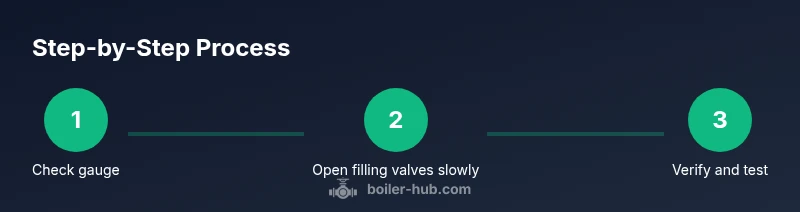
Calibration should be deliberate and incremental. Start by confirming safety and gathering essential tools. Then, with the boiler cool, locate the filling loop and the corresponding valves. Open the valve slowly, watching the gauge to avoid overshoot. Stop when you approach the target range from your manual, then close the valve and re-check after the system runs for a few minutes to confirm stability. If the pressure remains off, repeat in small increments rather than making abrupt changes. If the system does not stabilize, shut down and consult a professional.
Common mistakes and safety tips
- Don’t adjust a hot boiler: high-temperature water expands the pressure, making overcorrection dangerous.
- Don’t open valves quickly: rapid changes can overshoot the target and stress joints.
- Don’t bypass safety devices: the pressure relief valve and aquastat are there to prevent dangerous conditions.
- Don’t ignore leaks: small drips can quickly erode pressure and cause air pockets.
- Document readings: keeping a simple log helps track fluctuations and determine if a professional assessment is needed.
Monitoring and maintenance plan
Establish a routine that fits your system and usage. Check the pressure gauge at least monthly under normal conditions, and after any major system work or water loss. Record cold and hot readings to detect unusual shifts. If you notice frequent pressure changes or system noises, schedule a professional inspection to verify the integrity of the expansion tank, fill valve, and circulation pump. Regular maintenance keeps your boiler efficient, safe, and reliable over time.
Tools & Materials
- Boiler pressure gauge(Ensure accurate reading; verify scale (psi or bar) matches your manual)
- Filling loop key or valve wrench(Only for boilers equipped with a filling loop; follow manufacturer instructions)
- Safety gear (gloves and eye protection)(Protect hands and eyes during valve operation)
- Owner’s manual(Always confirm target pressure and procedure for your model)
- Towels or rags(Catch drips and protect surfaces around the boiler)
- Flat-head screwdriver(Optional for certain valve adjustments)
Steps
Estimated time: 45-60 minutes
- 1
Turn off and cool the boiler
Switch off the boiler and allow it to reach a safe, cool temperature before touching any components. This reduces burn risk and lets pressure readings stabilize.
Tip: If you must touch hot components, use heat-resistant gloves and avoid steam release during valve handling. - 2
Locate filling loop and valves
Find the filling loop and the two isolation valves. Confirm they are accessible and not corroded or stuck. Clear the area around the pipes to avoid accidental contact.
Tip: If your system has no filling loop, skip this step and refer to the manual for alternative re-pressurization methods. - 3
Check current pressure
Read the gauge and note the cold and hot readings. Compare with the numbers in your manual to determine if the pressure is within the safe operating range.
Tip: If readings are unclear, gently tap the gauge to confirm it isn’t sticking. - 4
Open valves to add water gradually
Open the valve slowly to allow a controlled amount of water into the system. Watch the gauge closely and stop as soon as you approach the target range.
Tip: Never force the valve beyond a gentle, incremental turn. - 5
Close valves and re-check pressure
Close the filling valves and record the new reading after the system runs for a few minutes. Re-check to ensure the pressure remains stable.
Tip: If pressure rises quickly after closing, there may be other issues like a faulty expansion vessel. - 6
Test run and verify
Turn the boiler back on and run a quick heating cycle. Re-check the pressure once hot to ensure it returns to the target range.
Tip: If the pressure does not stabilize within the expected range, stop and consult a professional.
Questions & Answers
What should the boiler pressure be when the system is cold?
Most residential hot-water boilers have a cold-range target noted in the manual. It’s usually a lower value than hot operating pressure. Always verify with your model’s specification and avoid forcing pressure beyond the specified range.
When the system is cold, look up your model’s target cold pressure in the manual and aim for that range. If uncertain, consult a technician.
What if the pressure keeps rising after topping up?
Persistent rise after topping up suggests a possible fault in the expansion vessel, relief valve, or a leak. Stop adjustments and consult a professional to prevent overpressure conditions and potential damage.
If pressure keeps rising after topping up, stop and contact a technician to check the expansion tank and valves.
Can I adjust pressure on a steam boiler myself?
Steam boiler pressure management can be hazardous and is often model-specific. Consult the manual and consider professional service for safety-critical components.
Steam boilers are trickier; check the manual and, if in doubt, call a pro for safety.
Why does pressure drop when the boiler heats up?
Pressure drop during heating can indicate water loss, air in the system, or a failing expansion vessel. If drops exceed normal variation, seek professional evaluation.
A drop when heating can mean leaks, air, or expansion-tank issues—get it checked if it’s persistent.
Is it safe to adjust boiler pressure myself?
Yes, if you follow the manufacturer’s steps exactly, wear safety gear, and operate only on a cool system. If you’re unsure, hire a professional to ensure safety.
It can be safe if you follow the manual and stay cool; otherwise, a pro should handle it.
Watch Video
Key Points
- Know your boiler’s target pressure from the manual.
- Adjust only when the system is cool and safe.
- Make small, incremental changes and verify after each step.
- Document readings and consult a professional for persistent issues.