How to Check Boiler Pressure: A Step-by-Step Guide
Learn how to safely check boiler pressure, read gauge readings, and adjust your system for optimal efficiency. This in-depth guide from Boiler Hub covers tools, safety tips, and troubleshooting for homeowners and facility managers.


Goal: learn how to safely check boiler pressure and interpret gauge readings to keep your heating system efficient. This guide shows where to find the pressure gauge, how to read cold versus hot readings, and what to do if pressure is too high or too low. You’ll need a basic pressure gauge or a boiler user display and a few common tools.
Understanding Boiler Pressure and Why It Matters
Boiler pressure is a measure of the water pressure inside your heating system's closed loop. When pressure is too low, the boiler may struggle to push hot water through radiators or baseboard heaters, leading to cold spots and reduced comfort. If pressure is too high, seals and joints can strain, increasing the risk of leaks and failure. For homeowners and facility managers, checking pressure is a quick, essential habit that helps prevent outages and keeps your heating efficient. According to Boiler Hub, regular monitoring of pressure helps catch problems early and reduces the risk of unexpected outages. Understanding the gauge and knowing the correct target range gives you a reliable baseline for safe operation. In most residential boilers, pressure is read in psi, and readings differ when the system is cold versus hot because water expands as it heats. This means you should always compare readings taken in the same state. The gauge or digital display may also show an optional secondary metric, such as kPa, but the key idea remains: a stable pressure around the recommended range means your boiler can circulate water effectively without straining components. The expansion tank and automatic pressure-relief valve work together to handle temperature-driven expansion; if either part fails, pressure can drift and performance suffers. By understanding these elements, you gain a practical, actionable skill that helps you maintain comfort and avoid costly service calls. This knowledge lays the groundwork for safe checks, simple adjustments, and better long-term reliability.
Reading Gauge Readings: Cold vs Hot and Common Ranges
To interpret boiler pressure correctly, you need to read the gauge in the right context. A cold boiler typically shows a lower reading than when it is heating water, because water expands as it warms. For most residential boilers, a typical target range when cold is about 12 to 15 psi. When the system is hot, the reading commonly rises to roughly 18 to 25 psi. Exact targets depend on the boiler model and the size of the expansion tank, so always consult the manufacturer manual for your unit. If readings fall outside the recommended range, don’t panic. Minor variations can occur due to ambient temperature, recent cooling cycles, or a short refilling event. Always compare readings from the same state (cold or hot) and, if possible, verify with a second indicator or a seasonal diagnostic mode on digital panels. In addition to psi, some systems display a metric unit (kPa) or a color-coded alert. Recognize the signs of a healthy range, and know when to plan a controlled adjustment rather than chasing every minor fluctuation. When in doubt, allow the system to settle for 15–30 minutes and take a new reading to confirm a trend rather than a single snapshot.
Setting Up Safely: Tools, Environment, and Preparation
Before you touch the boiler, prepare a clean, dry workspace and ensure you have a safe path away from kids and pets. Turn off the boiler and let it cool for at least 15 to 30 minutes to avoid scalding or pressure burns while you inspect the gauge and fittings. Gather your essential tools: a calibrated pressure gauge (dial or the boiler’s built-in display), a sturdy wrench or pliers, a clean cloth or towel for drips, and a small container if you plan to drain water. If your system uses a fill loop to raise pressure, locate the fill valves and understand their flow direction. Read the manufacturer’s instructions for your model to learn the recommended procedure and any safety cautions. If you observe rust, obvious leaks, or corrosion around connections, do not proceed—have the system inspected by a qualified technician. A calm, methodical approach reduces the risk of scalding and makes it easier to spot a fault. Finally, consider taking a baseline photo of the pressure gauge so you have a reference point for later adjustments or to share with a technician if needed. This preparation sets you up for a smooth, safe check.
Reading, Interpreting, and Adjusting: Scenarios and Actions
When the gauge reads too low, the system may struggle to maintain hot water and heat evenly. In many cases you will need to raise the pressure by carefully adding water through the filling loop, then recheck the gauge after the system settles for a few minutes. If the gauge reads too high, shut the boiler off, let it cool, and release a small amount of water through the boiler drain or by using the pressure-relief valve according to the manual. The key is to adjust gradually and verify after each incremental change. After any adjustment, run the circulator for 10 to 15 minutes and inspect for leaks around valves and joints. If you cannot bring the reading into range within 30 minutes of adjustment, or if the gauge fluctuates dramatically, stop and call a professional. These steps apply to most boiler types, including conventional, combi, and system boilers, but specific methods may vary by model. Keeping a simple log of readings and actions helps reveal slow trends, such as a gradually dropping pressure indicating a leak, or a rising pressure suggesting a faulty expansion vessel. If you detect persistent issues, treat it as a maintenance priority rather than a one-off fix.
Maintenance Mindset: Regular Checks and Common Pitfalls
A routine approach to boiler pressure includes seasonal checks—at least once in fall and once in spring—to ensure that the expansion tank remains effective and that the fill loop is not blocked. Common mistakes include overfilling, which raises pressure quickly, or ignoring a slowly dropping pressure that could indicate a leak. Keep a simple log noting the date, cold/hot readings, and any actions taken, plus the boiler model and system layout. Use only the equipment recommended by the manufacturer, and never bypass safety devices. If your expansion tank has not been serviced in years, consider having it inspected or replaced by a licensed pro; an ineffective expansion tank can cause pressure swings that stress seals and joints. Regular maintenance also includes inspecting the pressure relief valve and ensuring it trips within a safe range. If you notice damp spots, hissing sounds, or water dripping near valves, address them promptly with professional help. Finally, pair checks of boiler pressure with routine cleaning of components like burners or heat exchangers to sustain efficiency and reduce fuel consumption. Boiler Hub's team emphasizes that a proactive maintenance plan reduces the likelihood of sudden outages and extends equipment life.
When to Call a Pro: Warning Signs and Next Steps
There are times when DIY pressure checks should be avoided. If you notice any of the following, hire a technician: persistent fluctuating readings, loud banging or knocking sounds from the boiler, water leaks around the boiler, corroded fittings, or a pressure relief valve that leaks continuously. If the system does not pressurize after repeated, careful attempts, or if you suspect a faulty gauge that misreads pressure, a professional assessment is warranted. For complex systems—such as those with multiple loops, zone valves, or modern smart controls—an expert will interpret readings in the context of your entire heating system, potentially diagnosing issues with the circulator pump, air locks, or the expansion vessel. By following safety protocols and documenting measurements, you can facilitate an efficient service call and help the technician identify the root cause faster. The Boiler Hub team recommends maintaining your maintenance records, and scheduling annual inspections to ensure reliability and efficiency in your boiler system.
Tools & Materials
- Calibrated boiler pressure gauge (dial or digital display)(Essential for accurate readings; ensure it is suitable for your system's pressure range)
- Adjustable wrench or pliers(Used to operate fill and drain valves if necessary)
- Cloth or towel(Catches drips and helps keep fittings dry while you work)
- Small container or cup(Optional for catching draining water; helpful but not required)
- Boiler manual(Contains model-specific safety warnings and procedures)
Steps
Estimated time: 20-45 minutes
- 1
Identify the pressure gauge
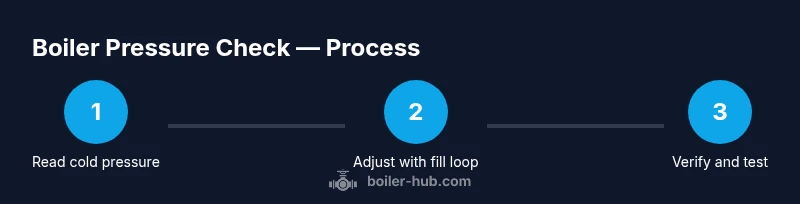
Locate the boiler pressure gauge on the front, side, or control panel. Note whether your unit uses psi or kPa and identify the cold baseline you will compare against. This establishes a safe starting point before any adjustment.
Tip: Take a quick photo of the gauge as baseline reference. - 2
Check current pressure when cold
Ensure the boiler is off and has cooled. Read the gauge to determine your current cold pressure. If it’s outside typical ranges, planning a follow-up check after a minor heat cycle helps confirm the trend.
Tip: If you cannot read the gauge, use a flashlight and magnifier to improve visibility. - 3
Decide if you need to fill or vent
If pressure is low, you will likely need to add water via the filling loop. If pressure is high, you may need to relieve pressure through the drain valve or pressure-relief valve after cooling. Do not perform both in the same session.
Tip: Never open the relief valve while the system is hot. - 4
Open the filling loop slowly
With the boiler off, gradually open the filling valve to allow water into the system. Do this slowly to avoid a sudden spike in pressure and watch the gauge closely as it rises toward the target range.
Tip: Close the valve immediately after the gauge enters the target range. - 5
Monitor and stabilize pressure
Close the fill valve once the reading reaches the target in the cold state, then wait 5–10 minutes and re-check to ensure the pressure stabilizes. If the pressure keeps climbing, stop and reassess for leaks or valve issues.
Tip: Document the stabilized value for future reference. - 6
Relieve excess pressure safely (if needed)
If readings are too high after heating, shut the boiler, let it cool, and carefully drain a small amount of water via the drain valve or use the safety relief valve per the manual. Do this in small increments and never force water out.
Tip: Wear gloves and keep your face away from the vent to avoid steam exposure. - 7
Re-check after adjustments
After any adjustment, re-check the pressure once more in hot and cold states where applicable. Ensure both readings are within recommended ranges and there are no leaks at joints or fittings.
Tip: If numbers drift, re-check for hidden leaks and confirm expansion tank function. - 8
Test run the boiler
Restart the boiler and let it run through a normal heating cycle for 10–15 minutes. Observe the gauge, listen for unusual noises, and check for leaks. This confirms the system maintains pressure under real operating conditions.
Tip: Keep a 15-minute observation window after startup. - 9
Record results and plan next check
Document the baseline cold reading, hot reading, and adjustments made. Schedule the next check within 6–12 months or as recommended by your boiler manufacturer.
Tip: Include model, serial number, and maintenance notes for quick future reference.
Questions & Answers
What is a normal boiler pressure when cold?
Typically around 12–15 psi for cold readings on many residential boilers, but always confirm with your specific model’s manual.
A typical cold boiler pressure is about 12 to 15 psi, but check your model’s manual for exact numbers.
What should I do if pressure is too low?
If pressure is low, gradually raise it using the filling loop and recheck after the system settles. Do not overfill.
If pressure is low, slowly fill via the loop and recheck after it settles.
What if pressure remains high after filling?
Shut off the boiler, let it cool, then relieve a small amount of water through the drain or relief valve according to the manual. If it continues, call a pro.
Turn it off, cool down, and carefully relieve some water. If it stays high, contact a professional.
Can a faulty gauge mislead me about pressure?
Yes. If readings seem inconsistent, verify with a second indicator or panel display, and consider replacing a suspected faulty gauge.
Gauges can fail; check with another indicator and replace if needed.
How often should I check boiler pressure?
Do a seasonal check (ideally twice a year) as part of a regular maintenance routine.
Check the pressure twice a year as part of seasonal maintenance.
Is it safe to check boiler pressure on an older boiler?
Yes, with caution. Follow all safety steps, and if you’re unsure, consult a professional.
It can be safe with care; follow steps or contact a pro if unsure.
Watch Video
Key Points
- Check pressure in cold state for a stable baseline
- Adjust gradually and recheck to avoid overcorrection
- Maintain a simple log of readings and actions
- Follow manufacturer guidance and safety steps
- Call a professional for persistent or risky issues