How to Check Boiler Temperature: A Step-by-Step Guide
Learn to safely check boiler temperature using built-in gauges, external thermometers, and thermostat readings. This comprehensive how-to covers tools, step-by-step actions, safety reminders, interpretation of readings, maintenance tips, and when to call a pro. Boiler Hub shares practical guidance for reliable, efficient boiler operation.


Across the boiler system, knowing the correct temperature helps ensure safe, efficient operation. This guide shows how to check boiler temperature using built-in gauges, external thermometers, and thermostat readings, plus what the readings mean for your comfort and safety. By following these steps, homeowners can diagnose trending issues and decide when to service. The process emphasizes safety and accuracy.
Understanding boiler temperature basics
A boiler’s temperature describes the heat level of the water or steam circulating through your heating system. In most homes, temperature affects comfort, efficiency, and safety. While it varies by boiler model and weather, a stable reading within the manufacturer’s recommended range generally indicates healthy operation. According to Boiler Hub, frequent temperature swings can point to flow issues, thermostat problems, or a failing pump. The first rule is to consult your model’s manual for the exact targets and to avoid guessing. If you’re ever unsure, err on the side of caution and contact a qualified technician. In the meantime, you can learn the common indicators of normal operation, such as consistent readings across the main lines and smooth, continuous heat delivery without cold spots. This section lays the groundwork for safe, practical checks you can perform without special tools beyond basic sensing devices.
Tools and indicators you'll need
Before you start, assemble a small toolkit for accurate readings and safe handling. A digital thermometer with a probe is essential for immersion or contact readings on pipes or water outlets. An infrared thermometer is useful for quick surface checks without contact. Have your boiler’s service manual on hand to confirm model-specific targets and safety steps. PPE like heat-resistant gloves and eye protection is non-negotiable. A flashlight helps in low-light access panels. Keep a notebook to log readings and any notable observations. Optional items include zip ties for sensor placement and a non-conductive tool to avoid accidental shorts. The goal is to create a safe, repeatable process you can perform confidently.
Safety first: hazards and precautions
Working around a boiler involves hot surfaces, pressurized zones, and electrical components. Never bypass safety devices or tamper with pressure-relief valves. If you smell gas, hear a hiss, or notice unusual flames, evacuate and call emergency services. Ensure the boiler is powered down and cooled before touching any components. Use PPE, keep children and pets away, and work in a dry environment. If you are not completely comfortable with these steps, stop and contact a licensed technician. Safe practice is the foundation of any temperature checking routine.
Reading the built-in temperature gauge
Many boilers display a temperature on a front panel gauge or a digital readout. Start by locating the gauge, then note the indicated value when the boiler is actively heating. If the gauge is hard to read, clean the glass cover and use a flashlight for visibility. Record the reading at several points during a heating cycle to understand the range. Compare the observed values to the manual's target range and to your comfort requirements. Consistency across readings suggests a stable system; wide swings may indicate flow or venting issues that deserve closer attention.
Using external thermometers for accuracy
External thermometers help verify readings without relying on a single source. Place a probe at the supply line or near the water outlet to measure the actual heat delivered into the system. For non-contact measurements, infrared thermometers can confirm surface temperatures on pipes; use them as a quick cross-check rather than the sole indicator. Calibrate any temperature tool according to the manufacturer’s instructions, and log calibration dates. When using water-based readings, ensure you’re not measuring after a stagnation period which can affect numbers. The more cross-checks you perform, the more confident you’ll be in the temperature picture.
Interpreting readings in context of demand and time
Temperature readings depend on demand: on very cold days the boiler will work longer and hotter, while mild days produce shorter cycles. Readings should be taken during steady operation, not immediately after startup or shutdown. A reading that seems too high or too low without a clear pattern may indicate temporary factors such as weather, thermostat cycling, or recent maintenance. Track readings across several cycles to identify a trend. When in doubt, rely on the model’s documented operating window rather than memory of a prior season. This approach helps you separate normal variation from a potential fault.
Common mistakes that skew readings
People often misread gauges due to parallax, use improper placement of thermometers, or read during startup when temperatures surge. Avoid touching hot surfaces with bare skin, and never rely on a single reading to judge system health. Environmental factors like ambient temperature and boiler load affect measurements; account for them by taking multiple readings. Over time you’ll learn what constitutes normal fluctuation for your setup, reducing unnecessary service calls. Boiler Hub shares these practical cautions to help homeowners maintain accuracy.
Routine maintenance to stabilize temperatures
Regular maintenance supports stable boiler temperature. Schedule annual service to clean heat exchangers, inspect sensors and valves, and verify thermostat calibration. During the heating season, perform monthly quick checks using the same method and points to notice trends. Keep the area around the boiler clean and free of dust to maintain accurate readings. If you notice persistent deviations, consider adjusting flow or call a technician for a more thorough assessment. Small, proactive steps can prevent temperature swings and improve efficiency over time.
What Boiler Hub recommends for residents
Boiler Hub emphasizes practical, safe checks that homeowners can perform without specialized tools. Start with clear, repeatable procedures, maintain a log of readings, and only escalate when readings consistently fall outside the model’s documented range. Our team notes that many temperature issues stem from thermostat misalignment or flow restrictions, both of which can be resolved efficiently by friendly technicians. By staying informed and keeping to a routine, you’ll protect your home’s comfort and safety while extending the life of your boiler.
Tools & Materials
- Digital thermometer with probe(Probe suitable for immersion or contact with pipes; minimum 1 inch sensing tip)
- Infrared/non-contact thermometer(Good for quick surface checks; not a substitute for water temperature readings)
- Boiler service manual(Contains model-specific target ranges and safety steps)
- Heat-resistant gloves(Protect hands when handling hot components)
- Eye protection(Safety glasses or goggles)
- Flashlight or headlamp(Improve visibility in panel areas)
- Notebook and pen(Record readings, date, and observations)
Steps
Estimated time: 25-45 minutes
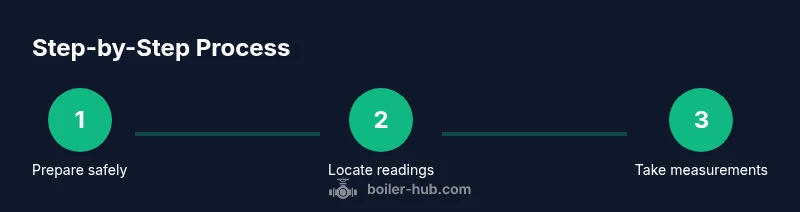
- 1
Prepare and safety check
Power down the boiler and let it cool to a safe touch. Put on PPE, verify work area is dry, and remove any flammable items nearby. This step prevents burns and reduces the risk of accidental shocks during measurements.
Tip: If you’re unsure about any part, pause and consult a professional. - 2
Identify measurement points
Locate the primary temperature reading point: this could be a front-panel gauge, a digital display, or a sensor near the supply/return lines. If your manual shows multiple points, choose the one most representative of the heated output.
Tip: Consult the model’s diagram or service manual to confirm the correct point. - 3
Take initial readings
Using the digital thermometer, place the probe at the selected point and record the reading. If you have an infrared tool, also capture a surface temperature for cross-checking.
Tip: Take at least two readings in quick succession for reliability. - 4
Cross-check with thermostat
If your system uses a thermostat, compare its setting with the measured boiler temperature. Discrepancies may indicate calibration needs or sensor drift.
Tip: Ensure the thermostat is in a steady call for heat before measuring. - 5
Document and analyze
Log the reading, date, time, and any environmental factors. Look for patterns across several cycles to distinguish normal variation from a potential issue.
Tip: Keep readings in the same units and use consistent timing. - 6
Decide on next steps
If readings consistently fall outside the manufacturer’s recommended range, schedule service or call a professional. Avoid making major system changes based on a single measurement.
Tip: Don’t ignore persistent outliers; they often signal underlying problems.
Questions & Answers
How often should I check boiler temperature?
During the heating season, perform checks periodically and log changes. Outside this period, monitor when you notice performance issues or changes in comfort.
Check periodically during heating season and whenever you notice a change in comfort or performance.
What readings indicate a problem?
Readings that consistently stray from the manual’s range or that vary widely between checks can indicate a fault such as flow, thermostat, or sensor issues.
Consistent deviations from the manual’s range or wide fluctuations indicate potential faults.
Can I use a smartphone app to check boiler temperature?
Some modern boilers provide apps for temperature monitoring; others require traditional measurements. Always verify with your model’s features.
Some boilers have apps for monitoring, but many require manual readings.
Why do readings differ between supply and return lines?
Supply and return lines reflect different parts of the loop; temperature can vary along the loop due to heat exchange and flow. Use the point your manual specifies for checks.
Different parts of the loop can read differently; use the recommended point for checks.
Is it safe to touch boiler pipes?
Boiler pipes can be extremely hot. Use PPE and avoid touching exposed hot components. If anything seems risky, stop and seek professional help.
Pipes can burn you; wear protection and avoid touching hot parts.
What should I do if readings are low?
Low readings may indicate issues with water flow, gas supply, or thermostat calibration. Check for simple causes first, then call a pro if the problem persists.
Low readings can signal flow or calibration problems; check basics and contact a pro if needed.
Watch Video
Key Points
- Follow model-specific targets from the manual.
- Use multiple tools for cross-checking readings.
- Log readings to identify trends over time.
- Escalate if readings are persistently outside range.
- Boiler Hub recommends a simple routine for reliability.