How to Check a Boiler Thermostat: A Practical Guide
A detailed, step-by-step guide from Boiler Hub on safely checking, calibrating, and troubleshooting your boiler thermostat to improve efficiency and reliability.


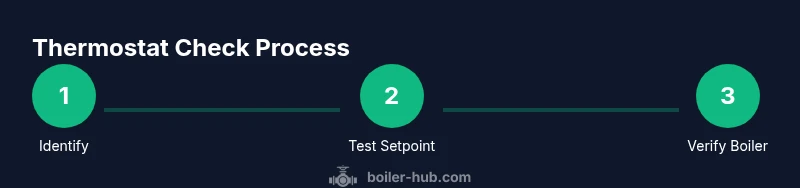
To check your boiler thermostat, locate the control panel and verify the setpoint matches your home's needs, then test with the boiler on to confirm the reading on the dial equals the actual temperature. If the readings differ, recalibrate or replace the thermostat, and check for faulty wiring or a blown fuse.
How a boiler thermostat works
Boiler thermostats regulate when the boiler fires by sensing the water temperature, room temperature, or a combination of both. In traditional homes you may encounter a simple dial thermostat that controls a separate aquastat on the boiler, while newer setups use digital wall thermostats paired with wireless receivers. Low-voltage electronic stats connect to a transformer and a control circuit, while line-voltage models sit directly in the boiler's electrical loop. Understanding the type you have helps you approach testing safely and effectively. According to Boiler Hub, an accurate thermostat is key to efficient boiler operation when the system is set up for reliable heating, and the right settings reduce wear and energy waste. This section lays the groundwork for diagnosing common misreads, dead zones, and drift between displayed temperature and actual water or room temperature.
Safety and prep before testing
Testing a thermostat involves working around live power, gas lines, and hot boiler components. Begin by turning off power to the boiler and disconnecting any external power to the thermostat if you can safely access the wiring. Clear the area of clutter, wear protective eyewear and gloves, and have a flashlight handy. If your boiler remains hard to reach or involves gas shutoffs, contact a licensed technician rather than attempting a risky repair. Keep a log of what you observe, including any abnormal readings, strange noises, or brief outages. Safety first protects both you and your equipment.
Identify thermostat types and access points
Thermostats come in several flavors: simple dial units, digital wall-mounted controls, and integrated boiler controls. For most installations you will need to remove a front cover or the cover plate on the boiler or on the receiver unit to access the wiring. Note the model number, wire colors, and the number of conductors before you disturb anything. Digital thermostats often have a current reading on the display, while mechanical models depend on the dial and a separate sensor bulb or capillary tube in older systems. Documenting the wiring diagram helps when you compare readings and when you replace components later.
Step-by-step: verify the setpoint and readings
First, locate the thermostat's setpoint and the current ambient or system temperature reading. If your device shows a target temperature for the house, compare it to an accurate room thermometer placed in the living space. For digital units, navigate to the current temperature display; for mechanical units, read the dial position and translate it into a temperature using the manufacturer’s scale. If the displayed and ambient temperatures disagree beyond what you expect in a typical room, note the difference and prepare to test the next steps. This helps confirm whether the thermostat is misreading or if the room is outside the thermostat’s sensing range.
Step-by-step: test heating call and boiler response
Set the thermostat to call for heat and observe whether the boiler fires promptly. Listen for burner ignition and check that hot water or steam begins to circulate within the expected time frame. If no response occurs, recheck power and wiring, confirm the thermostat is powered (batteries installed if applicable), and verify the boiler’s safety switch is engaged. After initiating heat, allow several minutes for the system to respond and then re-check the readings to ensure the thermostat triggers consistent operation.
Troubleshooting common thermostat issues
Common problems include a thermostat that reads too high or too low, a stubborn display that won’t power on, or loose wiring connections. Start by inspecting wire terminals for looseness, corrosion, or damaged insulation. If the stat is battery powered, replace batteries and re-seat contacts. For digital units, perform a reset or recalibration according to the manufacturer’s instructions. If readings persistently drift or the boiler cycle times become erratic, the thermostat or receiver may be failing and require replacement.
When to recalibrate vs replace the thermostat
Recalibration is often a quick fix for minor drift, but persistent mismatches after recalibration indicate a failing sensor or aging components. If recalibrating does not restore accurate readings or if the thermostat won’t hold a setpoint, replacement is usually the safest option. Choose a model compatible with your boiler’s control system and consider digital options with battery backup and remote sensing for greater reliability. The decision should balance cost, convenience, and the risk of continued inefficiency.
Maintenance practices to keep thermostats accurate
Keep thermostats away from direct sunlight, heating vents, or drafts that skew sensing. Dust and grime on sensing elements can cause false readings, so clean the front panel and thermostat body periodically with a dry cloth. Replace batteries as recommended by the manufacturer and update firmware if available. Finally, record changes and ensure you have a copy of the wiring diagram for future servicing. Regular attention preserves accuracy and extends the life of the boiler system.
Tools & Materials
- Screwdriver set (Phillips and flathead)(Sizes #2 Phillips and 1/4 inch flathead; remove cover plates.)
- Digital multimeter(Test voltage on low-voltage circuits; exercise caution.)
- Room thermometer(Place away from heat sources to measure ambient accurately.)
- Thermostat batteries (if applicable)(Check if your unit uses batteries and replace if needed.)
- Safety gear (gloves, eye protection)(Protect hands and eyes while testing near hot components.)
- Soft cloth and mild cleaner(Cleaning dust from terminals and casing.)
Steps
Estimated time: 30-60 minutes
- 1
Identify the thermostat and access panel
Locate the thermostat type and safely open the access panel to reveal wiring. Document model numbers, wire colors, and how many conductors you see. This helps with calibration and any future replacement.
Tip: Take a clear photo of the wiring before touching anything. - 2
Check the setpoint against ambient temperature
Find the thermostat's setpoint and compare it to a trusted room thermometer placed in the living space. A large discrepancy suggests drift in the sensor or improper placement of the unit.
Tip: If the thermostat is near a heat source, move the thermometer away to prevent skewed readings. - 3
Test the thermostat's call for heat
Temporarily set the thermostat to a higher temperature and watch for the boiler to start. Confirm flow of hot water or steam and listening for ignition. If the boiler does not respond, recheck wiring and power.
Tip: Wait a few minutes for the system to respond before concluding a fault. - 4
Inspect wiring and power
With power off, inspect terminals for loose connections, corrosion, or damaged insulation. Re-seat any loose wires and secure them with the appropriate screws.
Tip: Always verify power is off before touching wiring. - 5
Decide on recalibration or replacement
If readings drift after adjustments, determine whether recalibration suffices or replacement is advisable. Match compatibility with your boiler control system and consider a digital model with backups.
Tip: Keep replacement parts identical to the original or compatible to avoid control errors. - 6
Final safety check and test run
Reassemble the panel, restore power, and run a full heat-cycle. Verify the boiler fires reliably when heat is requested and that readings stabilize.
Tip: Record observations for future maintenance.
Questions & Answers
Do I need to turn off the boiler before checking the thermostat?
Yes, power down the boiler and thermostat if you must handle wiring to avoid shocks. If you are testing electronics, disconnect power only where safe and follow manufacturer guidelines.
Power down the boiler and thermostat before handling wiring to stay safe. If unsure, consult a pro.
Why does the thermostat show a different temperature than the room?
Thermostats can drift due to sensor aging, placement near heat sources, or environmental changes. Compare with a room thermometer and consider relocation or recalibration.
Thermostats can drift from room temperature because of sensor aging or placement.
Can a faulty thermostat cause high energy bills?
A malfunctioning thermostat can cause the boiler to run longer than needed, increasing energy use. Replace or recalibrate to restore efficient cycling.
Yes, a bad thermostat can waste energy by over- or under-calling heat.
Is recalibration safe for modern electronic thermostats?
Most electronic thermostats support a reset or recalibration through the settings. Follow the manual and avoid forceful adjustments.
Recalibration is usually safe when done per the manual; if in doubt, call a pro.
When should I replace the thermostat?
Replace when recalibration doesn't fix drift, when readings are erratic, or the display fails. Choose a compatible model with your boiler.
If recalibration fails or the unit is unreliable, replacement is wise.
What is the typical cost range for thermostat replacement?
Costs vary by model and labor. For budgeting, consult your boiler manufacturer’s recommendations or a licensed technician for a quote.
Prices vary; contact a pro for an accurate estimate.
Watch Video
Key Points
- Understand thermostat type before testing for accurate results.
- Verify readings with a separate room thermometer.
- Test heating call to confirm boiler response.
- Recalibrate first; replace if drift persists.
- Regular maintenance preserves accuracy and efficiency.