How to Check Boiler Efficiency: A Practical Guide
Learn proven steps to check boiler efficiency, spot waste, and improve performance. This Boiler Hub guide covers tests, maintenance, and safety tips for homeowners and facility managers.


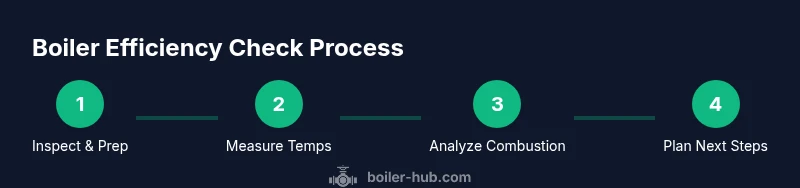
To check boiler efficiency, compare heat delivered to fuel consumed and run a few safe, practical tests. This quick guide shows you how to gauge performance, diagnose common waste, and decide whether you need maintenance, repair, or a replacement. By following these steps, homeowners and facility managers can verify efficiency with confidence. Start with basic measurements and progress to more precise checks if your equipment allows.
Understanding boiler efficiency concepts
Boiler efficiency is the ratio of useful heat you get from the boiler to the energy contained in the fuel it uses. In practice, this means two intertwined ideas: combustion efficiency (how completely the fuel is burned) and thermal efficiency (how effectively the produced heat is transferred to the home). Most residential boilers come with an efficiency rating on the label or in the manual, often expressed as a percent. While the exact wording can vary by region, the underlying goal is the same: minimize heat loss through the chimney, flue, or pipework, and maximize heat delivered to your living spaces. Subtle factors like burner adjustment, venting, and return-water temperature all influence the final performance. A boiler that is regularly serviced and properly insulated will typically deliver more usable heat for every unit of fuel, reducing both energy consumption and operating costs over time.
For homeowners and facility managers, understanding these concepts helps you interpret test results and decide on maintenance or replacement actions. Keep in mind that external conditions (outdoor temperature, thermostat settings) and internal factors (system design, radiator sizing, piping layout) all sway efficiency readings. The goal is to isolate boiler performance from other system variables, so you can target boiler improvements with confidence.
According to Boiler Hub Analysis, practical checks can reveal efficiency gaps without expensive equipment. Start with the basics: confirm the label rating, inspect safety devices, and note any abnormal operation like rumbling burners or strange odors. These initial observations set the stage for more accurate measurements and informed decisions.
When you’re ready to test more deeply, you’ll use measurements such as supply and return temperatures, combustion byproducts, and the heat transfer between the boiler and your piping. Although some tests require professional tools, many homeowners can perform safe, low-risk evaluations that indicate whether a professional service is warranted.
Why efficiency matters for your bills and safety
Efficient boilers reduce energy waste, which directly affects utility bills and carbon footprint. Even small improvements can translate into noticeable savings over time, especially in homes with older or larger boilers. Efficiency also relates to safety: poorly maintained boilers can produce excessive combustion byproducts, and faults in venting or air supply increase the risk of dangerous build-ups. Regular maintenance helps ensure safe operation, minimizes the risk of leaks or overheating, and extends the life of your heating equipment.
Beyond personal savings, efficient boilers support system reliability. An efficient unit reaches target temperatures more quickly and maintains stable heat distribution throughout the home, reducing hotspots and cold rooms. For facility managers overseeing multiple units, routine checks help schedule preventive maintenance and avoid unexpected downtime during peak usage.
A well-tuned boiler also responds better to thermostat adjustments, reducing unnecessary cycling. When a system runs more efficiently, it uses less fuel to reach the same comfort level, which can simplify budget forecasting and equipment planning. Boiler Hub recommends framing efficiency as a holistic objective: combine proper maintenance with sensible usage patterns to maximize long-term performance.
In short, improving boiler efficiency is a practical, safety-conscious, and economically sound goal for any home or facility. By understanding the factors that affect efficiency and applying a structured testing approach, you can identify opportunities to optimize performance without resorting to guesswork.
Methods to check boiler efficiency
There are several practical methods to evaluate boiler efficiency without immediately replacing equipment. Start with the manufacturer’s efficiency label and service history, then proceed to on-site measurements if you have access to the right tools. The most informative checks involve both fuel input indicators and heat transfer indicators:
- Compare labeled efficiency or AFUE rating with current performance. The label provides a baseline for what the boiler should achieve; deviations over time often signal maintenance needs.
- Observe fuel usage against heat output. If your fuel bills rise or you notice the home isn’t heating evenly, it may indicate reduced efficiency. Correlate this with system usage (length of runs, thermostat settings) to distinguish usage changes from genuine performance degradation.
- Measure supply and return temperatures. A narrow temperature drop (or insufficient delta-T) can mean poor heat transfer, restrictive flow, or air issues. Use a thermometer with a probe on the supply line and a sensor on the return line to estimate the heat transfer effectiveness.
- Conduct a basic combustion check if you have access to appropriate tools. For gas boilers, a handheld flue gas analyzer can indicate combustion quality (CO2, O2) and burner stability. If you don’t have the tool, note burner behavior, flame color, and soot presence for later professional review.
- Inspect venting and flue integrity. Blocked or restrictive venting wastes energy and makes the combustion process less efficient. Look for corrosion, leaks, or visible obstructions that could impair exhaust flow.
- Review system components that influence heat transfer. A dirty heat exchanger, clogged filters, or oversized or undersized radiators impede efficient heat distribution. Regular cleaning and proper balancing of radiators can improve overall performance.
Interpreting results requires context. A higher reading on one metric does not automatically translate to a better overall efficiency if other parts of the system are poorly functioning. Use a combination of measurements to form a complete picture, and do not hesitate to involve a professional if any results seem off or dangerous. For a thorough assessment, plan a formal efficiency test with a licensed technician who can perform advanced measurements and provide a detailed report.
Maintenance and troubleshooting to improve efficiency
Maintenance is the cornerstone of boiler efficiency. Regular service keeps the burner and heat exchanger clean, the ignition stable, and the venting unobstructed. A maintenance routine typically involves inspecting and cleaning the burner assembly, checking gas pressure (for gas boilers), testing safety devices, and verifying thermostat and control settings. Small adjustments during service can yield meaningful improvements in heat delivery and fuel usage without major investments.
Keep condensate and return lines clear. Condensate pipes should drain freely, and returns must not be blocked by scale or debris. Insulate pipes that carry hot water to reduce losses and improve overall system efficiency. If your boiler has a thermostat or outdoor reset control, ensure it’s calibrated to provide appropriate supply water temperatures for different outdoor conditions. Evaluate radiator balance—air pockets and uneven distribution mean hot rooms or cold zones, which often lead to longer boiler runs and wasted energy.
Water quality matters, particularly for older boilers. Hard water and mineral buildup reduce heat transfer efficiency and can corrode internal components. If you’re on a hard-water supply, consider a water treatment plan or occasional flushing as recommended by your boiler’s manufacturer. Finally, address any obvious leaks promptly. Even small leaks can cause heat loss and disrupt pressure balance, undermining efficiency and safety.
If you’re not comfortable performing maintenance tasks yourself, a qualified technician can perform a comprehensive tune-up, clean the heat exchanger, verify gas pressure, and test combustion with professional-grade equipment. Regular professional maintenance, paired with attentive homeowner practices, is the best way to sustain high boiler efficiency over the long term.
What to do next: deciding between repair or replacement
When results indicate inefficiency, you must decide whether to repair or replace. In general, consider the boiler’s age, current condition, and projected maintenance costs. If major components are nearing the end of their life or if frequent repairs are required, replacement with a newer, high-efficiency model may be more economical in the long run. However, a well-timed maintenance tune-up can restore performance without the expense of a full replacement.
Economic considerations matter. Gather quotes for both a major repair and a replacement, and compare them against your anticipated energy savings, usage patterns, and the expected lifespan of the equipment. Ask for a written maintenance plan and a predicted payback period for an upgrade to a high-efficiency unit. A licensed professional can provide a detailed assessment that weighs upfront costs against ongoing savings.
Before making a decision, review your home’s insulation, air sealing, and radiator distribution. Sometimes, efficiency gains come from addressing household heat losses rather than the boiler itself. If the system is well-matched to the home but shows diminishing returns on maintenance, this is a strong signal to consider replacement. Boiler Hub’s guidance is to pursue informed, evidence-based decisions rather than reactive fixes.
Tools & Materials
- Safety glasses or goggles(Protect eyes from debris and hot surfaces during inspection)
- Gloves (heat-resistant)(Wear heat-resistant gloves when handling hot components or touching metal surfaces)
- Screwdriver set (flathead and Phillips)(For removing panels or adjusting burner assemblies)
- Digital thermometer with probes(Place probes on supply and return lines for delta-T estimation)
- Infrared thermometer (optional)(Non-contact temp checks for quick surface readings)
- Digital manometer or pressure gauge(Verify gas pressure or system pressure as applicable)
- Flue gas analyzer (handheld)(Optional, for measuring combustion gases (CO2, O2, CO))
- Notebook and pen(Record measurements and observations)
- Owner’s manual or service guide(Reference for model-specific procedure and safe settings)
- Gas detector (for combustible gases)(Use if available for added safety during testing)
Steps
Estimated time: 60-120 minutes
- 1
Prepare safety and gather tools
Power down the boiler and allow it to cool before touching any components. Gather all required tools and review the safety notes in the owner’s manual. Ensure you have a clear workspace and adequate lighting to prevent accidental contact with hot surfaces.
Tip: Wear safety gear and keep a clear path to shutoff valves in case of emergencies. - 2
Inspect exterior and venting
Look for corrosion, leaks, or damage on the boiler casing, pipes, and venting system. Ensure the flue is clear and free of obstructions. A blocked vent can dramatically impact efficiency and safety.
Tip: If you see obvious damage or blockages, stop and call a professional rather than attempting a fix yourself. - 3
Check fuel supply and ignition quality
For gas boilers, verify the gas shutoff is open and listen for a steady burner operation. Check the ignition sequence and flame color; a pale or yellow flame can indicate incomplete combustion.
Tip: If ignition is inconsistent or flame color is off, do not proceed with further checks—professional servicing is recommended. - 4
Measure supply and return temperatures
Attach temperature probes to the supply line and the return line to estimate the heat transfer. A higher delta-T generally indicates better heat capture, while a very small delta-T can signal flow or heat exchanger issues.
Tip: Record multiple readings at different operating loads if possible. - 5
Conduct a basic combustion check
If you have a handheld flue gas analyzer, take readings for CO2, O2, and CO to assess combustion efficiency. If not, note sensor readings or indicators of stable operation for later professional review.
Tip: Do not run the test near open windows or doors; drafts can skew readings. - 6
Interpret results and plan actions
Compare measurements against the manufacturer’s guidance and your observed performance. If results indicate inefficiency, schedule maintenance or a diagnostic visit to determine whether cleaning, adjustment, or replacement is warranted.
Tip: Document all findings to support a future service visit.
Questions & Answers
What is boiler efficiency and why does it matter?
Boiler efficiency is the ratio of useful heat delivered to fuel energy used. It matters because higher efficiency lowers fuel costs, reduces emissions, and improves comfort and safety. Regular checks help you catch performance losses early.
Boiler efficiency is how well your boiler turns fuel into usable heat. Regular checks can save you money and keep your home comfortable and safe.
How is AFUE measured and what does it tell me?
AFUE is a rating that describes how efficiently a boiler converts fuel into heat over a typical burn cycle. It provides a baseline for comparing models and for tracking performance over time after maintenance.
AFUE tells you how efficiently your boiler uses fuel over a burn cycle, helping you compare models and track changes after service.
Can I improve boiler efficiency without replacing it?
Yes. Regular maintenance, cleaning heat exchangers, correcting any flame or ignition issues, balancing radiators, insulating pipes, and fixing leaks can all improve efficiency without a full replacement.
Sometimes you can boost efficiency with a good tune-up, cleaning, and balancing—no need to replace the boiler right away.
How often should I check boiler efficiency?
Ideally, perform a basic efficiency check at least once a heating season and schedule a professional service annually to maintain peak performance.
Do a quick check each heating season, and book an annual professional service for thorough assessment.
What are common signs of inefficiency I should watch for?
Rising fuel bills, uneven heating, strange noises, low hot water output, or frequent cycling can indicate reduced efficiency or system faults.
Watch for higher bills, uneven heat, or odd noises—that often signal inefficiency or a problem with the boiler.
When should I call a professional for efficiency testing?
If basic checks suggest poor performance, or you lack the tools or training for combustion analysis, consult a licensed technician for a detailed diagnosis and safe testing.
Call a professional if you’re unsure about readings or if there are safety concerns during testing.
Watch Video
Key Points
- Check boiler efficiency with a structured, safety-first approach
- Use a mix of surface observations, temperature measurements, and combustion indicators
- Maintenance and proper system balance are the biggest levers for sustained efficiency
- Plan replacements only after a professional assessment shows clear long-term benefits